(Transcript from World News Australia Radio)
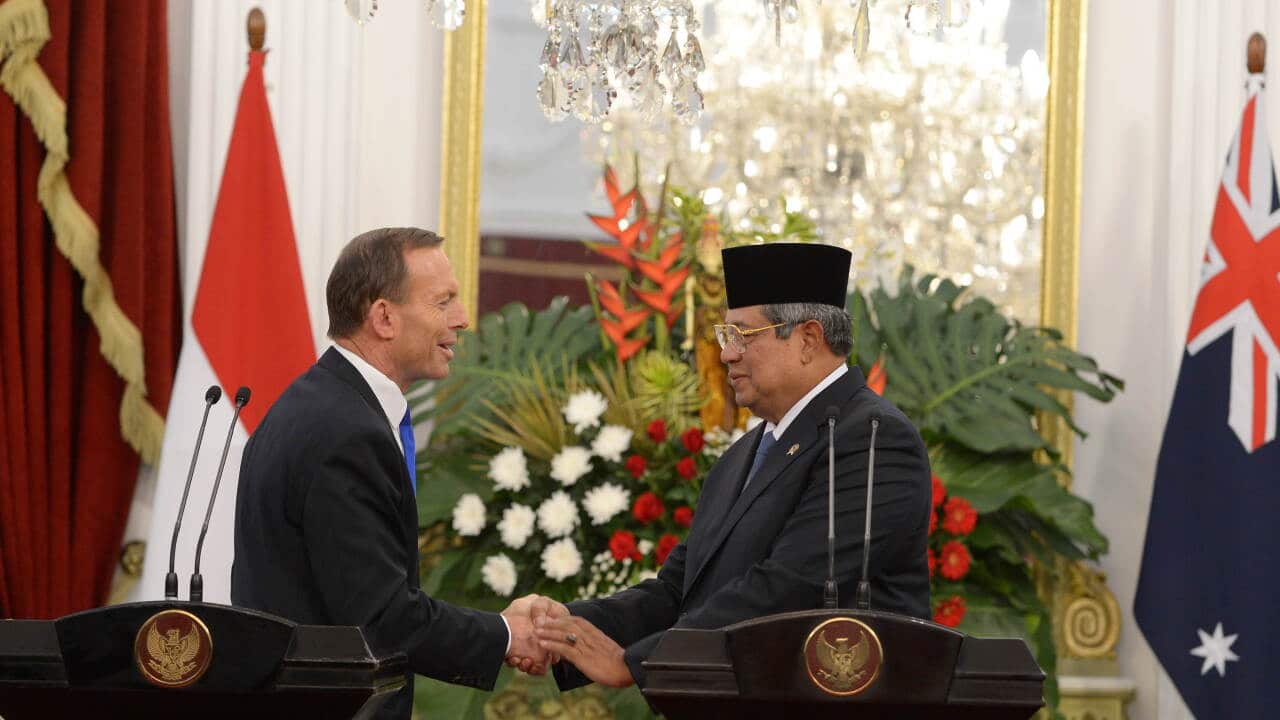
Prime Minister Tony Abbott has moved to defuse increasing diplomatic tensions with Indonesia over spying allegations although has stopped short of issuing an apology or an explanation.
The Indonesian government has demanded a full public explanation and its ambassador to Australia has been recalled to Jakarta.
After initially refusing to comment on the issue, Mr Abbott has told parliament he sincerely regrets any embarrassment the media reports have caused Indonesian President Susilo Bambang Yudhoyono.
Amanda Cavill has the details.
News that makes sense
Your trusted source for staying up-to-date with the world around you. Get free daily news updates and analysis, straight to your inbox.
(Click on audio tab to listen to this item)
Bilateral relations have been thrown into turmoil after leaked documents showed that in 2009, Australia tapped the personal mobile phones of the Indonesian President Susilo Bambang Yudhoyono, his wife and eight others in the president's inner circle.
Indonesia's call for its ambassador to come home from Canberra marks a new low in increasingly stretched relations between the two neighbours since the federal election in September.
Indonesia was already upset over earlier reports of spying from the Australian embassy in Jakarta, and differences over the heavily politicised issue of asylum-seekers trying to reach Australia via Indonesia.
As he left to go home, Indonesian ambassador Nadjib Kesoema had some advice for Australia's Prime Minister.
"I'm leaving for Jakarta now for consultation with the government of Indonesia. I think a good explanation will be the best way to ease the problem. Dear friends actually my Minister for Foreign Affairs has explained a lot of things and I think this is the standpoint, this is the position of the Indonesian government. I have to say that."
Mr Abbott has stressed the importance of the relationship with Indonesia, and with President Yudhoyono.
But the Prime Minister says Australia must do what is in Australia's best interests.
"Australia should not be expected to apologise for the steps we take to protect our country now or in the past. Any more than other government should be expected to apologise for the similar steps that they have taken. Madam Speaker I want to make it absolutely crystal clear that Australia has deep respect for Indonesia. For its government and for its people. I regard President Yudhoyono as a good friend of Australia. Indeed as one of the very best friends we have anywhere in the world."
Opposition leader Bill Shorten has backed Mr Abbott's commitment to national security and says the relationship with Indonesia can recover, thrive and prosper.
Mr Shorten says both sides must now commit to improving and repairing the relationship.
"The days ahead remain of the utmost importance in working to remediate issues with Indonesia. We should not allow these matters to fester for very long at all. We should not allow this matter to taint our relationship going forward. And we encourage the government to redouble its efforts to ensure that this is not the case. We in the opposition do not underestimate the seriousness of this issue."
Mr Shorten has pointed to the way the US handled a similar issue with Germany, saying it provides the opportunity for Australia to consider the same course of action.
US President Barack Obama apologised to German Chancellor Angela Merkel after it was revealed US intelligence had monitored her phone calls.
Independent MP Andrew Wilkie, a former intelligence analyst, says much of what is happening is a result of Indonesian domestic politics in the lead-up to elections next year.
He says he doubts there will be long term ramifications for bilateral relations from the current situation.
"A certain amount of what's going on at the moment is theatre for public consumption. Having started to run this theatre within Indonesia for Indonesian domestic purposes, they need to get a good outcome in Indonesia because of the election. This is much about saving face. This is not an intelligence problem now. This is a diplomatic problem to smooth this over so that everyone can save face and we can get back to business as usual - which is spying on each other."
It is unclear what effect Mr Abbott's latest statement may have.
They came after President Yudhoyono took to Twitter five times to voice his displeasure over the phone-tapping issue.
The President said it appeared that Australia was taking the matter lightly, but he found it personally offensive, and the broader Indonesian community deserved an explanation.
Mr Yudhoyono described the recall of his ambassador as stern diplomatic action.







