NATO says it has seen no evidence of Russian troops pulling back from the border with Ukraine, despite such an order by Russian President Vladimir Putin.
NATO Secretary General Anders Fogh Rasmussen said on Monday: "Unfortunately, ... we haven't seen any evidence at all that the Russians have started withdrawal of troops from the Ukrainian borders."
The US also said it had seen no evidence of troop movement. State Department spokeswoman Jen Psaki said Russia made a similar announcement last week "and we didn't see any evidence of movement at that time".
The Kremlin said that Putin had ordered all troops stationed along the border with Ukraine to withdraw. It said spring training had been completed in the Rostov, Belgorod and Bryansk regions and the units would return to their barracks.
Ukraine and the West have claimed that Russia has been massing tens of thousands of soldiers along the border, raising fears of an invasion in Kiev and prompting accusations from the West that the troops would further destabilise Ukraine as its pro-Western government faces unrest from pro-Russian separatists.
Russia has justified the presence of the troops as part of maintaining Russia's and the Russian people's own security.
The Kremlin statement was issued as Ukraine heads into presidential elections at the weekend.
German Chancellor Angela Merkel spoke with Putin by phone and urged him to respect the outcome of the election, a government spokesman said in Berlin.
The Kremlin said that the two leaders expressed hope that the authorities in Kiev would continue with the dialogue process in keeping with the roadmap outline by the Organisation for Security and Cooperation in Europe (OSCE).
Psaki said the Ukrainian government's preparations for the presidential election on May 25th were proceeding well.
"There are parts of eastern Ukraine, including parts of Crimea, where there are challenges, but most of Ukraine is calm and prepared to vote," she said.
Nationwide, 93 per cent of district election commissions are functioning normally, and they're on track to conduct the election, she said.
Meanwhile, a separatist leader in the east vowed to ignore the polls and demanded the resignation of the government in Kiev.
"We believe that the May 25 presidential election is not legitimate," Pavel Gubarev, the self-declared "people's governor" of Donetsk, told Russia's Rossia 24 state television.
"Naturally, we won't recognise this election."
Gubarev said it was illegal to carry out elections in the territory of what he called the Donetsk People's Republic and the neighbouring Luhansk People's Republic, adding that he doubts the vote will take place.
Separatist leaders in those regions declared independence from Ukraine after holding referendums on May 11, which Ukraine and the West called illegal.
Gubarev stressed there was no chance for a dialogue with the current government of Ukraine, which he called a foreign, neighbouring state.
"For a dialogue, the Kiev junta must resign and be replaced by a government of honest, responsible people," he said.
The Ukrainian government has initiated so-called round table talks on reconciliation, but the separatists have refused to participate, saying Kiev first needs to withdraw its forces from their regions.
Putin said he welcomed first contacts between Kiev and the separatists, the Interfax news agency reported, citing his office. It was not clear what contacts Putin meant.
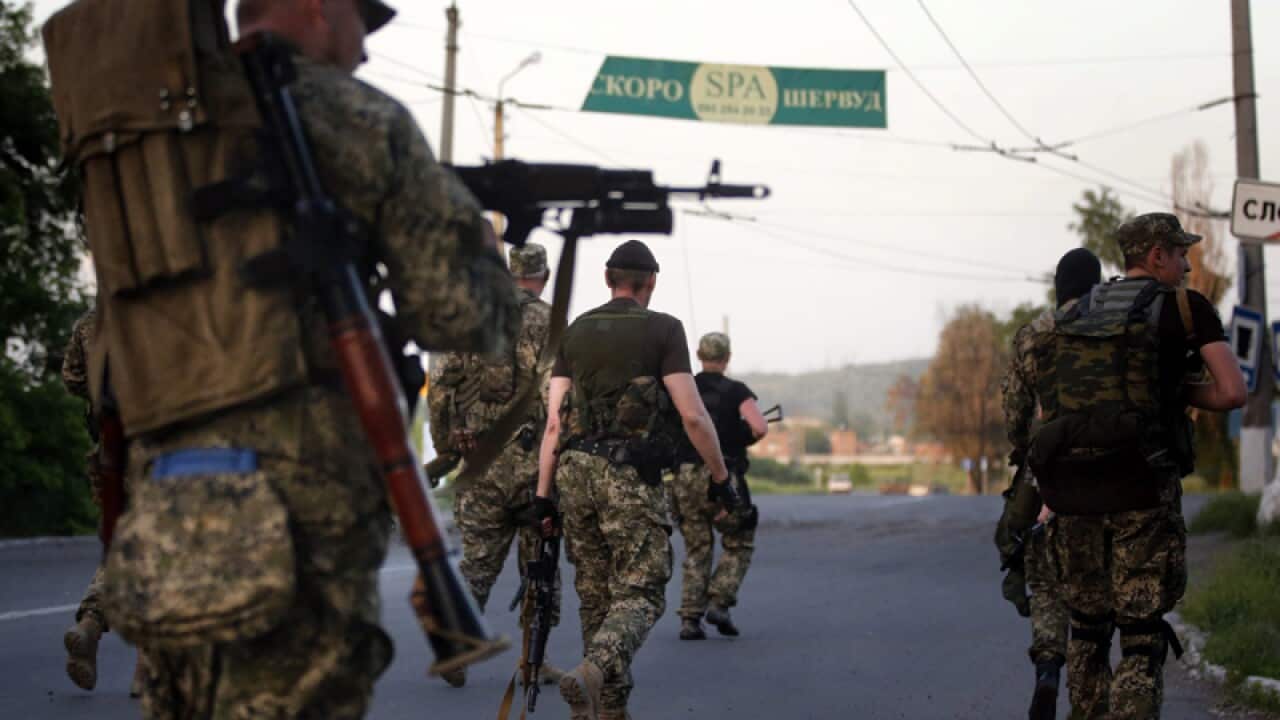
Meanwhile, separatists in the Donetsk region said they took back two roadblocks from government troops in a pre-dawn operation south of the rebel-held city of Sloviansk, Russia's Interfax news agency reported.
Russian Foreign Minister Sergei Lavrov told Interfax that the ongoing crisis would force Russia to rethink its ties to the European Union and NATO, noting that Western sanctions against Russia sparked by accusations of Russian involvement in the region do not help bring stability.
"We have to seriously check where we have agreement and where there are differences," he said.
Share


