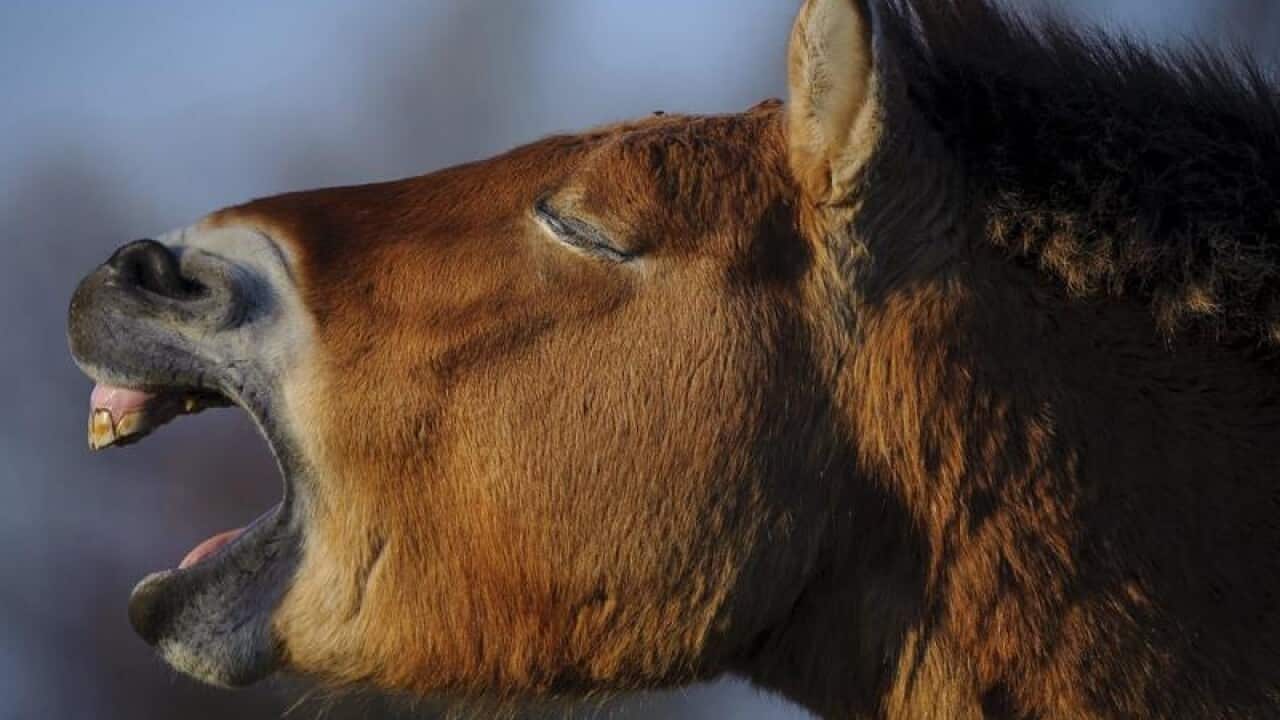
It may come as a disappointment to equine enthusiasts, but a new genetic study has found that no truly wild horses still exist and that a population inhabiting Mongolian grasslands actually is a feral descendant of the earliest-known domesticated horses.
Przewalski's horse, now numbering roughly 2000 in Mongolia, was long thought to be the last wild horse - meaning no history of domestication - unlike other free-roaming horses like the mustangs of the western United States that descended from steeds brought to North America centuries ago by Spaniards.
But researchers said on Thursday an examination of the genomes of dozens of ancient and modern horses concluded that Przewalski's horse, saved from extinction in the 20th century, descended from horses domesticated in northern Kazakhstan some 5500 years ago by people in what is called the Botai culture.
The research showed that the Botai culture offers the earliest-known evidence for horse domestication, but that their horses were not the ancestors of modern domesticated breeds.
"The world lost truly wild horses perhaps hundreds, if not thousands of years ago, but we are only just now learning this fact, with the results of this research," said University of Kansas zooarchaeologist Sandra Olsen, one of the researchers.
News that makes sense
Your trusted source for staying up-to-date with the world around you. Get free daily news updates and analysis, straight to your inbox.
Przewalski's horse, named for a Russian who described them in the 19th century, is relatively small and stocky.
Like horses depicted in prehistoric cave paintings, it is dun-coloured with a dark erect mane.
The current population is descended from 15 individuals caught a century ago, with Przewalski's horse later reintroduced into the wild.
Some horses from the domesticated Botai herds escaped and became the feral Przewalski's horse, the researchers said.
The research was published in the journal Science.







