Just hours before the announcement was due, other hot names making the rounds in Norway were Congolese doctor Denis Mukwege and the Organisation for the Prohibition of Chemical Weapons (OPCW).
In line with tradition, the chairman of the Norwegian Nobel Committee, Thorbjoern Jagland, will reveal the laureate's name at 11:00 am (0900 GMT) at the Nobel Institute in Oslo.
And like every year, speculation has hit fever pitch in the run-up to the announcement as pundits try to guess which of the record 259 nominees will take home the prestigious honour.
"It's always difficult to make the right choice but the Nobel Committee had no trouble reaching an agreement this year," Jagland told AFP.
He refused however to be drawn on the Committee's decision, keeping his lips tightly sealed.
News that makes sense
Your trusted source for staying up-to-date with the world around you. Get free daily news updates and analysis, straight to your inbox.
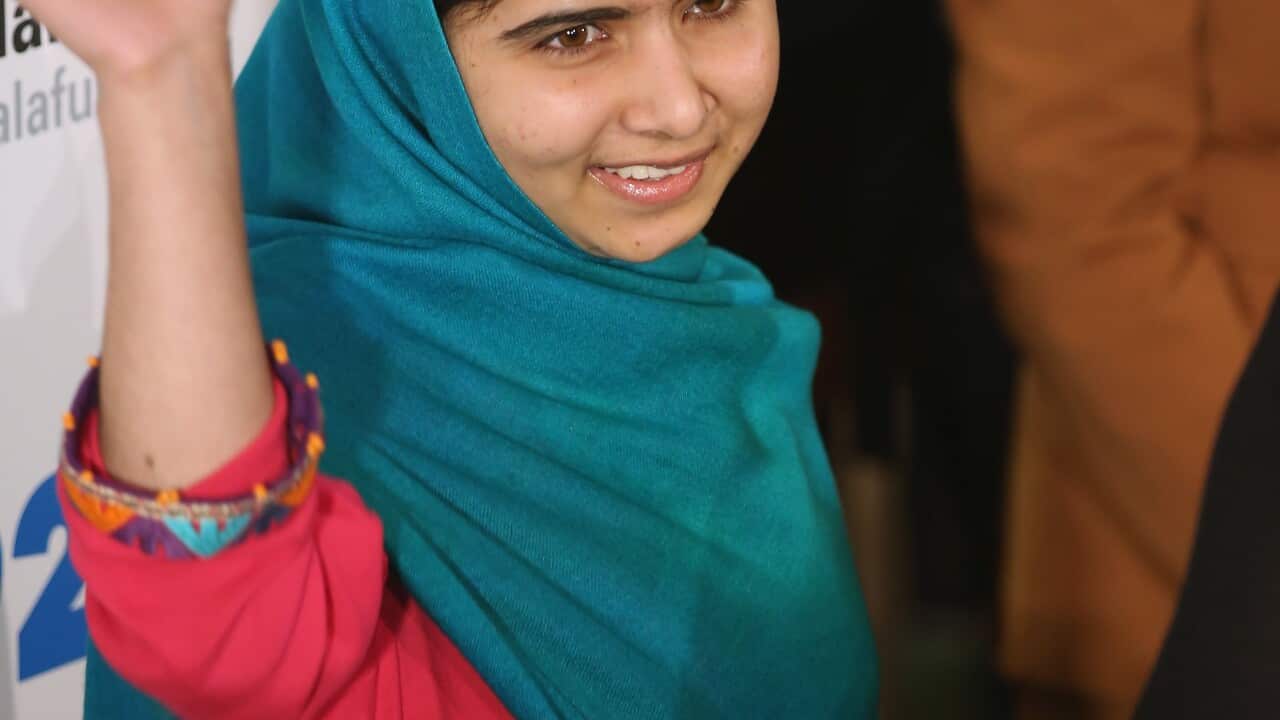
Experts and betting sites have put Malala at the top of the list of favourites. At just 16 years of age, she would be the youngest Nobel laureate of all time in any discipline if she were to win.
Malala defied the Taliban extremists who shot her in the head last year by surviving and continuing her campaign for girls' education on the global stage.
She was awarded the Sakharov Prize on Thursday by the European Parliament, but her tender age could work against her for the Nobel, some experts suggested.
"It could be a burden. Imposing that on a child might not be ethical," said Tilman Brueck, the head of Stockholm peace research institute SIPRI.
In order to ease some of the burden, the Committee could choose to honour girls' education by giving the prize to the United Nations Educational, Scientific and Cultural Organisation (UNESCO), or splitting it between Malala and UNESCO, Norwegian public broadcaster NRK suggested late Thursday.
Or it could turn in a completely different direction. On Thursday evening, Norwegian television reports presented The Hague-based OPCW -- tasked with supervising the dismantling of Syria's chemical weapons arsenal -- as a serious contender.
Among the other favourites is Mukwege, the doctor from the Democratic Republic of Congo who has been mooted as a possible laureate many times in recent years.
Mukwege, who was second behind Malala in the betting odds late Thursday, has set up a hospital and foundation to help the tens of thousands of women raped by local and foreign militants, as well as by soldiers in the army.
Yet other names circulating included that of Ales Belyatski, a jailed rights activist in Belarus, a country often described as Europe's last dictatorship.
A few months ahead of the Winter Olympics in the Russian city of Sochi, the five members of the Nobel Committee could also choose to shine the spotlight on the human rights situation in Russia, following what Human Rights Watch has described as the worst crackdown since the fall of the Soviet Union.
Activists such as Lyudmila Alexeyeva, Svetlana Gannushkina and Lilia Shibanova could be serious contenders, or the Russian rights group Memorial, which documents abuses dating from the Soviet era and those still happening today.
Meanwhile, outsiders for the peace prize include Kurdish politician Leyla Zana of Turkey, Guatamalan Attorney General Claudia Paz y Paz, and two Nigerian religious figures promoting interfaith dialogue, Catholic Archbishop John Onaiyekan and the Sultan of Sokoto, Muhammad Sa'ad Abubakar, the highest Muslim spiritual leader in Nigeria.
After making some unexpected choices in recent years -- US President Barack Obama in 2009 and the crisis-hit European Union last year -- the Nobel Committee could also decide to pull a surprise out of its hat.
The Nobel Prize consists of a gold medal, a diploma and a prize sum of eight million Swedish kronor ($1.2 million, 910,000 euros), to be shared if there is more than one laureate.







