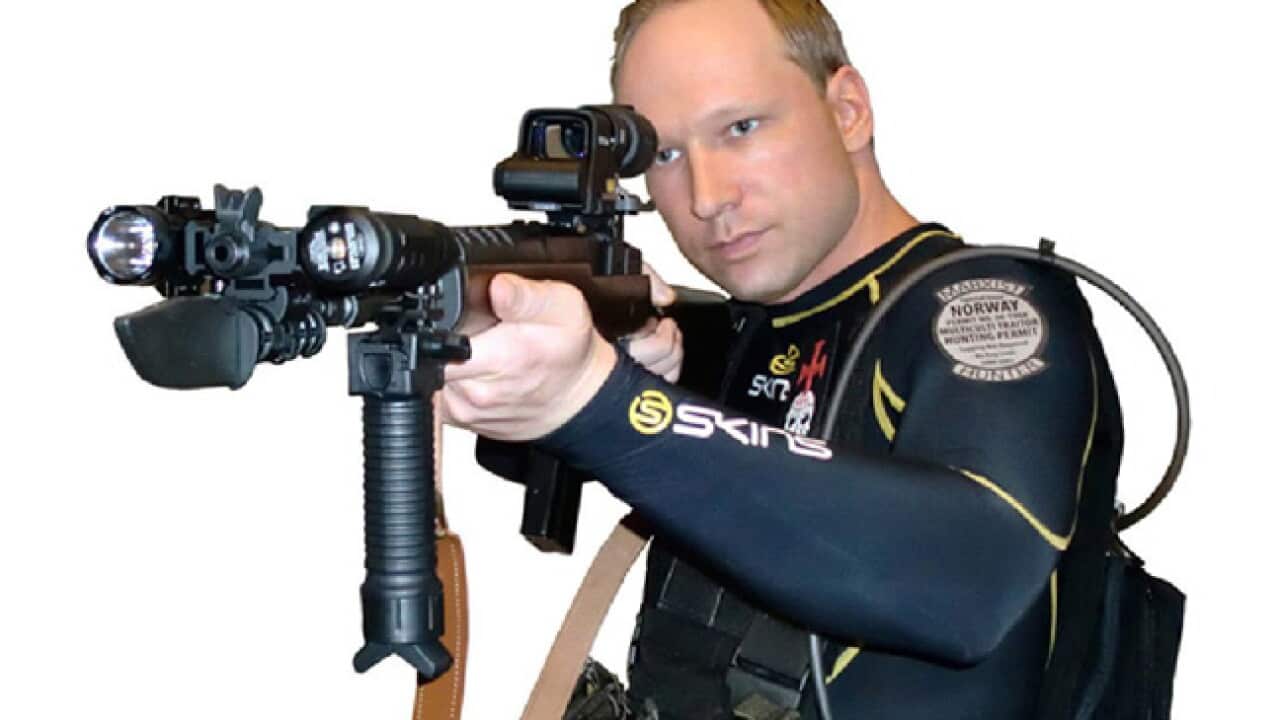
The man behind the deadly twin attacks in Norway on July 22 wants a Japanese psychiatrist to carry out his psychological evaluation, his lawyer was quoted as saying Tuesday.
"My client has expressed a wish for a Japanese expert. This wish has to do with the concept of honour. He believes that a Japanese person will understand him better than someone from Europe," defence lawyer Geir Lippestad told financial daily Dagens Naeringsliv.
Two Norwegian psychiatrists have been tasked with evaluating the mental state of 32-year-old rightwing extremist and confessed killer Anders Behring Breivik.
News that makes sense
Your trusted source for staying up-to-date with the world around you. Get free daily news updates and analysis, straight to your inbox.
They are set to make their recommendation by November 1 of whether he is sane enough to be tried for the attacks that killed 77 people and injured dozens of others.
"He has not said anything to me about refusing to talk to them," Lippestad stressed in the Dagens Naeringsliv interview.
In another interview, Lippestad said his client claimed he had spared the youngest people present on Utoeya island, where he killed 69 in a shooting rampage at a youth retreat run by the ruling Labour Party.
"I don't this it has anything to do with morals, but with the fact that they were to young to have been indoctrinated by the Labour Party. Therefore, he did not intend to kill the youngest children," Lippestad told the Dagbladet daily.
Thomas Hegghammer, a Norwegian expert on terrorism and Islamic extremism, told AFP in a recent interview that Behring Breivik's 1,500-page manifesto detailing his "crusade" against a "Muslim invasion" of Europe, showed he was fascinated by the Japanese and Korean cultures.
Based on the initial information available about Behring Breivik's reasoning and personality, several psychiatrists told AFP he was probably sane enough to be held accountable for his actions, meaning he could be tried and sentenced to prison instead of being locked up in a mental institution.
According to existing laws, he could be sentenced to up to 21 years behind bars if found guilty of "terrorism," although the sentence could be stretched to 30 years if he is also found guilty of "crimes against humanity."
On the afternoon of July 22, Behring Breivik first bombed government offices in Oslo, killing eight people, before going on an 80-minute shooting rampage on the nearby island of Utoeya, where the ruling Labour Party was holding a youth summer camp, killing another 69 people, many of them teenagers.
Norwegian police initially described the self-confessed mass-murderer as a "fundamentalist Christian" but his lawyer told DN he showed no signs of religious practice in jail.
Behring Breivik is held in isolation at the high-security Ila prison outside Oslo and his only contact with the outside world is prison staff.
According to the Verdens Gang tabloid, the prison's management has taken special security measures and runs poison tests on Behring Breivik's food.







