In Brief
- The government has announced it won't renew its membership with the European Southern Observatory.
- Some astronomers are concerned about the long-term impacts it could have on Australia's innovation and leadership opportunities.
Since the 1960s, Australia has been globally recognised as a leader in astronomical innovation. Now, engineers and astronomers say the country's at risk of being forgotten.
A defining moment in human history, the Apollo 11 mission to the moon in 1969 was made possible by Australian astronomers.
At the time, there were only three radio astronomy stations in the entire world which received a live broadcast from the moon through a specialised black and white slow scan television — two were in Australia.
Initially, Honeysuckle Creek in Canberra received the broadcast before NASA decided to switch to the Parkes Observatory in New South Wales, as they deemed its quality was better for transmitting.
Now, with the launch and return of the NASA-led Artemis II, history repeated itself as Australia was praised for its involvement, and career astronomers were excited about the future of astronomical research.
News that makes sense
Your trusted source for staying up-to-date with the world around you. Get free daily news updates and analysis, straight to your inbox.
However, some say they were caught off guard, and projects look uncertain, after the Australian government chose not to renew its 10-year membership with the European Southern Observatory (ESO).
The federal government says it is switching its priorities to Europe, having signed onto a deal with the Horizon program, but critics argue the Horizon deal won't cover large research infrastructure like telescopes.
When giving reasons for ending the ESO deal, the government earlier this month said it would prioritise investments in science and research that would generate tangible commercial outcomes.
A decade of discovery
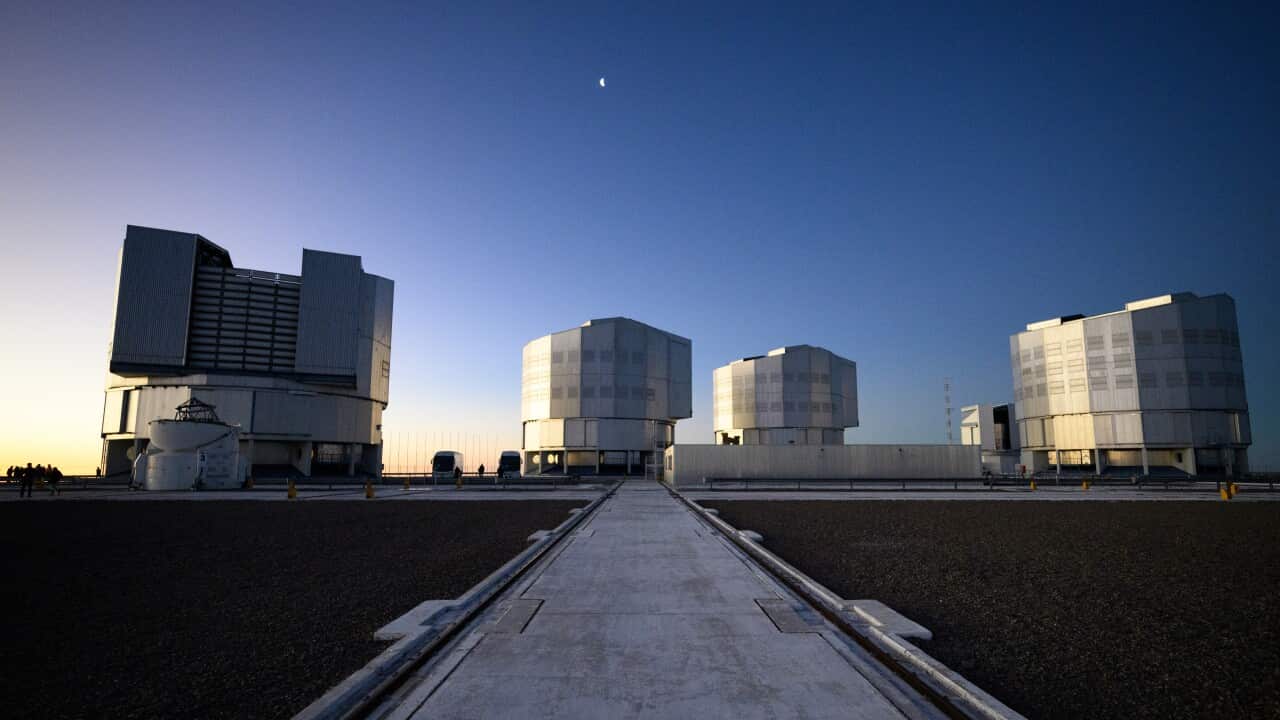
The ESO, established in 1962, is an intergovernmental research organisation that provides its member states with access to several major observatories located in the Atacama Desert in northern Chile. Among astronomers, it is highly regarded for its state-of-the-art facilities and location.
In 2017, the government committed to a 10-year strategic partnership with the ESO, which is now set to end next year.
The deal allowed Australian astronomers a degree of access not only to observation facilities, but to bid for contracts for technological developments that were limited to ESO member states.
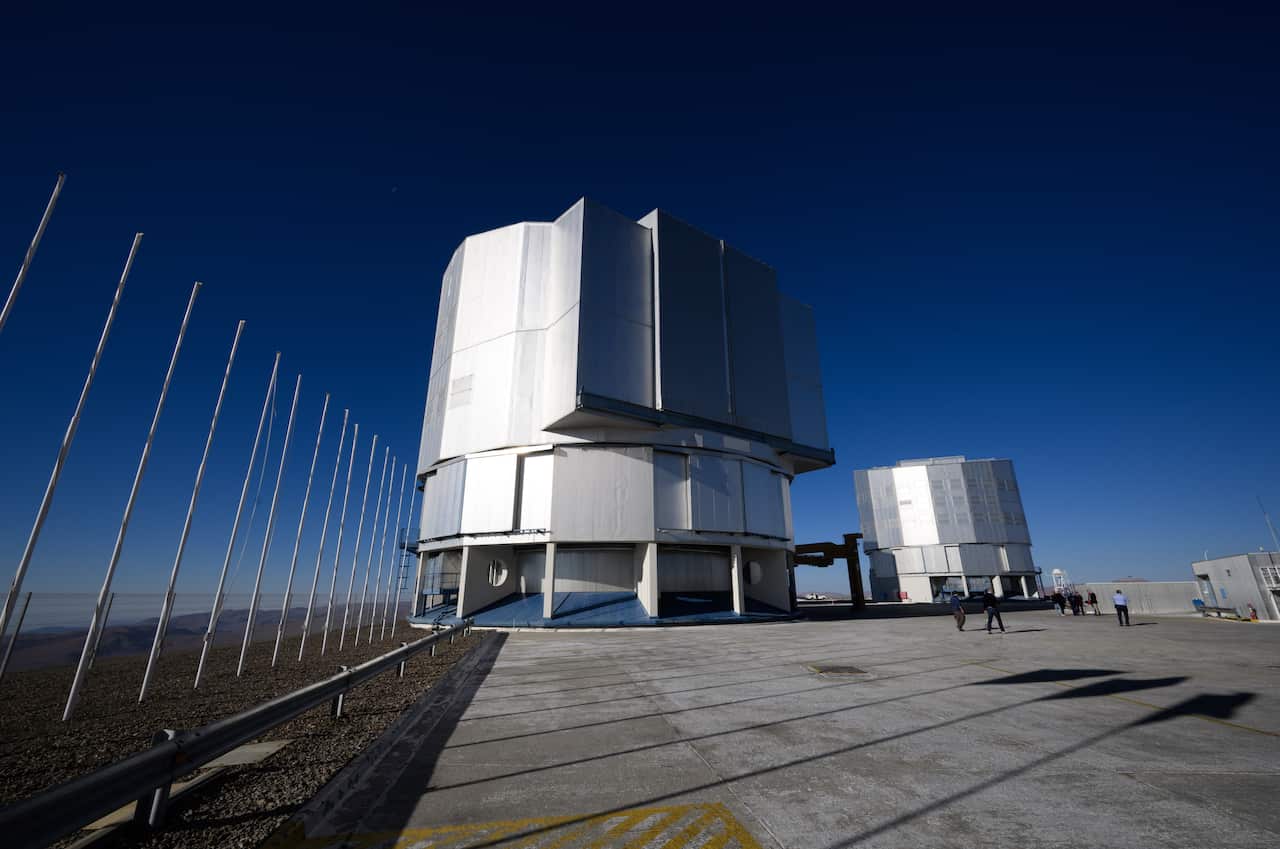
That access has been significant because, while Australia is one of the only places where the Milky Way is visible from the ground, the flatness of the landscape is a barrier to some observations.
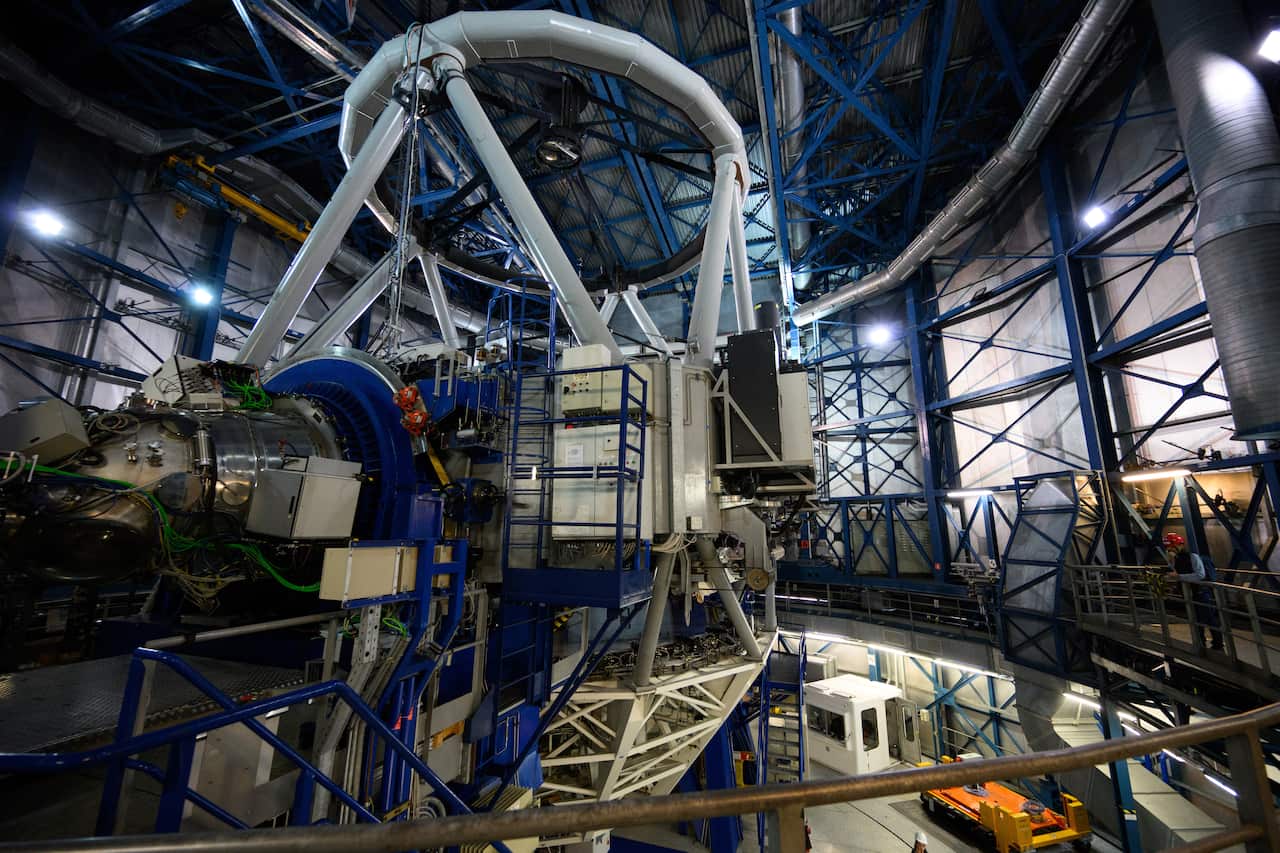
Astronomers say having access to ESO facilities, such as the Very Large Telescope in Chile is crucial, as it provides imagery and data second only to the Hubble Space Telescope.
A sharp shift in Australia's scientific strategy
Last month, the Department of Industry, Science and Resources announced that Australia and the European Union (EU) had begun formal treaty negotiations on Australia's access to joint research with the EU and associated countries through Horizon Europe.
Horizon Europe is said to be the world's largest pooled research funding program for international science and innovation collaboration.
While the scientific community initially welcomed the partnership, experts now say that Australia ending its ESO membership reflects a lack of understanding about fundamental research and development.
Virginia Kilborn, inaugural chief scientist at Swinburne University of Technology, said the ESO partnership has allowed Australia to lead projects and have equal access to facilities as other member states, but that opportunity is now lost.
"It really seems like a missed opportunity because we're at that point where that investment is going to have the biggest return," Kilborn told SBS News.
"We've done all the hard work. This was where we were going to get the biggest return. And unfortunately, this decision means that we're sort of foisted into some uncertainty about where optical astronomy sits within Australia for the next decade."
As part of the ESO deal, professional astronomers and engineers have been able to bid on projects and build up instrumentation programs, which Kilborn said was identified as a top priority in the last decade.
Last year, over 550 astronomers in Australia completed a two-year process to plan for the next decade. Kilborn said they found around one-third or more of astronomers in Australia relied on optical facilities to do their work and the group advised the government to maintain its membership with ESO.
"We're in the driving seat to be able to take on the projects for the future and take on international projects where we're leading design and having a voice in that as well ... It doesn't send a great signal to the international astronomy community when our own government is not backing the partnership that's been recommended."
The short-term decision in a long-term game
Andrew Hopkins, professor of astronomy at Macquarie University, has been involved in astronomy research for nearly 30 years. His work relates to galaxy evolution; understanding how galaxies like the Milky Way have formed, evolved and changed over time.
To do this, he uses telescopes placed around the world and in space to bring data together from facilities that observe different kinds of wavelengths. By using a varied range of telescopes, scientists can get a detailed picture of how galaxies form their stars, as well as how supermassive black holes form and impact the galaxies they live in.
Hopkins said he understands that the government wants to see great discoveries that result in immediate financial returns, but said that what gets lost in the conversation is the importance of fundamental research.
"It's the kind of activity that has to go on without necessarily aiming for very direct technological applications or business outcomes, because you just don't know where those outcomes are going to come from."
For the astronomer, the value of recognising this is its capacity to bring people together and share knowledge across a wide variety of domains and in ways that cannot be anticipated.
"You can't pick a winner, you can't say, 'Oh, well, I'm going to fund this guy's physics research because I can see 30 years down the track that's going to have a massive payoff.' No, that's not how it works. But what it does do is expand the capacity for future discoveries," he said.
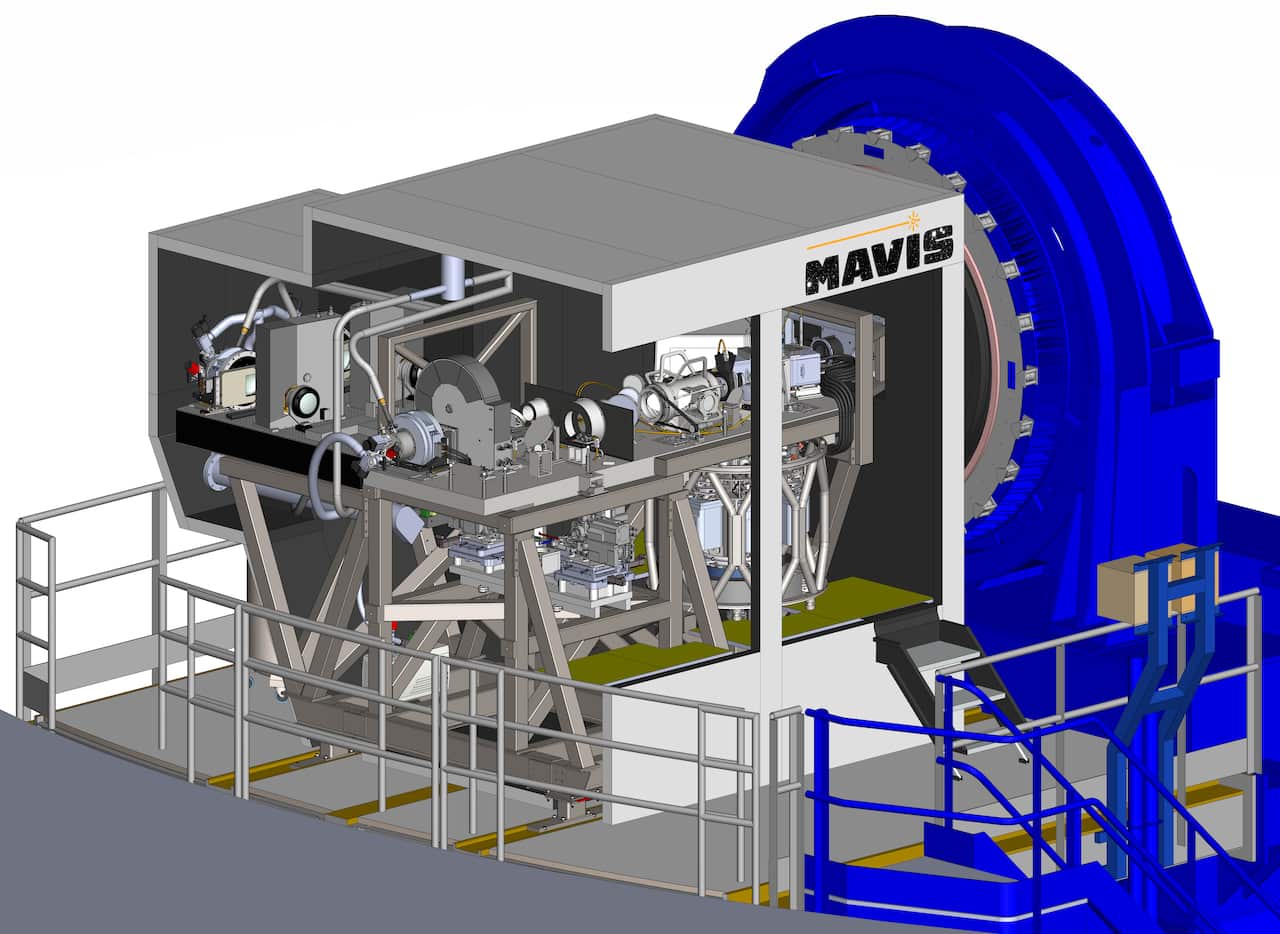
Since 2022, researchers at Macquarie University and other universities across the country have operated a project known as MAVIS, which they say is a revolutionary new instrument for the European Southern Observatory.
Hopkins said this instrument can allow for the sharpest optical images from ground-based facilities and is an example of the kind of technology projects that Australia can only get as a partner with ESO.
He said Australia could struggle to plan for the future if researchers can't guarantee access to projects like this.
"Without the opportunity to do these kinds of technology developments, there will be a much more limited opportunity for Australian researchers to be able to take on the scale of project like this that has flow-on effects for the environment that our homegrown researchers can take advantage of, can learn from, can build careers around."
The 'real' cost for astronomers
For early-career astronomers and engineers, the consequences of Australia no longer being part of ESO are said to be significant.
Claudia Lagos, a professor and senior principal research fellow at the University of Western Australia and a former ESO fellow, warned of "brain drain" and said the long-term impact of this decision will mean young people leaving Australia to pursue their careers elsewhere.
That could then have a flow-on effect with a lack of technological development, leaving leadership in the country behind, she said.
"I've talked to a lot of young people, Australians who are abroad currently, and with this decision, they're thinking of not coming back because they feel there's not going to be a clear future for them because they won't be able to be leaders in their respective fields."
Lagos said the loss of leading major scientific enterprises would have a "knock-on effect" because eventually, it may also stop development in areas of engineering and optical science.
One of the first large programs to be approved within the 10-year ESO partnership was Lagos' Middle Age Galaxy Properties with Integral Field Spectroscopy (MAGPI) survey, a study of galaxies and their transformations over the past four billion years.
Lagos said without continued membership, the team is unable to use ESO telescopes, which were vital to the initiative.
"Basically, where we're at, we have to abandon a lot of these projects."
Government stands by its decision
In a statement provided to SBS News, Industry and Innovation Minister Tim Ayres acknowledged the decision would "be difficult to hear for researchers, scientists and engineers who may be impacted".
"The Australian government is focused on making sure every dollar of Research and Development investment delivers maximum possible value for Australians. That means prioritising investments that generate new opportunities for the research sector as a whole."
He said that's why Australia will move towards the Horizon program, which he referred to as "the world's largest research and development fund, valued at $155 billion".
"Fast-tracked treaty talks should see Australian scientists, researchers and businesses benefiting from that global pool of talent and funding from 2027."
Australian astronomers and industry will continue to have access to the existing $129.2 million strategic partnership arrangement for ESO until late 2027.
The government said it will consult with the sector on next steps over the coming weeks.
For the latest from SBS News, download our app and subscribe to our newsletter.







