
The world is, broadly, seeing an increasing commitment to ideas like closing the gender pay gap and supporting women in leadership positions.
However, in reality, women remain underrepresented in political leadership even today.
In a June report published by UN Women, out of the 193 United Nations member states, 113 have never been led by a female politician.
That means more than half the world's countries have never had a woman at the helm — and among them is the United States.
But with vice-president Kamala Harris having secured the Democratic Party's presidential nomination for the November election, that might soon change.
News that makes sense
Your trusted source for staying up-to-date with the world around you. Get free daily news updates and analysis, straight to your inbox.
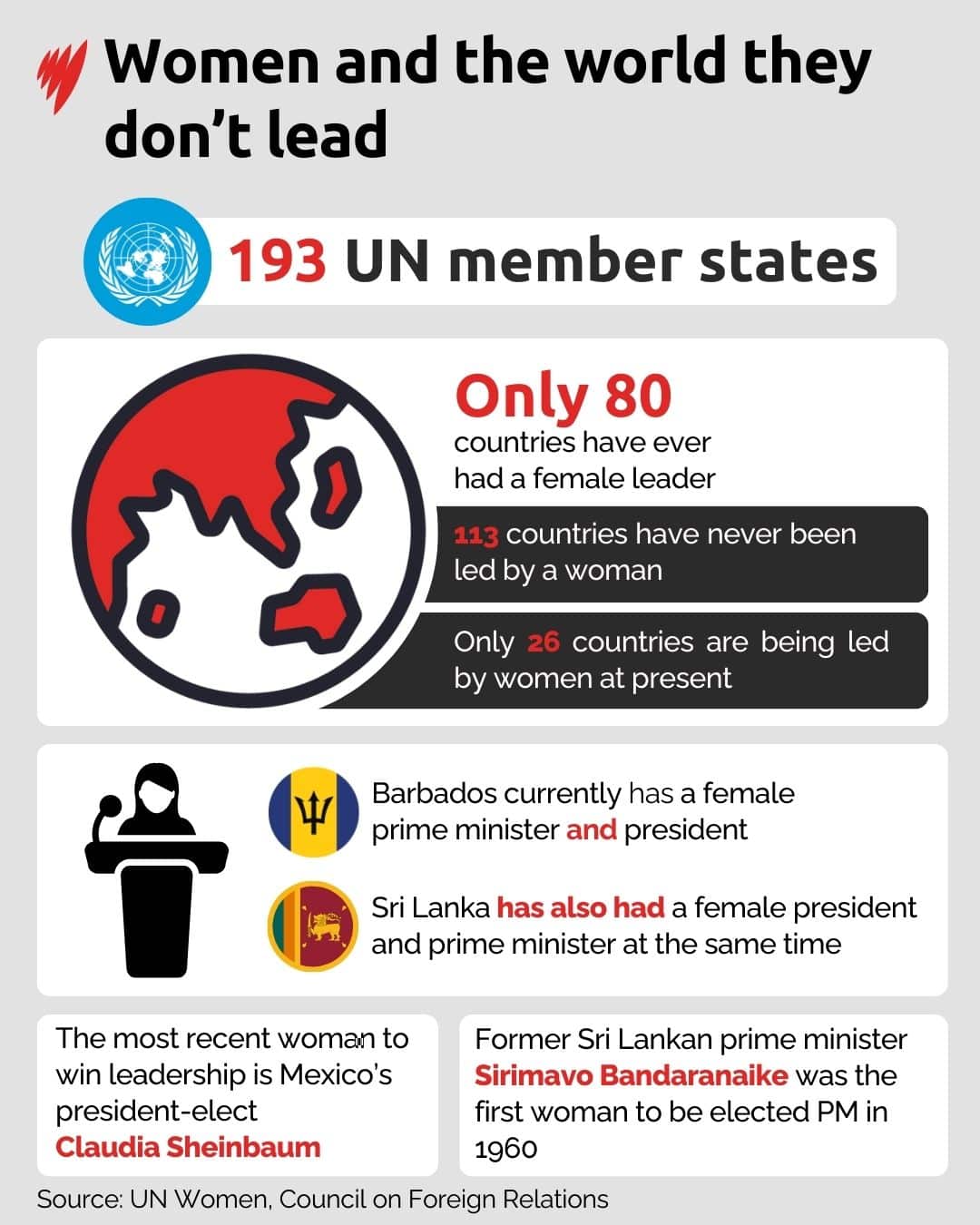
Just 26 of the 193 UN member states are currently led by women. That includes heads of state (including presidents), heads of government (such as prime ministers), and those holding a dual role.
The US' neighbour, Mexico, is the latest to join this list of countries.
Claudia Sheinbaum, the president-elect, is the first-ever woman elected to Mexico's highest office. She will take power on 1 October.
Europe has had the most number of women in positions of national leadership.
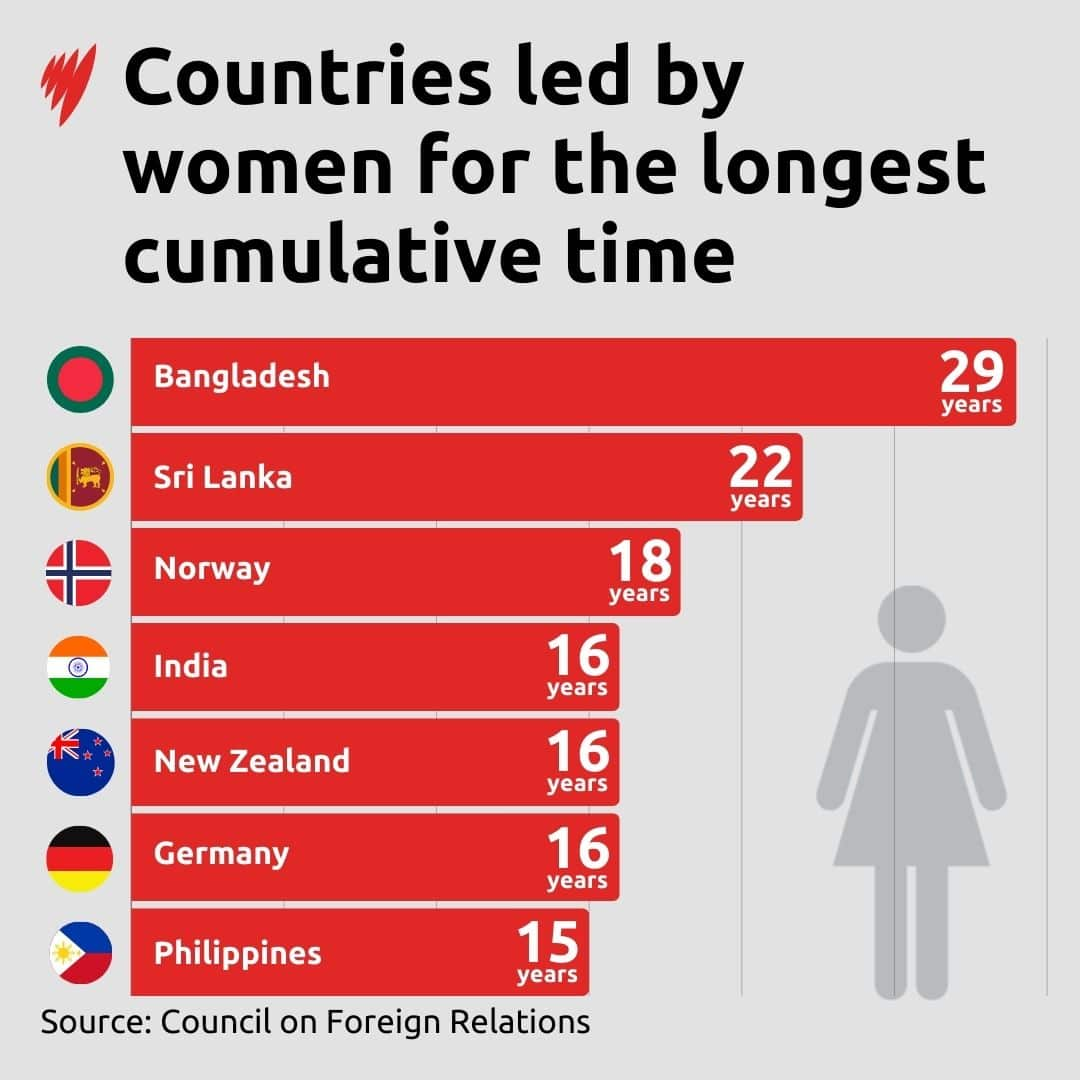
Bangladesh tops the list of countries where women have served in the highest office for the greatest number of years.
Australia has had only one female prime minister, Julia Gillard, while New Zealand has had three — the most recent being Jacinda Ardern.
Pakistan’s former prime minister Benazir Bhutto — who served twice for periods in both the 1980s and 1990s — was the first woman to head the government of a Muslim-majority nation. And like Ardern, she also gave birth while in office.
In its report titled Women Political Leaders 2024, UN Women Executive Director Sima Bahous said: “Our work is guided by the belief that when women lead, the world is better for all people and the planet.
“As many countries head to the polls this year, we all must put women first, at the pinnacle of power, where and when it matters the most. Women’s equal participation in governance and leadership is key to improving lives for all.”







