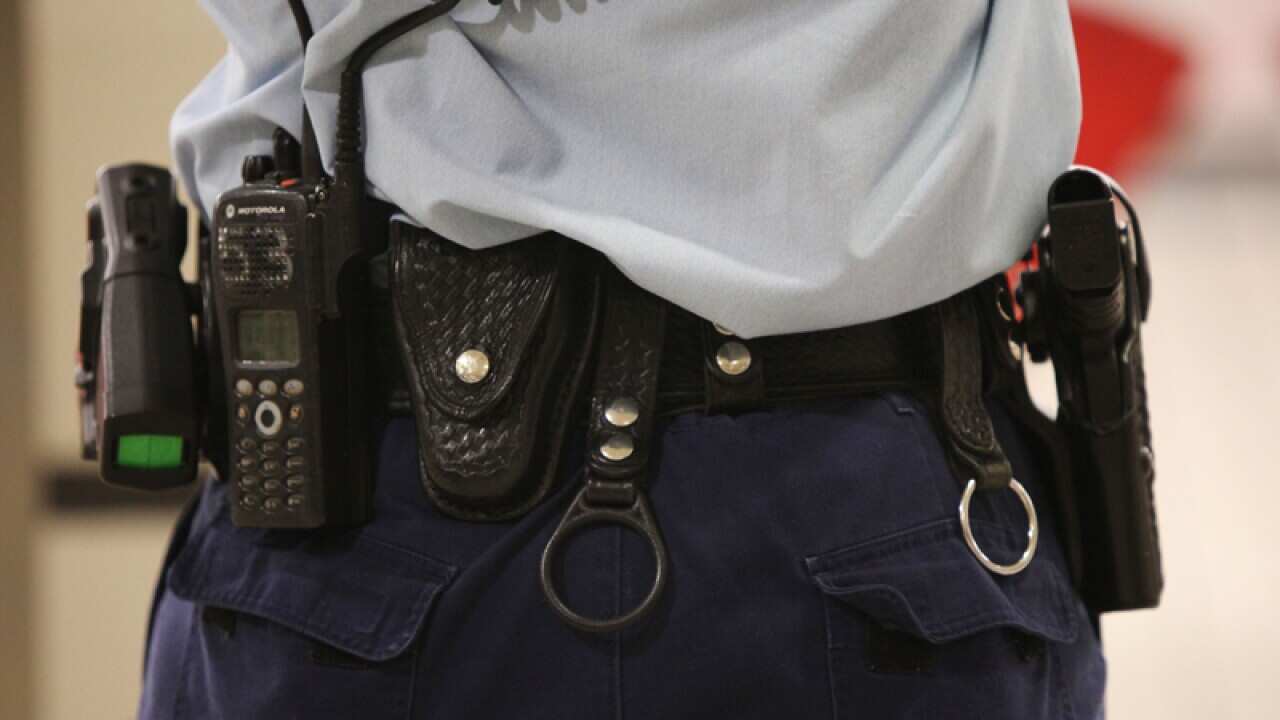
A NSW police officer who shot dead a mentally-ill young man and then refused to testify at his inquest must now give evidence after he lost an appeal.
Earlier this year, Senior Constable Andrew Rich refused to enter the witness box at the Sydney inquest into the death of 24-year-old Elijah Holcombe.
Sen Const Rich shot Mr Holcombe dead in a laneway at Armidale in northern NSW on June 2, 2009 after Mr Holcombe allegedly threatened him with a bread knife.
Mr Holcombe, who suffered from paranoid delusions and was afraid of police, had not committed any crime and had checked himself out of hospital earlier that morning.
The inquest has heard Sen Const Rich chased after Mr Holcombe and fired his weapon within seconds of ordering Mr Holcombe to put the knife down.
News that makes sense
Your trusted source for staying up-to-date with the world around you. Get free daily news updates and analysis, straight to your inbox.
Sen Const Rich's assertion that he shot Mr Holcombe in self-defence was bolstered by a decision by the Director of Public Prosecutions (DPP) last year not to charge him over the shooting.
When an inquest into Mr Holcombe's death resumed before NSW State Coroner Mary Jerram in March this year however, Sen Const Rich refused to give evidence.
He cited several reasons, including that the Commissioner of Police might take action against him, that he might face civil liability over Mr Holcombe's death or the DPP might use his evidence to pursue a case against him.
Ms Jerram ordered Sen Const Rich to give evidence, saying the shooting of a mentally-ill young man was "sadly, not an isolated incident".
"Questions arise inevitably of whether police are being sufficiently trained in and made aware of the discrete needs of mentally-ill persons, and methods of dealing with them," Ms Jerram said in her judgment last April.
"Was Senior Constable Rich aware that Elijah had not been scheduled under the Mental Health Act and had left the hospital voluntarily?
"Did Senior Constable Rich believe that he had a right ... to detain Elijah and return him to the hospital?
"If not, why did he chase after Elijah?
"These are significant issues which require further exploration."
Sen Const Rich appealed against the coroner's decision in the Supreme Court, which dismissed his case in July.
He then took his case to the Court of Appeal, but in a judgment handed down on Monday, the three-judge panel found Ms Jerram had properly considered the question of risk from Sen Const Rich's potential evidence.
They dismissed the constable's appeal and the inquest into Mr Holcombe's death is expected to resume next year.







