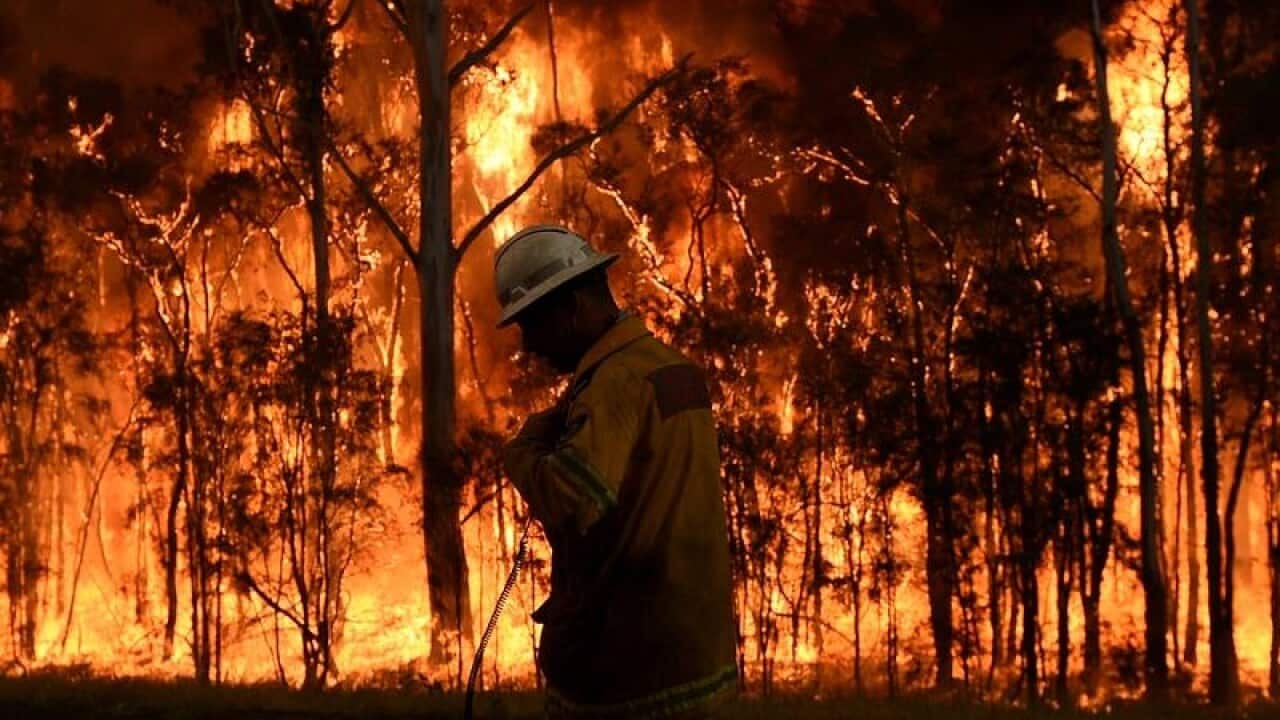
Drinking water and air pollution are tipped to get worse due to increased bushfire activity in NSW, a climate expert says.
Ecologist Lesley Hughes predicts the state will need to double its 80,000 firefighting force within 13 years to adapt to the changes on the front line.
But she expects the impact to extend beyond the charred landscape as smoke packed with irritants and cancer-causing chemicals also increases.
Prof Hughes co-authored the Climate Council's latest report, released on Tuesday, which predicts earlier, more frequent and more dangerous bushfires.
More people with respiratory and heart conditions will have problems, whether the smoke comes from increased hazard reduction burns or more wild bushfires, she says.
News that makes sense
Your trusted source for staying up-to-date with the world around you. Get free daily news updates and analysis, straight to your inbox.
"There is a lot of evidence now correlating ambulance call-outs and emergency room admissions with the amount of smoke in the air," she told reporters in Sydney on Tuesday.
Nutrient and sediment run-off into drinking water catchments will also increase as fire wipes out vegetation, she says.
The report says the current fire season, which started a month early due to a warm and dry winter, is an indication of the long-term trend of climate change's impact on bushfires.
More than 90 fires broke out on September 23 when peak temperatures across the state were up to 12C above the norm.
NSW this year recorded its first two 40C September days.
Even with a wetter than usual summer on the cards, the risk will not be mitigated, with rainfall to increase vegetation, which will fuel worse bushfires when drier conditions return.
"The relationship between rainfall and bushfire risk is complex," she says.
Prof Hughes' report says the cost of bushfire is likely to double in the next three decades to about $100 million.
However, that figure does not factor in climate change or the impact to the combined $1 billion budget of NSW's two main fire services, Fire & Rescue NSW and Rural Fire Service.
The report is the Climate Council's 11th report on Australia's bushfire activity.







