
(Transcript from World News Radio)
In New Zealand, the government has just bought one of the most significant battle sites of the country's land wars of the 1800s that pitted British forces against Maori warriors.
More than 2000 Maoris may have died in the wars, which lasted over a quarter of a century.
The Battle of Orakau was a major one, and, a century and a half later, the government is going to help keep alive the memory -- of what was won and what was lost.
Ron Sutton has the story.
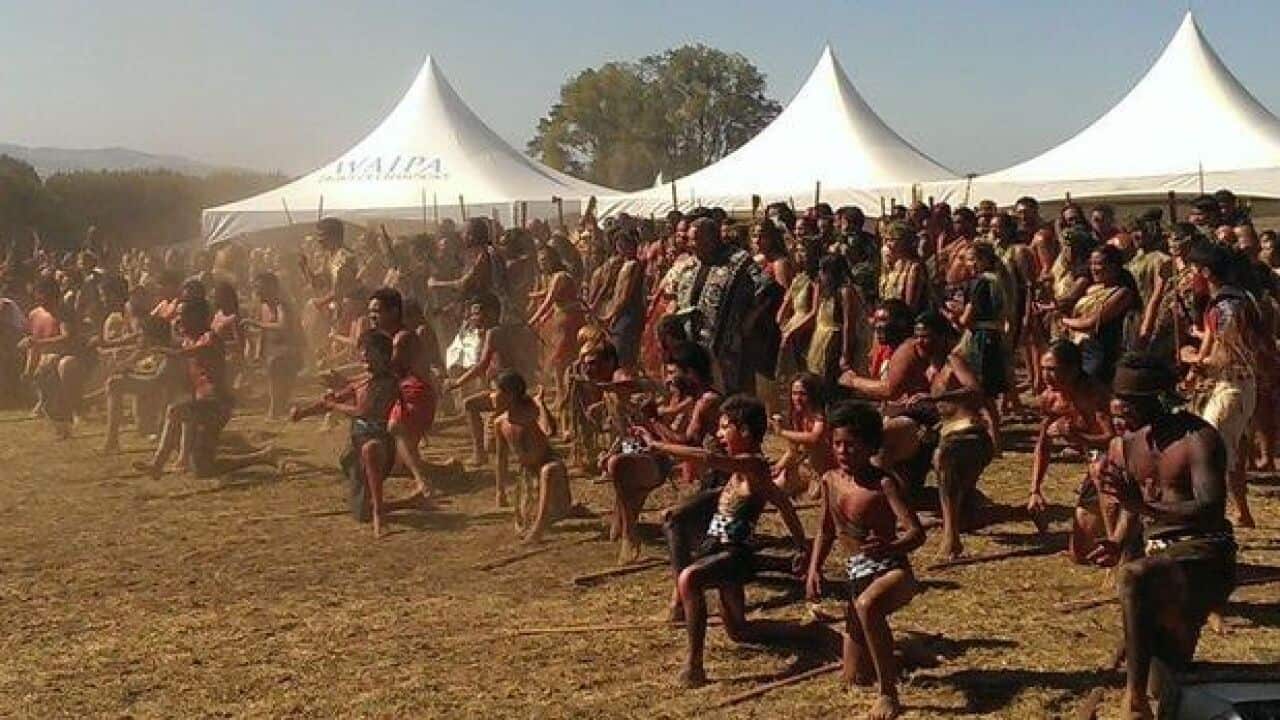
The Battle of Orakau was a definitive one in the New Zealand Wars of the mid-19th century, once known as the Maori Wars or the Maori Land Wars.
Up to 1400 British and colonial soldiers overwhelmed 300 Maori fighters led by legendary chief Rewi Maniapoto in what a silent film would immortalise as Rewi's Last Stand.
Now, New Zealand's government will help immortalise that stand in real life after purchasing the 10-hectare property from farmers so it can become a memorial to all who died.
The president of the Battle of Orakau Heritage Society, Kaawhia Te Muraahi, says he is thrilled at the government's gesture.
"It says a lot, I think. I think it says that the Crown is definitely interested in our heritage as a country and how that heritage and our past informs where we are today in moving forward. I think the purchase of the battle site is a significant move in the maturing of our nation and our identity as a nation, firstly. Secondly, it's a sign of warming of relationships between the Crown and our Maori tribal groups and leaders as well."
Mr Te Muraahi says the Maori defeat, both in the battle and the wars, dismantled the existing Maori economy.
Yet, he says, it also ushered in a new agricultural economy that was absolutely significant in the nation-building of New Zealand as it is today.
Tribal leaders and the Battle of Orakau Heritage Society have been involved in consultations with the government for the past three years over what could be done with the site.
Early plans have called for building a memorial, at a cost of just under three-million dollars.
Mr Te Muraahi says it is not to be just a memorial to what happened on the site, which lies south of Hamilton on New Zealand's North Island.
"We want to build a memorial that's in line with the significance of the battle, that edifies not war but edifies the importance of human life, and racial understanding, and understanding that there are different views but that wars never, never ... should never be a part of the solution-seeking process. We want the memorial to be something that speaks to the people of where we've come from and where we could possibly be going to into the future."
A year ago, New Zealand Prime Minister John Key attended the 150th-anniversary commemorations of the battle.
At the time, he said the Government would consider buying the battle-site property.
The landowners were a farming couple, Chris and Sue Kay, who understood the site's historical value and accommodated the sale to the government.
During last year's election campaign, Prime Minister Key also left the door open to another potentially highly significant gesture to address the New Zealand Wars.
Ahead of the September elections -- which would return him to office -- he was asked about the possibility of a national holiday to remember the victims.
"It's a mission I'll obviously happily take away. If we're still the government post-September the 20th, we'll have a look at the issue. And the challenge is whether we can realistically find another public holiday, or whether we can change one for it. I don't know. That's something we'd have to get advice on."
Kaawhia Te Muraahi, whose group initiated the idea back in 2013, says the holiday would be to remember the colonial soldiers who died, as well as the Maoris.
"If it's good enough for us as a country to acknowledge our soldiers fallen offshore, it's absolutely, absolutely imperative that we do so for all of those who fell on our own lands. This is about our nation-building. It's about being absolutely honest with who we are and where we've come from."





