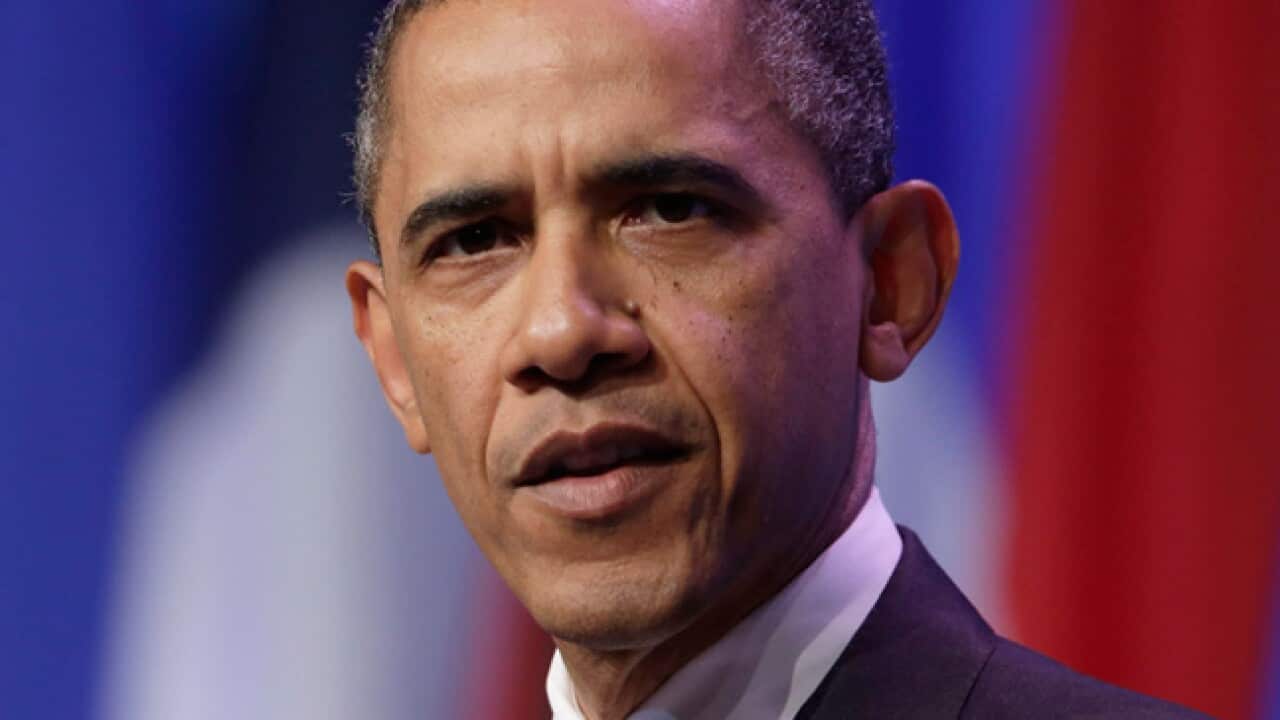
US President Barack Obama suspended the threat of deportation against hundreds of thousands of young illegal immigrants, delighting crucial Hispanic voters ahead of November's election.
"These are young people who study in our schools, they play in our neighborhoods... they are Americans in their heart, in their minds, in every single way but one... on paper," Obama said at the White House.
The scheme applies to people brought to the United States before the age of 16 who are currently under 30, are in school or have graduated from high school, or have served in the military and have not been convicted of a felony.
News that makes sense
Your trusted source for staying up-to-date with the world around you. Get free daily news updates and analysis, straight to your inbox.
"Put yourself in their shoes, imagine you have done everything right your entire life... only to suddenly face the threat of deportation to a country you know nothing about," Obama said.
"This is not amnesty, this is not immunity... this is the right thing to do," said Obama, who was unusually heckled by a journalist from the conservative Daily Caller website during his remarks.
Although affected youths will be able to apply for work permits, they will not be granted permanent residence status or a path towards citizenship.
Homeland Security Secretary Janet Napolitano said that only youths who presented no threat to national security would be eligible for the scheme.
Obama's decision will go some way to enshrining the goals of the DREAM Act, legislation backed by the White House that could lead to young illegal immigrants gaining permanent residency.
The bill, opposed by Republican presidential candidate Mitt Romney and conservatives on Capitol Hill, has repeatedly failed to pass Congress and become law.
There was no immediate reaction from Romney from the plan, which appears to represent a shrewd political move that could further box in the Republican on immigration, a crucial issue in swing states like Colorado or Nevada.
But other Republicans accused Obama of overstepping his powers and of bypassing the collective will of elected lawmakers.
"Americans should be outraged that President Obama is planning to usurp the constitutional authority of the United States Congress and grant amnesty by edict to one million illegal aliens," said Iowa Representative Steve King.
"There is no ambiguity in Congress about whether the DREAM Act's amnesty program should be the law of the land.
"It has been rejected by Congress, and yet President Obama has decided that he will move forward with it anyway."
Senator Marco Rubio, seen as a possible future Republican presidential candidate, has a difficult line to walk on immigration between a hawkish Republican party and a desire not alienate Hispanic voters.
He called the plight of illegal immigrants brought to America as children "a difficult balance to strike" but said that while Obama's move was welcome to those affected, it would make finding a permanent solution more difficult.
"By once again ignoring the Constitution and going around Congress, this short-term policy will make it harder to find a balanced and responsible long term one," Rubio said.
Officials said that the move was not a permanent solution to the status of illegal immigrants but offered a two-year deferment of deportation proceedings, which could be extended by a further two years on expiry.
Despite sparking conservative anger, Obama's decision was however welcomed by immigration reform groups.
"The president has given us a reason to believe in him" said Cesar Vargas, managing partner of DRM Capitol Group, which fights for DREAM legislation around the United States.
"We will ensure that people go out to vote to keep this executive order alive."
Officials said that the measure could impact around 800,000 youthful illegal immigrants. The Pew Hispanic Center said up to 1.4 million children and young adults could benefit.
There are 11.5 million illegal immigrants living in the United States, and efforts to deal with their status -- and provide a path to citizenship -- have foundered in recent years over sharp political divisions.
In an NBC/Wall Street Journal poll last month, Obama led Romney among registered Hispanic voters, 61 to 27 percent.
Obama promised to work towards comprehensive immigration reform, a goal of the Hispanic community, when he ran for office but has made little progress. Now the president is pledging to tackle the issue if he wins a second term.







