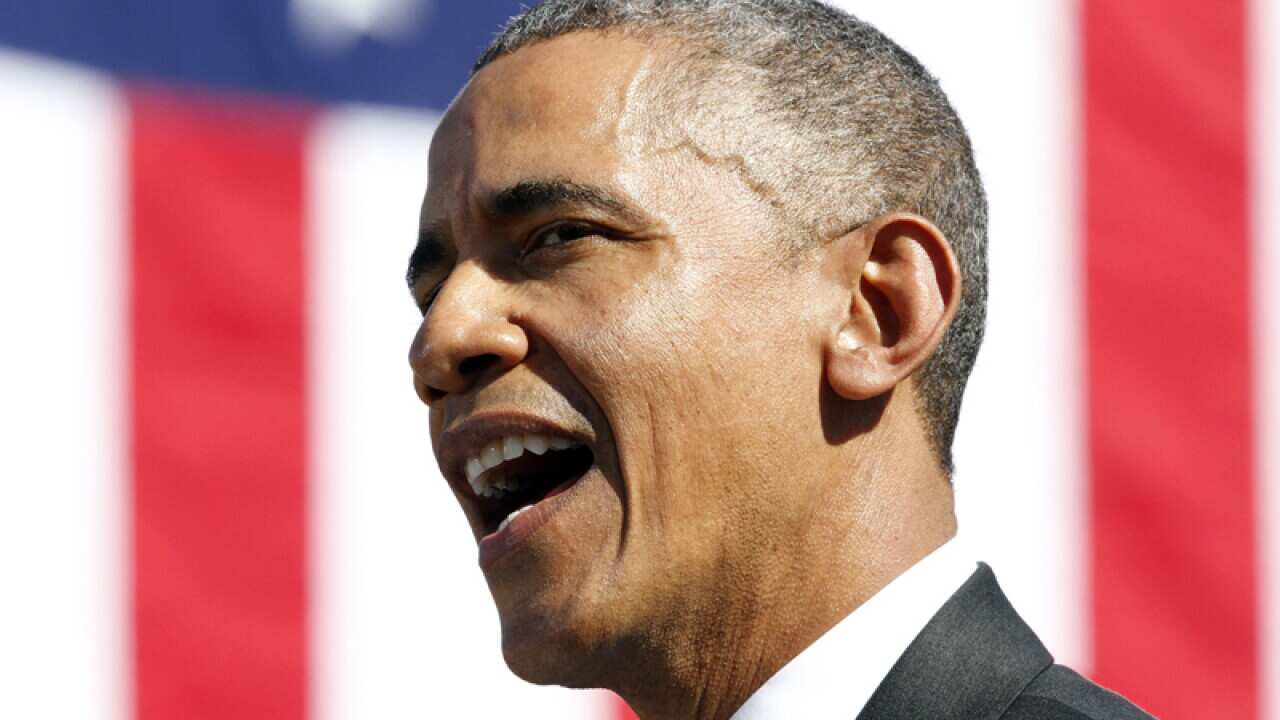
US President Barack Obama has tried to rally a new generation of Americans to the spirit of the civil rights struggle, warning their march for freedom "is not yet finished".
In a forceful speech in Selma, Alabama on the 50th anniversary of the brutal repression of a peaceful protest, America's first black president denounced new attempts to restrict voting rights.
And he paid stirring tribute to the sacrifice of a generation of activists who marched so that black Americans could enjoy civil rights and opened the road that eventually led him to the White House.
"We gather here to celebrate them," he declared, standing on the spot where Alabama state troopers confronted the marchers.
"We gather here to honour the courage of ordinary Americans willing to endure billy clubs and the chastening rod, tear gas and the trampling hoof; men and women who despite the gush of blood and splintered bone would stay true to their North Star and keep marching toward justice."
News that makes sense
Your trusted source for staying up-to-date with the world around you. Get free daily news updates and analysis, straight to your inbox.
After the Selma march and others like it, President Lyndon Johnson passed the Voting Rights Act that sought to prevent racist officials from excluding African Americans from the ballot.
That law, Obama said, is again under threat from state governments seeking to tighten voter registration rules in a bid to restrict the size of the franchise.
"How can that be?" he asked, noting that previous Republican presidents Ronald Reagan and George W. Bush - who was present for the speech - had renewed it.
"One hundred members of Congress have come here today to honour people who were willing to die for the right to protect it," he declared.
"If we want to honour this day, let those hundred go back to Washington and gather four hundred more and together pledge to make it their mission to restore the law this year.
"That is how we honour this bridge," he said, in front of a crowd estimated at 40,000, more than twice the population of what is still a very poor and mainly black town.
Obama also addressed recent incidents in which police killings of unarmed black men and teenagers had triggered protests and accusations of deep-seated official racism.
"We just need to open our eyes and ears and hearts, to know that this nation's long racial history still casts its long shadow upon us. We know the march is not yet over, the race is not yet won," he said.
On March 7, 1965, some 600 peaceful activists were attacked by police with clubs and tear gas at the bridge, a seminal moment in America's democracy.
Obama was introduced by a man he described as his hero, Georgia Congressman John Lewis, who as a young man was one of those assaulted on the bridge as he attempted to march.
"We come to Selma to be renewed, we come to be inspired," Lewis said.
"We were beaten, tear gassed, some of us were left bloody right here on this bridge. Seventeen of us were hospitalised that day. But we never became bitter or hostile."
The history of what happened at Selma on "Bloody Sunday" has recently returned to prominence thanks to an Oscar-nominated film starring actor David Oyelowo as civil rights leader Martin Luther King.







