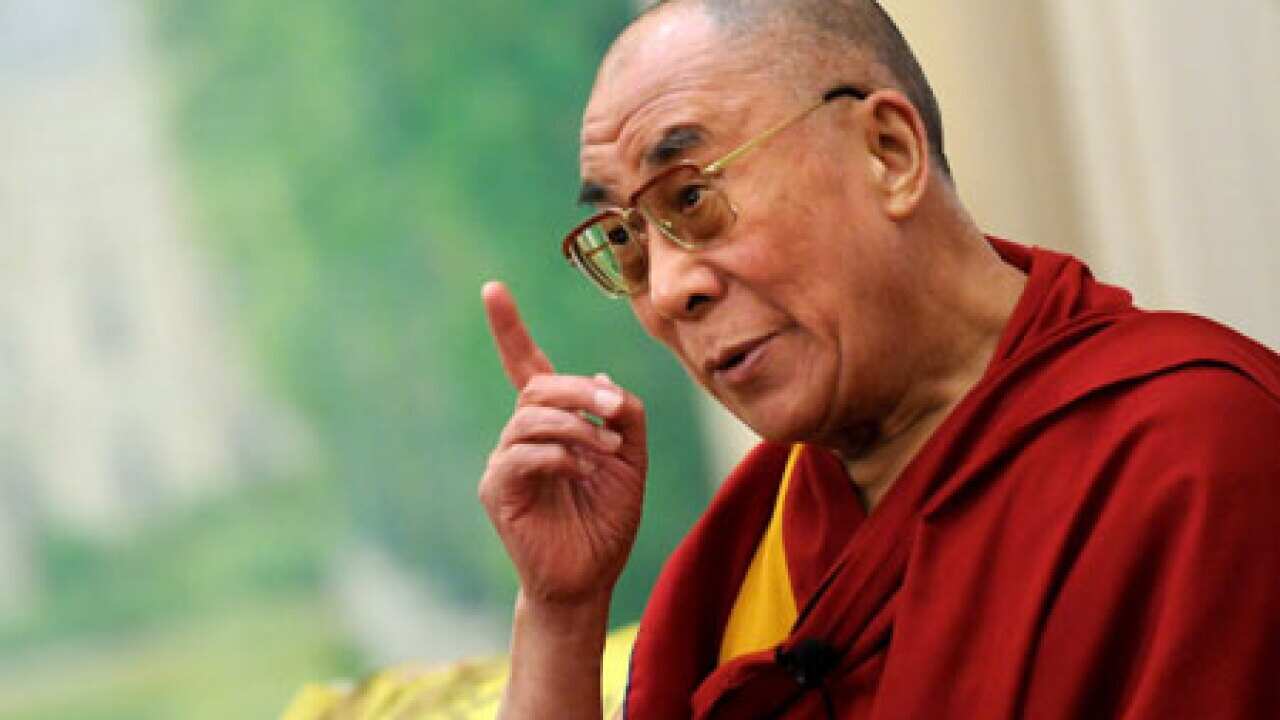
US President Barack Obama risked angering China by announcing a meeting next week with the Dalai Lama, just as he needs Beijing's cooperation to pressure Iran over its nuclear ambitions.
Despite Chinese objections, Obama will meet the exiled Tibetan leader in the Map Room at the White House next Thursday, the president's spokesman Robert Gibbs told reporters.
"The Dalai Lama is an internationally respected religious leader. He's a spokesman for Tibetan rights. The president looks forward to an engaging and constructive meeting," Gibbs said.
News that makes sense
Your trusted source for staying up-to-date with the world around you. Get free daily news updates and analysis, straight to your inbox.
Despite political pressure at home, Obama avoided meeting the Dalai Lama when the Buddhist monk was in Washington last year, in an apparent bid to set relations off on a good foot with Beijing early in his presidency.
Obama, however, told Chinese leaders during his trip to Beijing in November that he planned to meet with the Dalai Lama, who is widely respected in the United States but branded a separatist by Beijing.
Next week's meeting comes at a time when relations have already soured over the sale of a $6.4bn package of US weapons to Taiwan, which Beijing regards as a Chinese territory to be reunified by force if necessary.
And Obama knows Chinese support is vital if he is to succeed in winning united backing at the UN Security Council for the tough regime of sanctions he wants to impose on Iran for stepping up its suspect nuclear work.
Washington plays down tension
Gibbs, however, sought to play down the discord.
"We think we have a mature enough relationship with the Chinese that we can agree on mutual interests, but also have a mature enough relationship that we know the two countries... are not always going to agree on everything."
China is a veto-wielding member of the Security Council and has hesitated to step up pressure on Iran, which insists that its sensitive uranium enrichment work is for peaceful civilian purposes.
US and Chinese relations have also been strained over Internet censorship, with Google threatening to leave the fast-growing market over cyber-attacks against the email accounts of rights activists.
Beijing said last week it "resolutely opposes" the planned visit by the Dalai Lama, who fled Tibet into exile in India in 1959, especially any meetings with US leaders.
The Dalai Lama, 74, fled his homeland after a failed uprising against Chinese rule. That came nine years after Chinese troops were sent to take control of the region.
Since the 2008 round of talks, China has maintained a tough crackdown in Tibet launched following a wave of anti-Chinese unrest that erupted in March of that year and which Beijing blamed on the Dalai Lama.
Several people have reportedly been executed for their roles in the violence, and last month China named a military veteran, Padma Choling, as Tibet's new governor.







