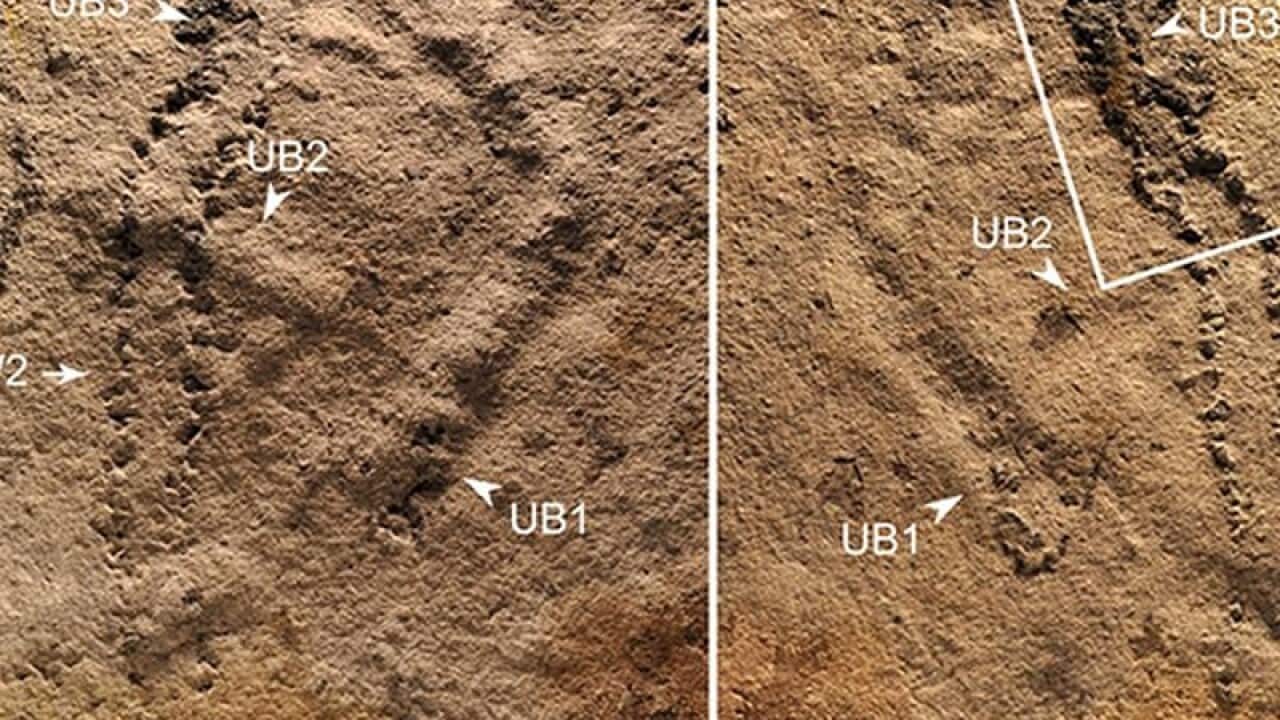
Scientists say tracks left by tiny animals that crawled in sea-shore mud around 550 million years ago are the oldest footprints on Earth.
Mystery surrounds the one-millimetre long creatures that made the prints, since no trace of their bodies has been found.
Scientists believe they may have been a type of arthropod - the family of animals with jointed limbs that includes insects and crustaceans, or something akin to a legged worm.
Their fossilised trackways and burrows were discovered in the Yangtze Gorges area of South China in a rock formation dating back between 541 and 551 million years.
News that makes sense
Your trusted source for staying up-to-date with the world around you. Get free daily news updates and analysis, straight to your inbox.
Previously no evidence of limbed animals has been found that pre-dates the "Cambrian Explosion", the sudden surge in diversity that occurred on Earth about 510 - 541 million years ago.
One unusual aspect of the footprints is that they appear somewhat irregular and disorganised, suggesting an element of clumsiness.
"The irregular arrangement of tracks in the... trackways may be taken as evidence that the movement of their trace maker's appendages was poorly coordinated and is distinct from the highly coordinated metachronal (wave-like) rhythm typical of modern arthropods," the Chinese and American team led by Dr Shuhai Xiao, from Virginia Tech in the US, wrote in the journal Science Advances.







