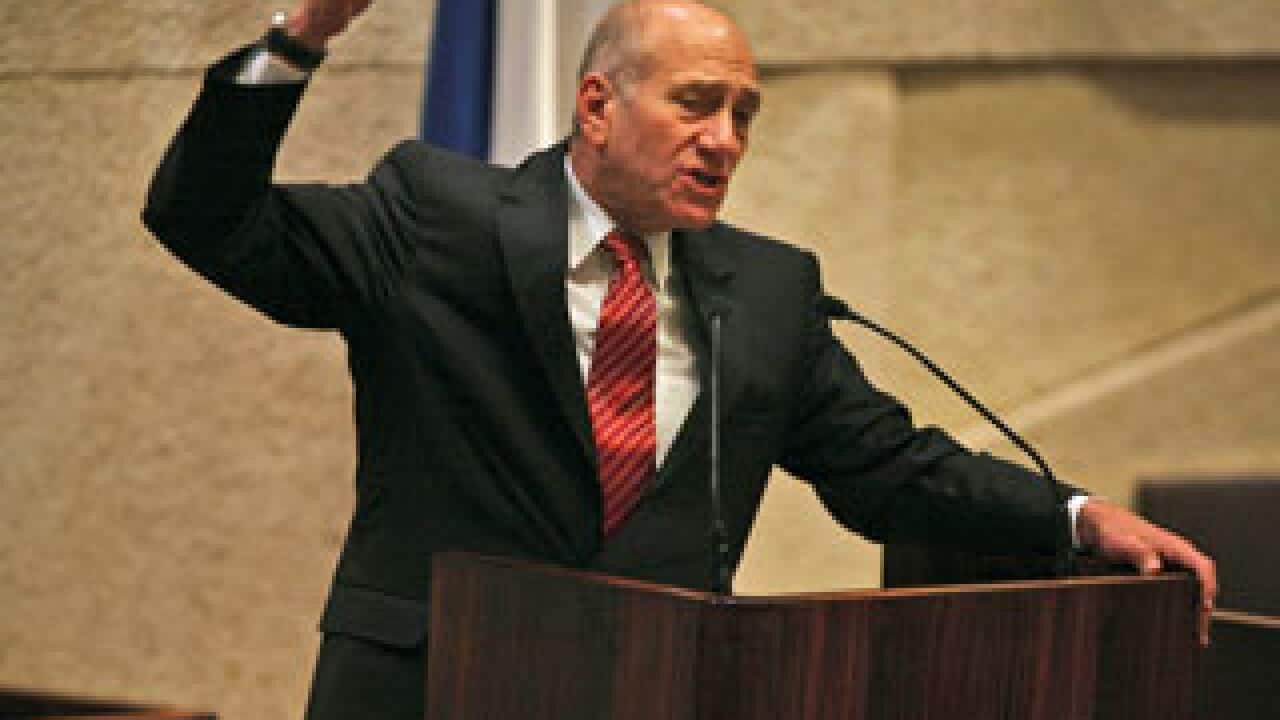
Israel's former prime minister Ehud Olmert, named as a key suspect in a massive real estate scandal in Jerusalem, denied media reports that he had taken a bribe.
Olmert, identified on Thursday after a court lifted a gag order on the case, told Channel 10 television that "no one ever offered me a bribe, and I never took one."
Media reports had said Olmert, who is also an ex-mayor of Jerusalem, was suspected of having taken a bribe of 3.5 million shekels (almost one million dollars at the current exchange rate).
News that makes sense
Your trusted source for staying up-to-date with the world around you. Get free daily news updates and analysis, straight to your inbox.
Olmert, 64, returned from a European trip on Wednesday night shortly after his successor as mayor, Uri Lupolianski, was arrested for his alleged involvement in the scandal over Jerusalem's Holyland residential complex.
The affair, which riveted Israelis, is the latest in a list of graft accusations against Olmert.
Olmert associate arrested
Police last week also arrested former Olmert associate Uri Messer and several other men suspected of bribing officials to smooth the way for the construction of the grandiose Holyland complex.
Also Thursday, a court rejected a request from Messer and the other suspects to be freed on bail.
Israel's "real estate scandal of the century" has been splashed on the front pages, with papers running Olmert's photograph while pointing to the gag order which had prevented the naming of a "leading public figure" allegedly involved.
Olmert ready to answer questions
Olmert spokesman Amir Dan said the former premier denied any involvement in the affair and that he was ready to answer police questions.
In his remarks to Channel 10, Olmert himself said: "I am ready to be questioned by the police, and I am at their disposition at all times, whenever they consider it useful."
Police have a state witness to testify against Olmert, and the former premier is expected to be questioned in the next few days, according to media reports.
The website of the Haaretz daily said police suspect Olmert received bribes through two channels -- his close friend Messer, a lawyer, and through an aide, Shula Zaken.
Messer is himself a witness in a separate graft trial currently under way against Olmert in which Zaken is a co-defendant.
"The net is tightening" was the headline in Israel's Maariv newspaper on Thursday above an old photo showing Olmert and Lupolianski together at a construction site.
Vigilantes arrested
Police, meanwhile, said they have arrested two people in connection with putting up Wild West-style posters of Olmert marked "Wanted."
Newspapers and readers had a field day lambasting the controversial hilltop complex of high-rise buildings that make up Holyland, describing it as a monstrosity, an eyesore and a blot on Jerusalem's landscape.
But Olmert told Channel 10: "I approved the Holyland project when it was a matter of three hotels, to help tourism. The project was modified after the end of my term as mayor, and I have nothing to do with it."
In December, Olmert pleaded not guilty to charges of corruption linked to three other cases. He resigned under pressure in September 2008 after police recommended he be indicted.
He is accused of unlawfully accepting gifts of cash-stuffed envelopes from Jewish-American businessman Morris Talanski and of multiple-billing for foreign trips.
Olmert has also been charged with cronyism in relation to an investment centre which he oversaw when he was trade and industry minister between 2003 and 2006.
The 61-page indictment includes allegations of "fraud, breach of trust, registering false corporate documents and concealing fraudulent earnings."
That case is expected to drag on for several months, if not years. If found guilty, Olmert could face a prison term, although it is unclear for how long.
Attorney General Menachem Mazuz dropped three other corruption probes against Olmert, who was named by Time Magazine as Israel's most able politician when he took over as premier from the ailing Ariel Sharon in May 2006.
All the charges relate to a period before Olmert became premier, to his terms as mayor of Jerusalem and later as trade and industry minister.







