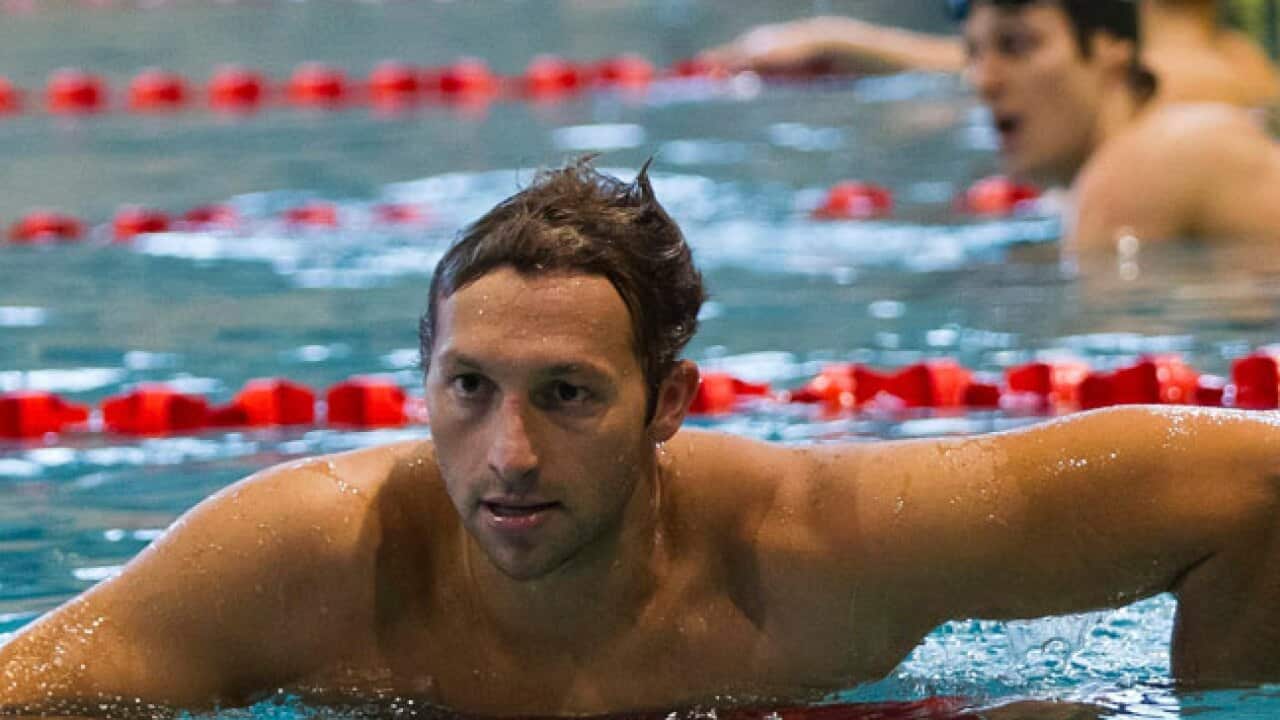
Given the size of our population, Australia's success at the past three Summer Olympic Games has been quite remarkable.
Across the Sydney, Athens and Beijing Olympic Games, the nation's athletes have won a total of 153 medals. At the Sydney 2000 Olympic Games alone, Australia won 58 medals: a result that placed the nation fourth on the medal tally.
But has this success had an impact on sport participation in Australia?
If Australian sport policy over the past four decades is to be believed, winning Olympic medals should boost sport participation.
Two Australian government reports, published in the mid-1970s, established the belief that sport investment concentrated at the elite end of the sporting pyramid will result in a “trickle-down effect” leading to increased grassroots sport participation.
An extensive review of the literature, however, conducted by Professor Mike Weed and his British colleagues published in 2009, found that there was no reliable evidence available that indicated that any Olympic Games had raised sport participation levels for a host population.
A recent study completed by researchers at the Australian Centre for Olympic Studies, situated within the UTS Business School, examined this issue from an Australian perspective.
The paper published this month in the Journal of Policy Research in Tourism, Leisure and Events investigated participation data collected over the past two decades by the Australian Sports Commission (ASC) and the Australian Bureau of Statistics (ABS). The purpose of the study was to try and determine whether hosting the Olympic Games and other international sport events in Australia boosted sport participation levels. Some of the main findings to emerge from the research, conducted by lead author Professor Tony Veal (UTS), Professor Kristine Toohey (Griffith University) and myself, included:
Analysis of participation data and the Sydney 2000 Olympic Games found that while a moderate increase in adult sport participation occurred, non-Olympic sports witnessed stronger increases than Olympic sports. For example, from ABS data collected between 2000 and 2001, just five Olympic sports had increased participation, compared with 13 non-Olympic sports.
For children, however, Olympic sports achieved stronger participation growth, lending some tentative support to a trickle-down effect. (In other words, Olympic success inspired kids to take up sport.) For instance, between 2000 and 2003, ABS data (as measured through playing sport outside of school hours) showed 10 Olympic sports increased participation levels compared to just four non-Olympic sports.
The success of the national team at the 2006 Melbourne Commonwealth Games and the impact of hosting the event on sport participation were also examined. The analysis of participation data provided “no evidence to support the proposition that the event boosted adult sports participation in Australia or the host state”. However, a positive effect on children's sport participation was detected, albeit at modest levels.
In addition to the two multi-sport events mentioned above, the 2003 Rugby World Cup, hosted across Australian cities, was investigated. Rugby achieved solid participation increases over the examined period. For instance, people aged 15 and older, who played rugby at least once in a year, their participation increased from 96,400 in 2001 to 166,000 in 2005. A similar sized increase was achieved for boys aged 5 to 14.
These findings present a mixed picture. It is evident in some sports, particularly at the junior level, that elite success and the hosting of major events result in a short-term bounce in participation. However, this bounce is often not sustained. In the case of the 2003 Rugby World Cup, the Australian Rugby Union wisely used the commercial windfall generated by the event to invest heavily in junior development programs. Many Olympic and Commonwealth Games sports in Australia have not had the funds nor the human resources to implement such programs and their sports have not achieved the participation increases seen by rugby.
For Australia to fully capitalise on our success at the Olympic Games, in order to grow sport participation, a more strategic approach is required. Not only should success be promoted from the top down but greater attention is needed in developing sport from the grassroots up. The exemplar of this approach in the past two decades is not an Olympic sport, but rather the indigenous game: the Australian Football League.
Stephen Frawley does not work for, consult to, own shares in or receive funding from any company or organisation that would benefit from this article, and has no relevant affiliations.

Share


