Indonesia faces public health challenges on several fronts, including rising rates of HIV, malaria prevention and the fight again tuberculosis, reports Rhiannon Elston.
Inside Indonesia's drug prisons
My visit to Indonesia starts in Jakarta at a methadone clinic that's just a couple of years old. There are only 12 similar clinics in Jakarta, and Dr Lady, who supervises the HIV program at the clinic, tells me it would be "much better to have a lot more".
Patients who have a long way to travel for methadone treatment are more likely to drop out, and because the clinics are only open during working hours, they're not always convenient for those trying to treat heroine addiction while at the same time holding down a job.
I then head to a couple of prisons to see similar progams at work. HIV rates are high among inmates, partially due to Indonesia's traditionally tough stance against drug use. The number of drug users in prisons is high; 50 and 60 per cent respectively at the male and female jails I visit.
News that makes sense
Your trusted source for staying up-to-date with the world around you. Get free daily news updates and analysis, straight to your inbox.
Later in the week, drug user advocate Edo Nasution tells me it was "easy" to procure drugs in prison in the three short stints he spent behind bars.
Indonesia introduced a narcotics law in 2009 that is designed to divert drug users away from prisons and into rehabilitation, but there are signs a lot more work needs to be done in this area for it to be truly effective.
Sex workers learn safer sex
In the Jakarta suburb of Rawa Bebek, I meet Rosanti, a 23-year-old sex worker who only learned about HIV last year.
"I'm afraid of being infected with this illness," she tells me. Rosanti joined a local task-force on HIV prevention around the same time she became aware of it.
In Bandung, I meet Barbie in a hair salon that is doubling as a venue for a health seminar on safe sex. With the help of a radish, she demonstrates how to correctly put a condom on, and later quizzes her students on best practices.
Malaria prevention in Sumatra
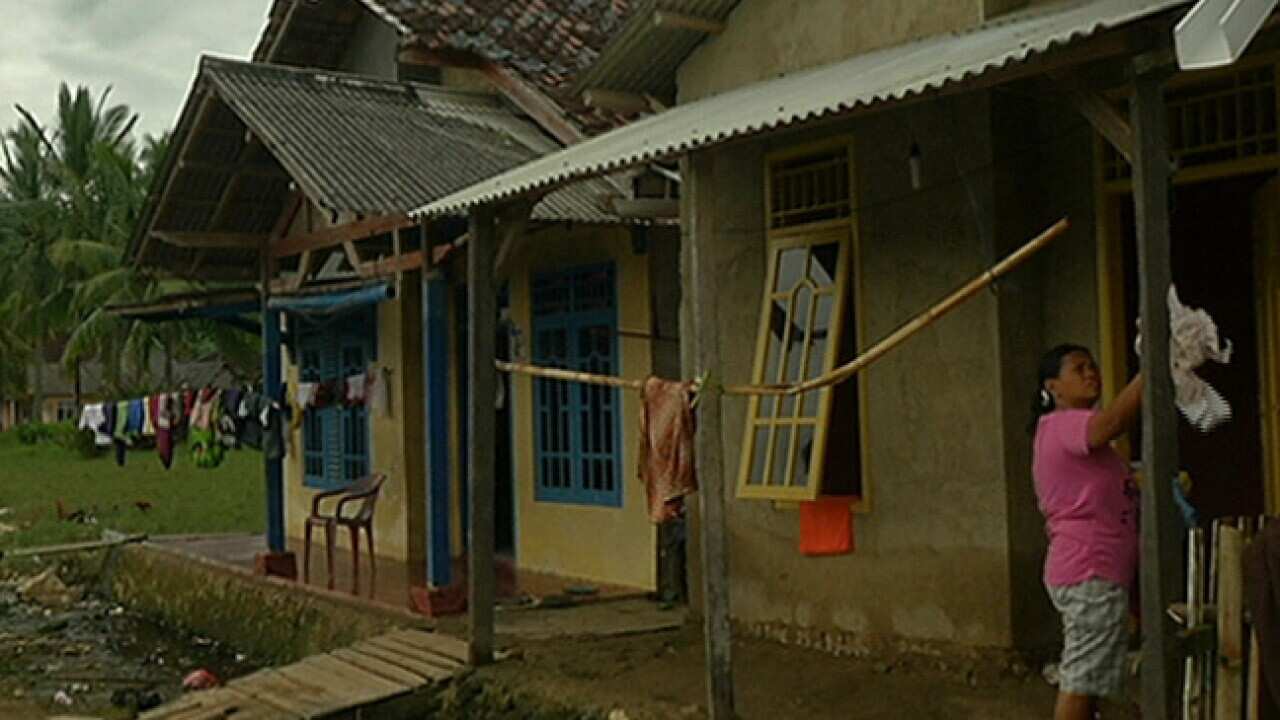
High in the hills of rural Sumatra, in a village 90 minutes outside the southern city of Lampung, Ulfaul Zuhro has been diagnosed with malaria for the second time in her 22-year life.
She's tired and in pain, and the diagnosis doesn't appear to make things better.
Ulfaul already uses a mosquito net and insect repellent, the two main tools of frontline defence against malaria-carrying mosquitos, and she can't believe this has happened again.
She's young and otherwise healthy, and expected to make a recovery, but for pregnant women and children under five, the disease can be deadly.
Ulfaul heads home to rest, and we carry on to a primary health centre another short drive away.
The clinic is conducting rapid-testing, and expectant mother Christina has come in for a check-up. She's delighted to be declared malaria-free, and invites us back to her home where she can't wait to put up her free mosquito net.
The insect net has been treated with DDT, a chemical the World Health Organisation has banned for every use except in malaria prevention.
"Even though there might be an adverse effect of the chemicals in the net, I feel that the benefit outweighs the possibility of risk," Christina's husband tells me.
Later, we head to yet another village dotted by shrimp and fish farms. These deep pools of water are a particularly desirable breeding ground for malaria-carrying mosquitos, and the danger is still present, despite efforts to clean them up.
Back home in Australia, medical researchers at Griffith University have released details about a promising new malaria vaccine.
Rhiannon travelled with the finanical support of the Global Fund to Fight AIDS, Malaria and Tuberculosis.







