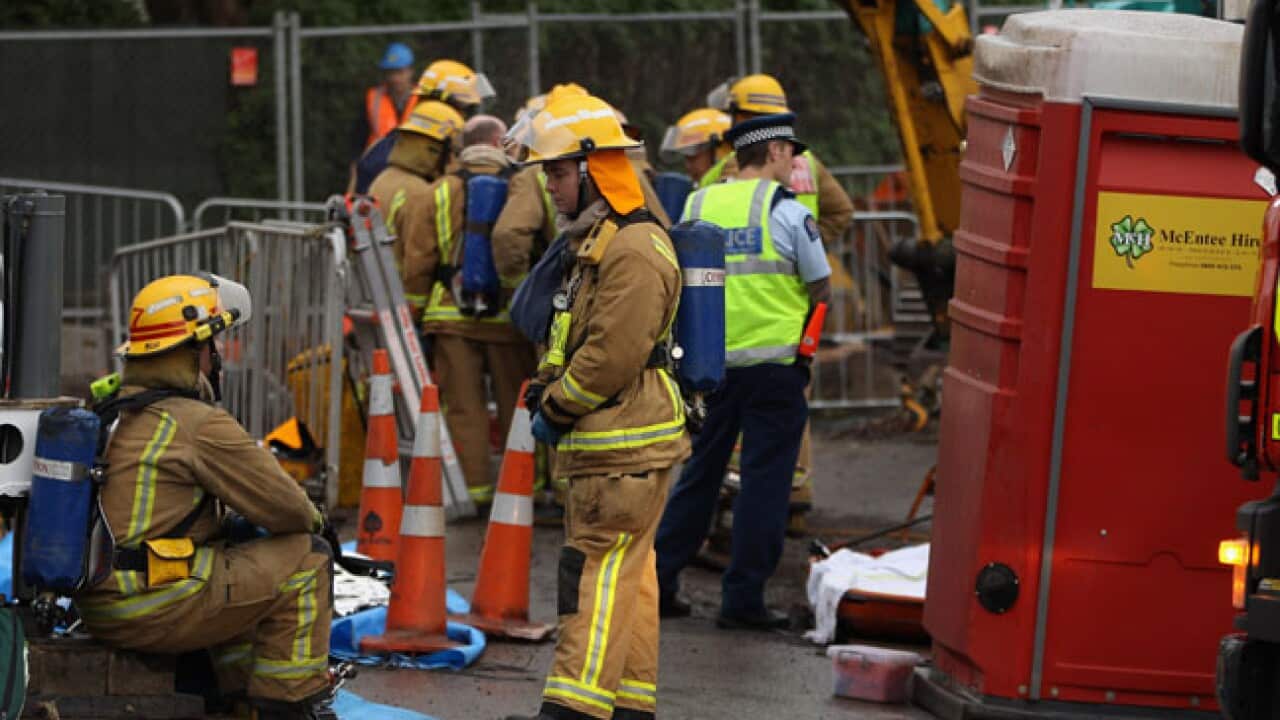
The explosion which killed one man and injured six others in a tunnel in the Auckland suburb of Onehunga was caused by an unidentified gas, New Zealand emergency services say.
The explosion happened 4m into a tunnel where a new water main was being connected in Onehunga's Mt Smart Road, said Superintendent George Fraser, the police officer in charge of the rescue and recovery mission.
The workers had just entered the tunnel and were only a few metres into it when the blast happened, blowing two men out of the
tunnel and injuring five.
One of the men died.
"There are a total of seven workers that were involved. Six of those workers have been taken to hospital. We have one confirmed
fatality," Fraser said.
One of the injured men was critical, one was serious and the other four were being assessed.
One man was believed to have lost limbs.
Auckland fire acting area commander Steve Lakin said seven specialist appliances were sent to the area.
"When the Fire Service arrived at the scene it was a rescue operation. They rescued six people from the vicinity of what is an underground pipe.
"After we made the scene safe and realising it had been a fatal accident, the Fire Service, along with the other emergency services, made an effort to enter the tunnel to determine the state of play.
"We entered the tunnel with gas detection equipment and found that there were explosive limits of gases inside the tunnel.
"At this stage we are unaware of what those gases are likely to be, other than the explosive limits are beyond our normal safe
procedures."
They were working to make sure the area was safe and the gas was reduced inside the tunnel so they could go back inside for another inspection, Lakin said.
Gas detection equipment was on the site.
"We can't determine what that gas is because we can't get to where we need to be.
"All we can do at the moment is go through a process of elimination to make sure that the services in and around the area, such as electricity and gas, have been isolated and we are then working with the technicians on site from the relevant companies to
determine what the gases are," he said.
"The gas levels are low and are non-toxic but they have levels of flammability.
The 1.5km pipe was about 3m underground and was 2.5m in diameter, allowing people to walk into it before the diameter reduced.
Emergency personnel got as far as they could into the pipe during the rescue mission, Lakin said.
They planned to flood the pipe with material to reduce the risk of another explosion but first needed to establish what the gas
was.
"Our first priority was to make sure nobody was in that tunnel.
The second priority was to establish what the gas is and the next priority then will be to make this area safe," Lakin said.
No details of the dead man or injured workers were available.
Share


