

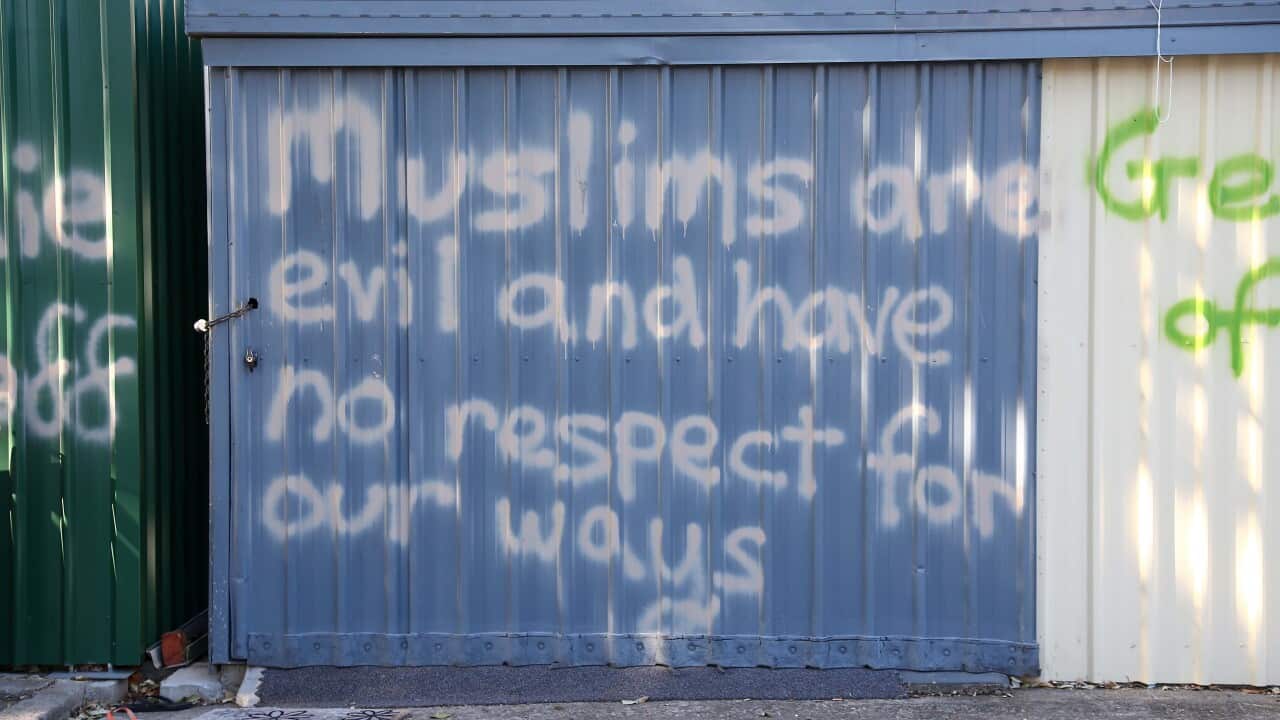
The social cohesion report - published by Monash University and the Scanlon Foundation - also found that one in four Australians had a negative attitude towards Muslims.
It covered attitudes to multiculturalism, immigration, trust in politicians and discrimination.
It found that although four in five Australians had a high level of support for multiculturalism, discrimination remained a problem.
Professor Andrew Markus, of Melbourne’s Monash University, told SBS Muslims were disproportionately represented.
"What we found consistently that negative views towards Muslims is five times higher than say towards Buddhists,” he said.
News that makes sense
Your trusted source for staying up-to-date with the world around you. Get free daily news updates and analysis, straight to your inbox.
On immigration, the report found 58 per cent of the population approved of Australia's immigration program, while public concern over asylum seeker boat arrivals had dropped to just four per cent.
The rise of Islamophobia
Sydney woman Asma Fahmi told SBS she was struck from behind on her way to work last year in what she believed was an Islamophobic attack.
"There was a man who had put his legs in between and was trying to push me to the floor,” she said.
“Then he finally called me an f***ing terrorist, that I realised that he attacked me because I was Muslim.”
She said she now lived in fear and had been forced to change her life.
“Then he finally called me an f***ing terrorist, I realised that he attacked me because I was Muslim.”
"If I were to go to certain areas, I would have to be with someone else,” she said.
“I don't travel as much as I used to.
“There really isn't much we can do. It's not like we can carry around a weapon."
Victoria Police Assistant Commissioner Andrew Crisp said the rise of the self-proclaimed Islamic State and the role a small number of Australians played in it had placed the Muslim community under the spotlight.
"We have seen an increase in the number of reports in relation to those people targeting [mainly] Muslim women,” he said.
Race Discrimination Commissioner Tim Soutphammasane said casual racism was also a growing problem.
"It's in places such as neighbourhoods and shopping centres where people appear to be experiencing racism more frequently,” he said. “What this indicates is that we're seeing casual racism emerging as the new face of discrimination in Australia.”