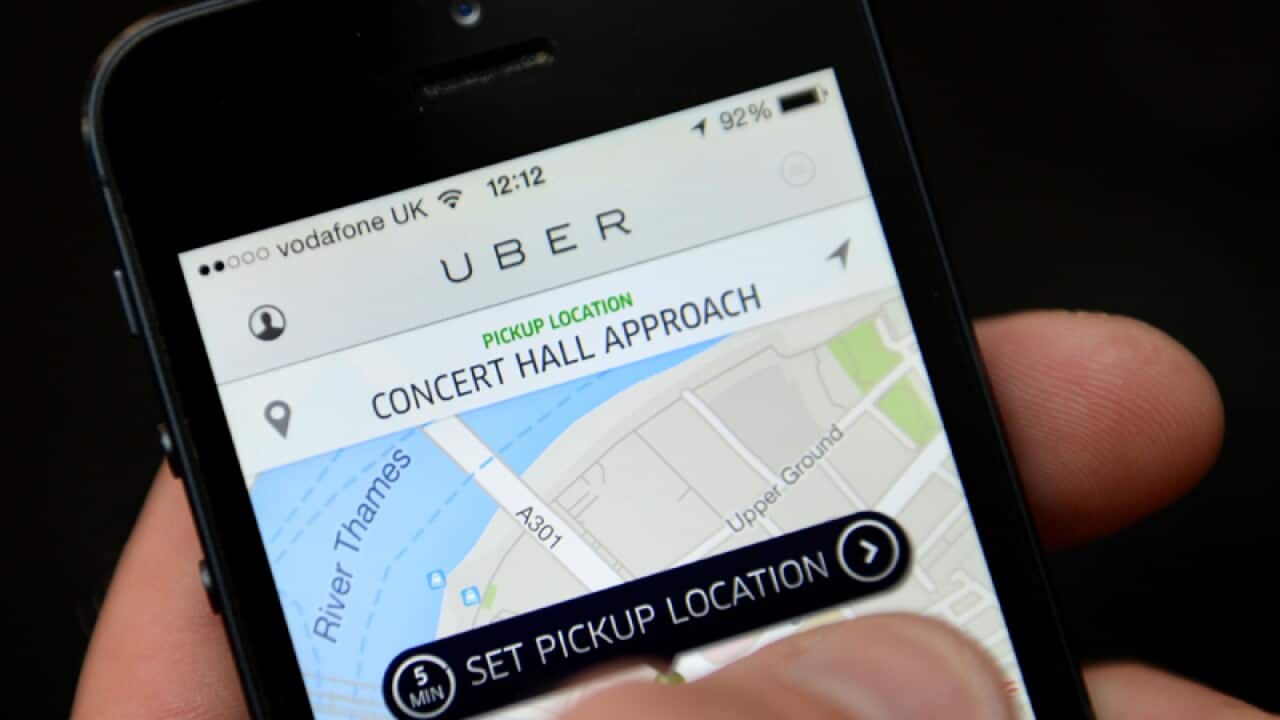
Over-regulation of companies such as Uber and Airbnb is posing a threat to their economic growth, a new report from the Institute of Public Affairs (IPA) has found.
The sharing economy describes a collection of new business models or platforms that helped private individuals use their own resources and exchange those resources.
None of the platforms such as Uber or Airbnb owned the resources they used. The platforms simply provided the information and people facilitated exchanges themselves.
Darcy Allen, a research fellow with the IPA, said the economy had grown dramatically in the past few years.
"One of the largest sharing economy platforms that everyone seems to hear about is Uber," he told SBS.
"Last week that got a valuation of $ 41 billion. And just to put that into perspective the stage it's at is where Facebook was after about seven years where Uber is only five-years-old."
He added that a flexible regulatory approach was needed to encourage and manage the growth of the sharing economy.
"The government comes in and imposes top-down control. The problem with this is that this is a fairly archaic sort of way to regulate. It's not taking into account why the sharing economy has emerged. And the sharing economy has emerged."
Mr Allen said the self regulating nature of sharing platforms was what was needed to guide government policies rather that policies that came from above.
"What we have now because of the internet and smartphones and the like, is that we have fantastic knowledge and information sharing so that we can utilise things reputations mechanisms that help to regulate from the information that the actual individuals have rather than the government coming in and imposing controls from the top."
The sharing economy has extended into areas that included finance, investment, home tools, and the exchange of everyday tasks.
Share


