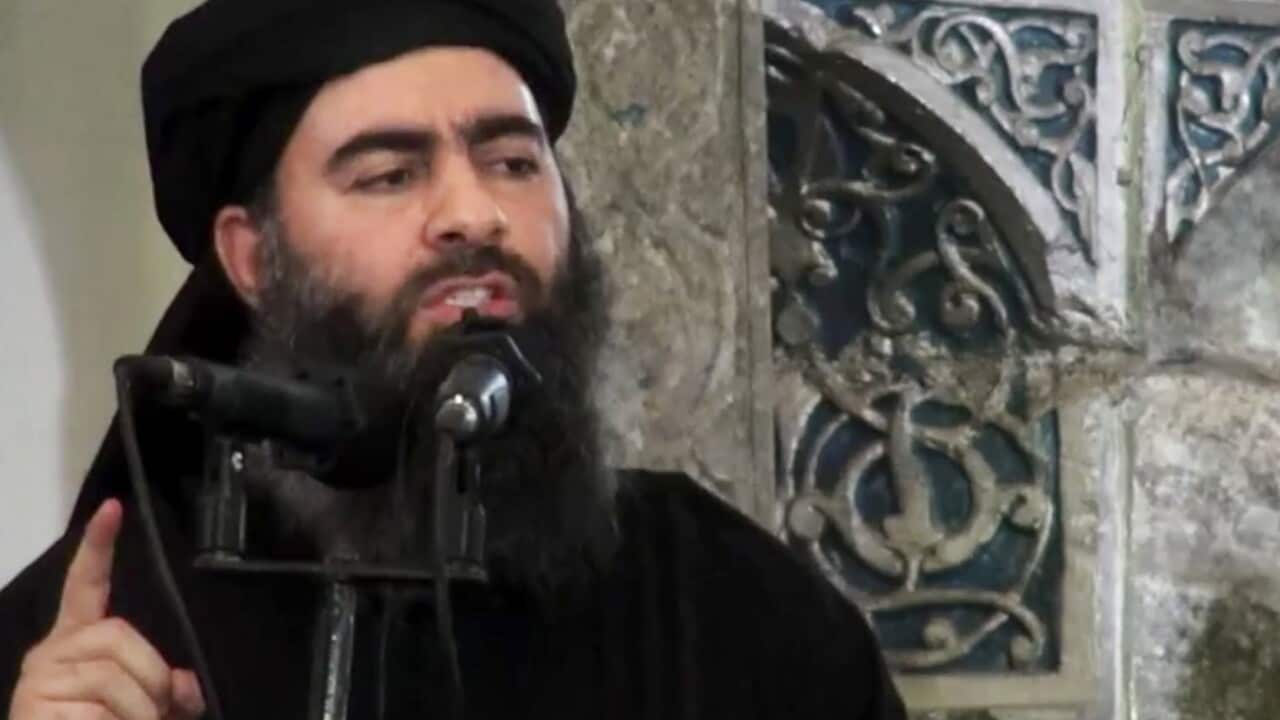
Pakistan's Taliban have rejected Islamic State leader Abu Bakr al-Baghdadi's claim to be the global leader of all Muslims.
The Pakistani Taliban's statement comes after a similar rejection by the Afghan Taliban following pledges of allegiance from low-level commanders of both Islamist movements to the Middle East-based Islamic State (IS).
Last year, IS, an al-Qaeda offshoot, proclaimed its leader as "caliph" - the head of the state.
Al-Baghdadi aspires to establish a global caliphate with himself at its head.
News that makes sense
Your trusted source for staying up-to-date with the world around you. Get free daily news updates and analysis, straight to your inbox.
The latest statement from the Pakistani Taliban comes amid speculation that the movement's leadership, whose goal is to topple the government of prime minister Nawaz Sharif and set up a sharia state, is actually wary of IS, which is driven by different ambitions that have little to do with South Asia.
"Baghdadi is not Khalifa (caliph) because in Islam, Khalifa means that he has command over all the Muslim world, while Baghdadi has no such command; he has command over a specific people and territory," the Pakistan Taliban said in the statement seen by Reuters news agency on Saturday.
"Baghdadi is not a Islamic Khalifa because his selection is not according to Islamic rules," the statement said, adding that the IS leader had little control in Muslim countries like Egypt, Libya, Yemen and Afghanistan.
The Pakistani Taliban operate separately from the Afghan insurgents of the same name, but are loosely aligned with them.
Late last year, a few breakaway factions of the Pakistani Taliban declared allegiance to Islamic State and ordered militants across the region to join its campaign to set up a global Islamic caliphate.
Pakistani authorities say IS has no financial ties with any Pakistani group.
But there are concerns about further turmoil in the region as US-led foreign troops withdraw from Afghanistan, with groups like the Haqqani network and IS likely to exploit the security vacuum.
The entry of Islamic State, while its numbers remain small, will also complicate Pakistan's fight against indigenous Islamist militants fighting to overthrow the government.
The Pakistani Taliban have been beset by bitter internal rivalries in the recent past, with the influential Mehsud tribal faction of the group refusing to accept the authority of Mullah Fazlullah, who came to power in late 2013.







