(Transcript from World News Australia Radio)
The Pakistani Taliban chief who ordered the attack that wounded teenage activist Malala Yousafzai has been announced as the militant group's new leader in Pakistan.
Maulana Fazlullah led the Taliban's brutal two-year rule in Pakistan's north-west valley of Swat before a military operation retook the area in 2009.
There are also questions being raised about what his appointment might mean for possible peace talks with the Pakistan government.
(Click on audio tab above to hear full item)
News that makes sense
Your trusted source for staying up-to-date with the world around you. Get free daily news updates and analysis, straight to your inbox.
Maulana Fazlullah takes over leadership of Tehreek-e-Taliban Pakistan after its previous leader, Hakimullah Mehsud was killed in a United States drone strike last week.
The killing of Mr Mehsud came as government representatives prepared to meet the TTP with a view to opening up peace talks.
Pakistani Prime Minister Nawaz Sharif responded by accusing the US of sabotaging peace efforts.
"The Government of Pakistan has made its position clear that drone strikes constituted a violation of Pakistan's sovereignty, violative of international humanitarian laws, besides being counter-productive to our efforts for bringing peace and stability in Pakistan and the region."
Adjunct Professor Clive Williams is with the the Centre for Policing, Intelligence and Counter Terrorism at Macquarie University in Sydney.
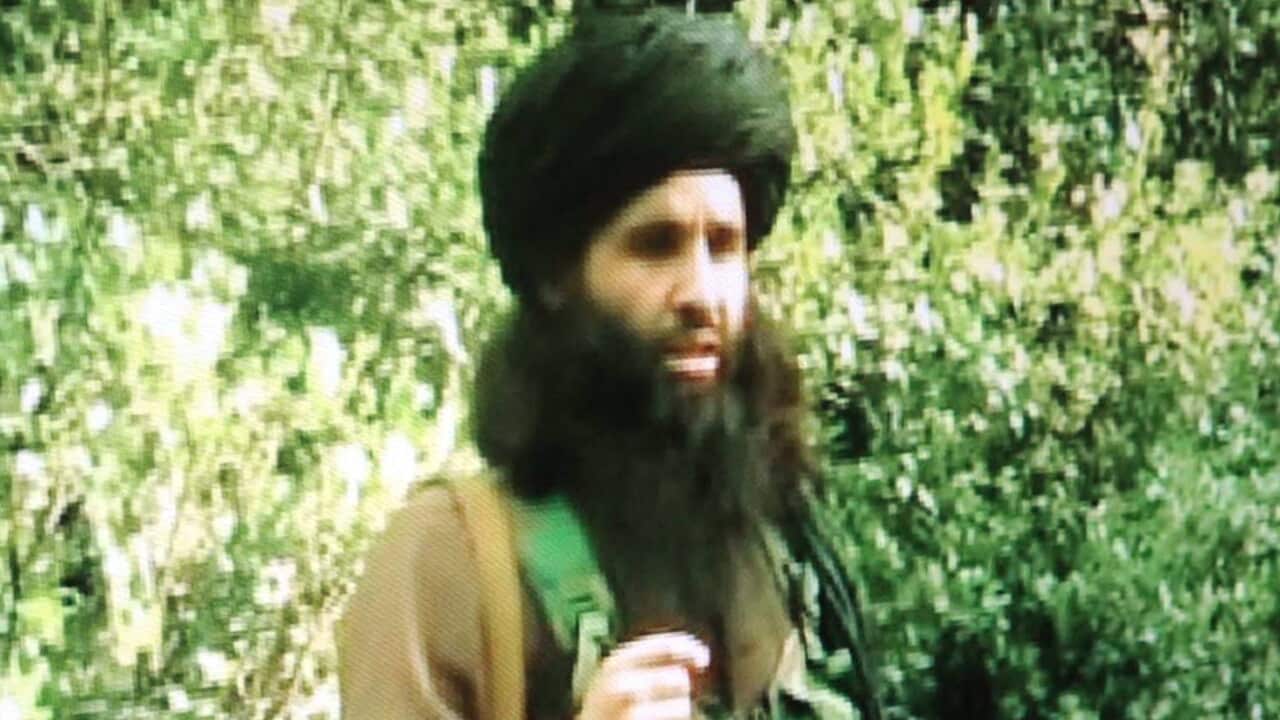
He says there are few photographs of Maulana Fazlullah in circulation.
But Professor Williams says it's known that he holds extreme views on many issues including education, health and the rights of women.
"Nowadays people can be identified from the drones, so people obviously in his situation don't want to have their photograph, out there but he's part of a smaller off-shoot group of the Pakistani Taliban and the kind of attitudes he's promoted within that group, he's been opposed to the polio vaccination program saying it's a way that the Jews and Christians are trying to make Muslims impotent. He's been opposed to women voting saying it's not the Pakistan tradition. He's opposed to female education. And as you may be aware back in October 2012 it was his orders that sent the assassin out to shoot Malala Yousafzai. So he's a very extreme, conservative person in his views".
Maulana Fazlullah, believed to be aged 39, was born in the Swat Valley and after studying at an Islamic religious school, worked as a chairlift operator before joining a group known as the Movement for the Enforcement of the Sharia of Mohammad.
After US-led forces entered Afghanistan to oust the Afghan Taliban from power in 2001, he joined thousands of Pakistanis who crossed the border to fight.
On his return to Pakistan, he took over the leadership of a Taliban offshoot group.
During Maulana Fazlullah's rule in the Swat Valley, the Taliban enforced a rigorous version of Islamic law, publicly beheading and flogging people and burning schools.
An army offensive ended his rule in 2009 and he escaped with a band of loyalists into the mountains of eastern Afghanistan, from where they have continued to orchestrate attacks in Pakistan.
Professor Williams says the new leader risks meeting the same fate as his predecessor.
"I think they'll go after him if they get the opportunity because he has also been linked to past attacks against the United States. In particular the attacks at Camp Chapman, I think where you might remember a number of CIA operatives were killed. Plus he's been linked to other attacks against the Americans. So I am sure if they see him and they recognise him they'll take him out."
Professor Damien Kingsbury is from the School of International and Political Studies at Deakin University.
He says it's too early to tell how the change of leadership of the Pakistani Taliban will affect relations with the Pakistan government.
"Look I think that ultimately there are points where they can find discussions and have agreements for degrees of autonomy around the tribal areas around Waziristan and so on. So there really is a question about the extent to which the Taliban are going to be active against their own government or trying to oppose external forces. If it's targeted primarily at external actors or people operating in the tribal areas, well that's one thing, but if they extend their activity externally and attack the Pakistani government or the Pakistani military and cross over into Afghanistan, well that's another matter again."







