This audio is voiced by AI and may occasionally mispronounce words.
Share your feedback and help us improve this feature. Read more about how we use AI at SBS here.
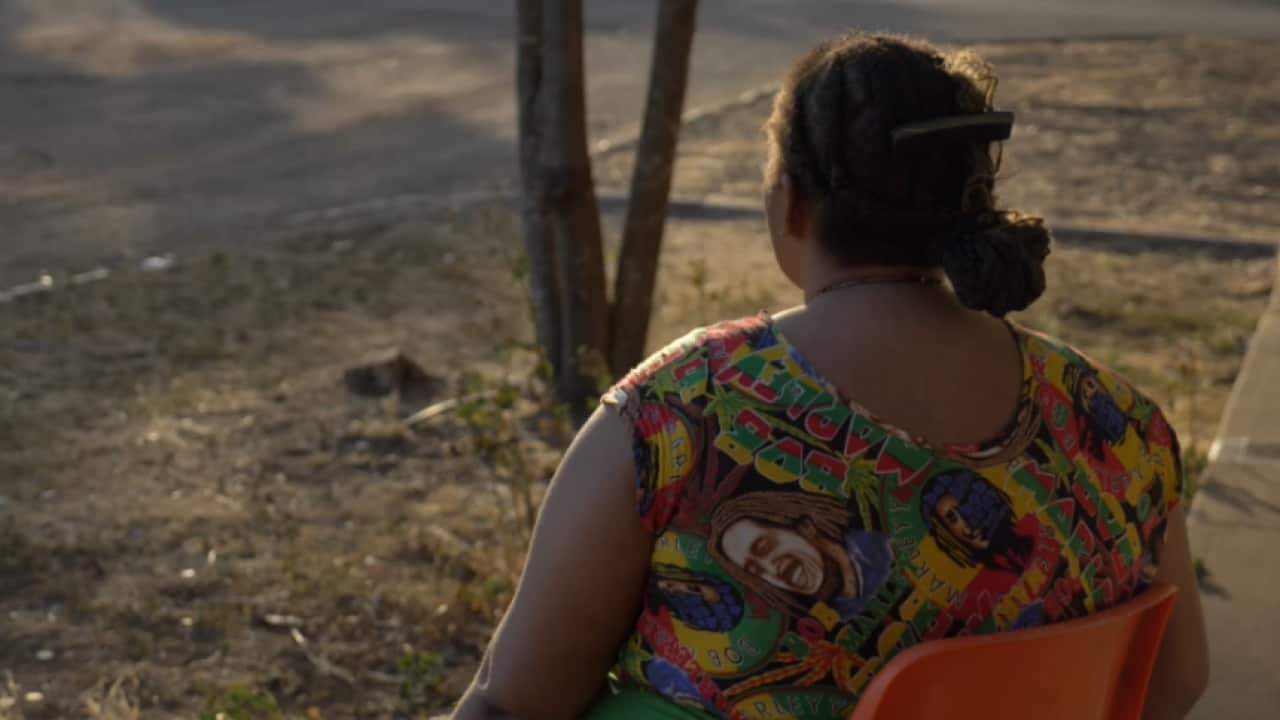
Ethel used to work long days picking fruit in regional NSW. But after falling off a tractor four months ago, she can barely move.
The 33-year-old first came to Australia from Solomon Islands in 2022 under the federal government's Pacific Australia Labour Mobility (PALM) scheme.
The PALM scheme is a temporary visa program designed to plug Australia's labour shortages by recruiting workers from nine Pacific Island nations and Timor-Leste.
Ethel — whose name SBS News has changed for privacy reasons — was initially employed under the scheme to work on a farm in northern Queensland but left after just four months.
The take-home pay was more modest than she expected. After deductions, she says there was barely enough left to survive on, let alone support her family in Solomon Islands — the main reason she joined the scheme.
News that makes sense
Your trusted source for staying up-to-date with the world around you. Get free daily news updates and analysis, straight to your inbox.
Ethel says $1,100 was deducted from her first pay for reasons that were unclear, leaving her with $500. Then, after paying rent and transport, she had only $200 left over.
"Family at home [were] asking for more money and we would send but we [were] left with nothing and that's why we left the PALM scheme," she tells SBS News.
She's among the thousands of workers who have absconded from the scheme, citing poor working conditions, exploitation and, in some instances, abuse. The Department of Home Affairs confirmed in a statement to SBS News that more than 7,000 workers have disengaged since 2019. Many are living either unlawfully (without a visa) or on a bridging visa awaiting further determination.
As a disengaged worker without a visa, Ethel has no work rights or access to government support, relying instead on the help of the local community, volunteers, and charities.
It's a situation that has left her — and many others — vulnerable to exploitation and injury.
Australia's hidden workforce
Since leaving the PALM scheme in 2022, Ethel has been working illegally in regional Australia, receiving cash in hand.
In August this year, while working at a farm in the regional NSW town of Leeton, she fell off a tractor and severely injured her leg.
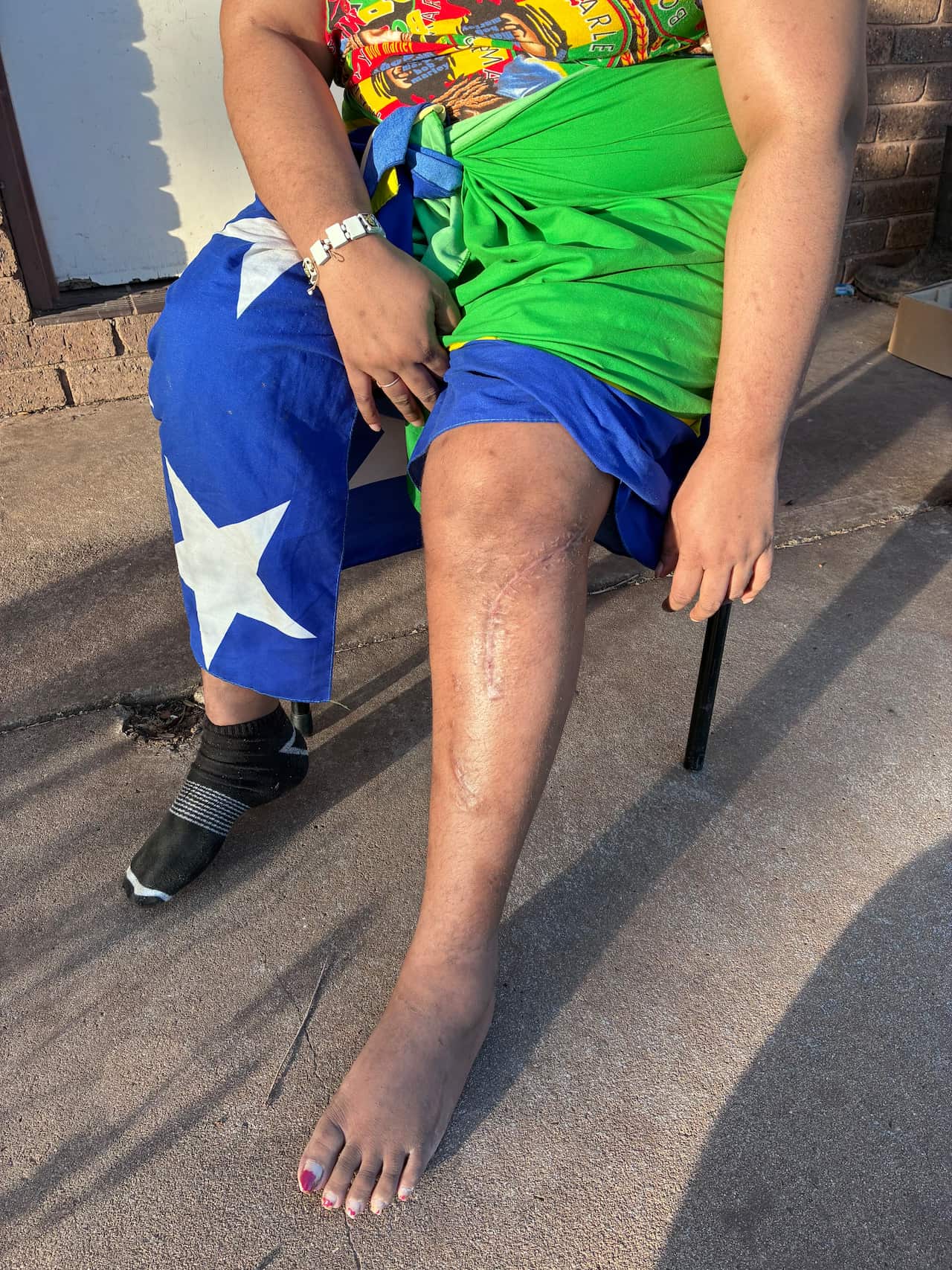
Ethel spent a week in bed before the president of the volunteer-run Leeton Multicultural Support Group, Paul Maytom, was alerted. He took her to hospital where she spent three weeks and underwent three surgeries.
When asked what would have happened if Maytom hadn't intervened, Ethel couldn't bring herself to answer, just shaking her head and pursing her lips.
"Paul helped me so much, I thank Paul so much and Red Cross," she says.
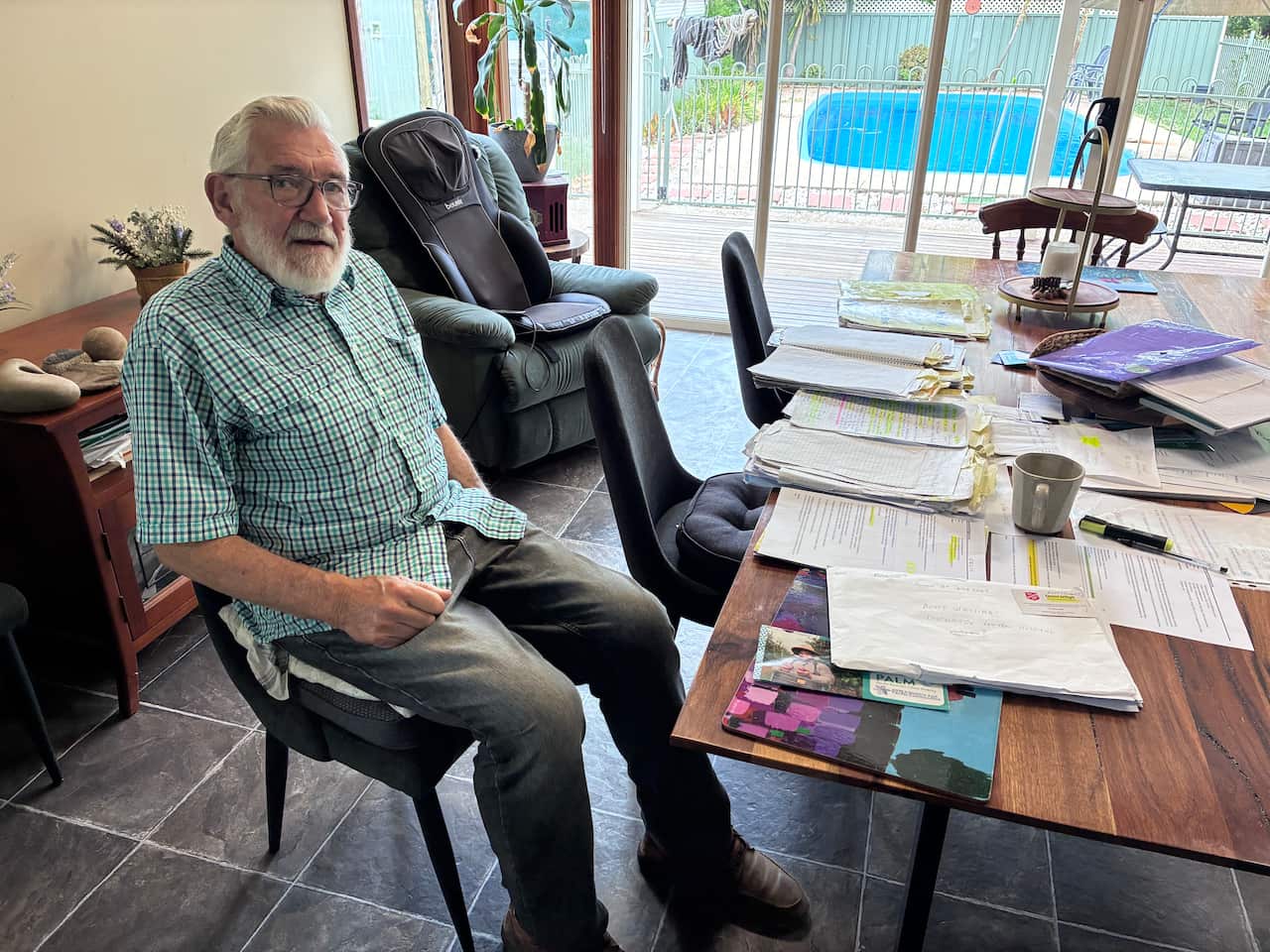
Maytom first arrived in Leeton in 1967 to pick fruit. He served on the local council for 34 years and was mayor for 16 of those. Now retired, the 77-year-old spends his time helping disengaged workers like Ethel, even using his own money to pay for her medication.
"The people that I've worked with over the last 18 months, they're people that either don't have enough money because they've got sick, or they got injured and there's no cover," he tells SBS News.
He has dozens of notebooks filled with information about the people he's helped — detailing accounts of underpayment, mistreatment and exploitation. He points to the case of one woman whose employment picking strawberries was terminated because she became pregnant.
We have a process that clearly upfront says that you have the same rights as Australian workers but yet that [an unfair dismissal] can happen.
Maytom says he wants Australians to know the hidden plight of these hidden workers.
"I believe if they understand what I know, they would accept and understand that these people are not really causing us any problem but they're caught in a trap and we need to help," he says.
The number of disengaged workers in the PALM scheme ballooned during the COVID-19 pandemic. In response, the Department of Employment and Workplace Relations (DEWR), which, along with the Department of Foreign Affairs and Trade, is jointly responsible for the scheme, set up a disengagement taskforce.
A spokesperson for DEWR declined to confirm the total number of disengaged workers but told SBS News in a statement that "the employer-reported disengagement rate" among PALM workers has declined "from 10 per cent in 2020-21 to 3 per cent in 2024-25".
"Addressing PALM worker disengagement is a priority for the Australian Government. Wherever possible, the Australian Government seeks to support the re-engagement of disengaged PALM workers," the spokesperson said, adding that a dedicated response team has been established to implement recommendations from the taskforce," they said.
The reasons why PALM workers have left the scheme vary, but many have pointed to problems arising from pay deductions, wage theft, mistreatment, insufficient work and being tied to a single employer.
A report by the Immigration Advice and Rights Centre noted employers are allowed to make deductions from the wages of PALM workers, which means they are sometimes left with just $100-$200 per week.
PALM workers are also not allowed to leave their employer without approval from the DEWR.
As a result, many workers experiencing hardship are faced with three choices: to stick with their employer, leave the scheme and return home, or abscond and seek cash-in-hand work.
But returning home isn't a simple option for many, including Ethel.
"If we go back to Solomon Islands in five months, we have nothing because they give us more deduction," she says.
Fellow Solomon Islands-born PALM worker Constantino Waowao also feels his options are limited. He says mistreatment by his employer in regional NSW caused him to leave the scheme in 2022.
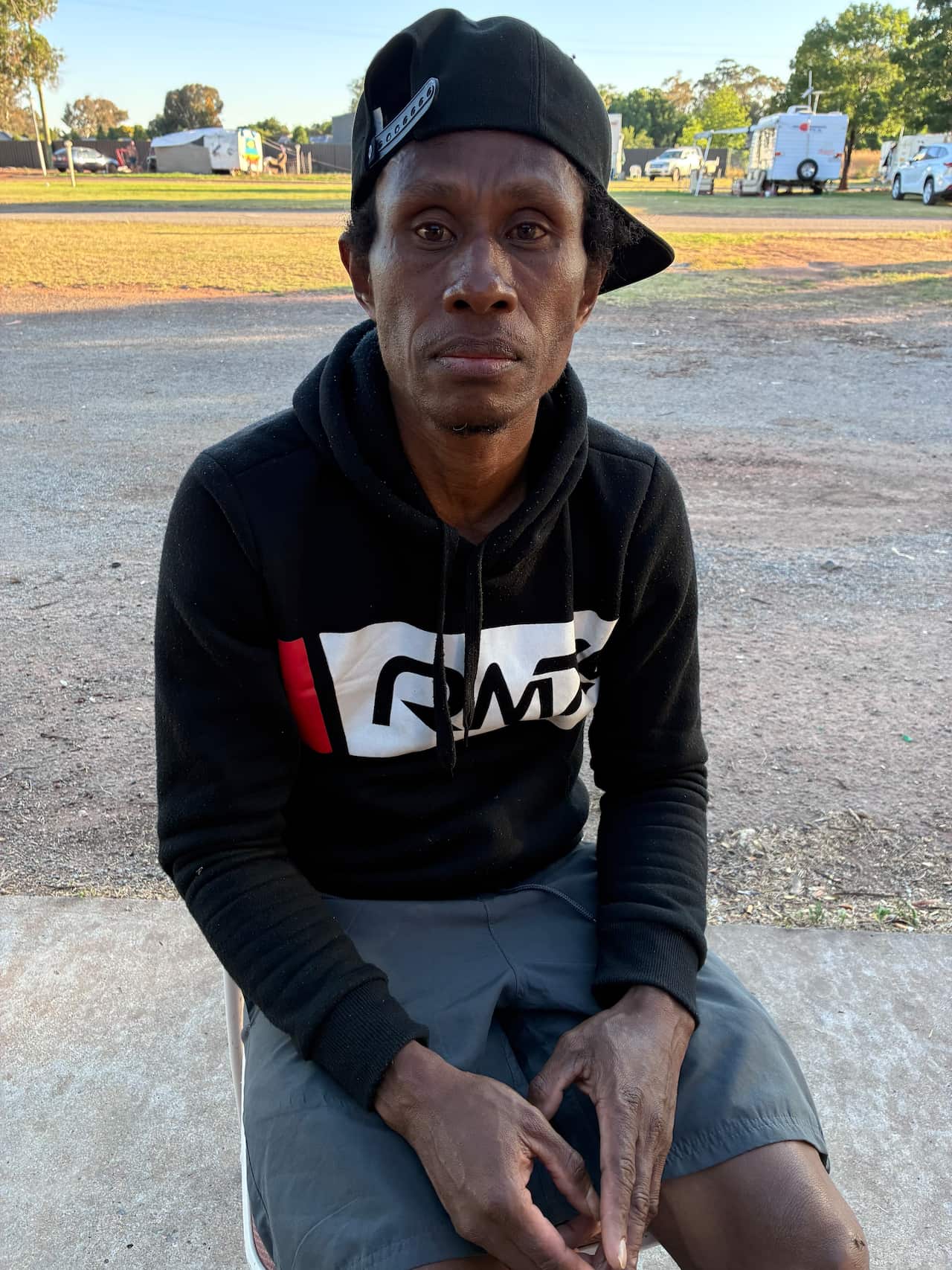
But the 43-year-old says he can't go back to Solomon Islands out of fear.
"I'm gay, I will never go back, if I go back they will kill me, that's why I'm here," Waowao tells SBS News.
Since January 2023, he has been on a bridging visa, awaiting a decision on his protection status.
"I don't feel happy about this because I need protection now," he says.
Illegal work necessary, but risky
Despite the lack of protections, there is no shortage of work for disengaged workers, especially in agriculture.
Justin Davidson is a fifth-generation family farmer who grows oranges in Leeton and regularly employs seasonal workers. He tells SBS News he wants a better model for seasonal work that doesn’t rely on disengaged workers.
"I think everyone can acknowledge it is a problem and we need to address it, it's not sustainable,"" he says.
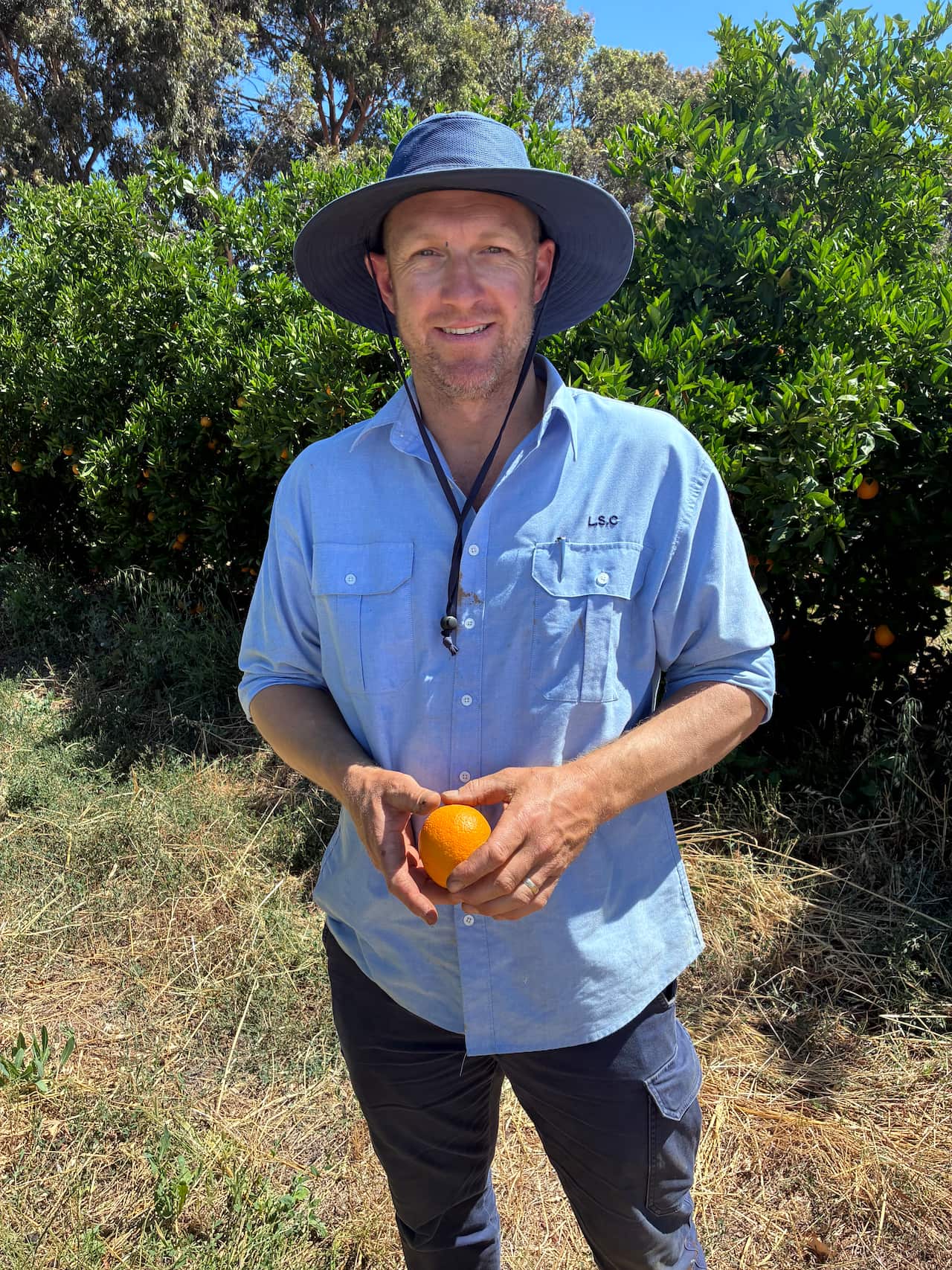
Davidson says he wants to see better protections and employment opportunities offered to those who have disengaged from the PALM scheme, and that he empathises with those who seek out cash-in-hand jobs.
These people need a second chance, they need income.
Ken Dachi from not-for-profit multicultural support organisation Welcoming Australia says allowing workers to move more easily between employers signed up to the PALM scheme would lead to fewer disengaged workers.
"The name gives it away, it's the Pacific Australian Mobility Scheme, so the mobility component doesn't exist, it needs to be explicit and activated," he says.
Far from an issue only affecting the regions or the towns dependent on this shadow workforce, Dachi points out that the fruit picked by disengaged workers ends up in homes across the country.
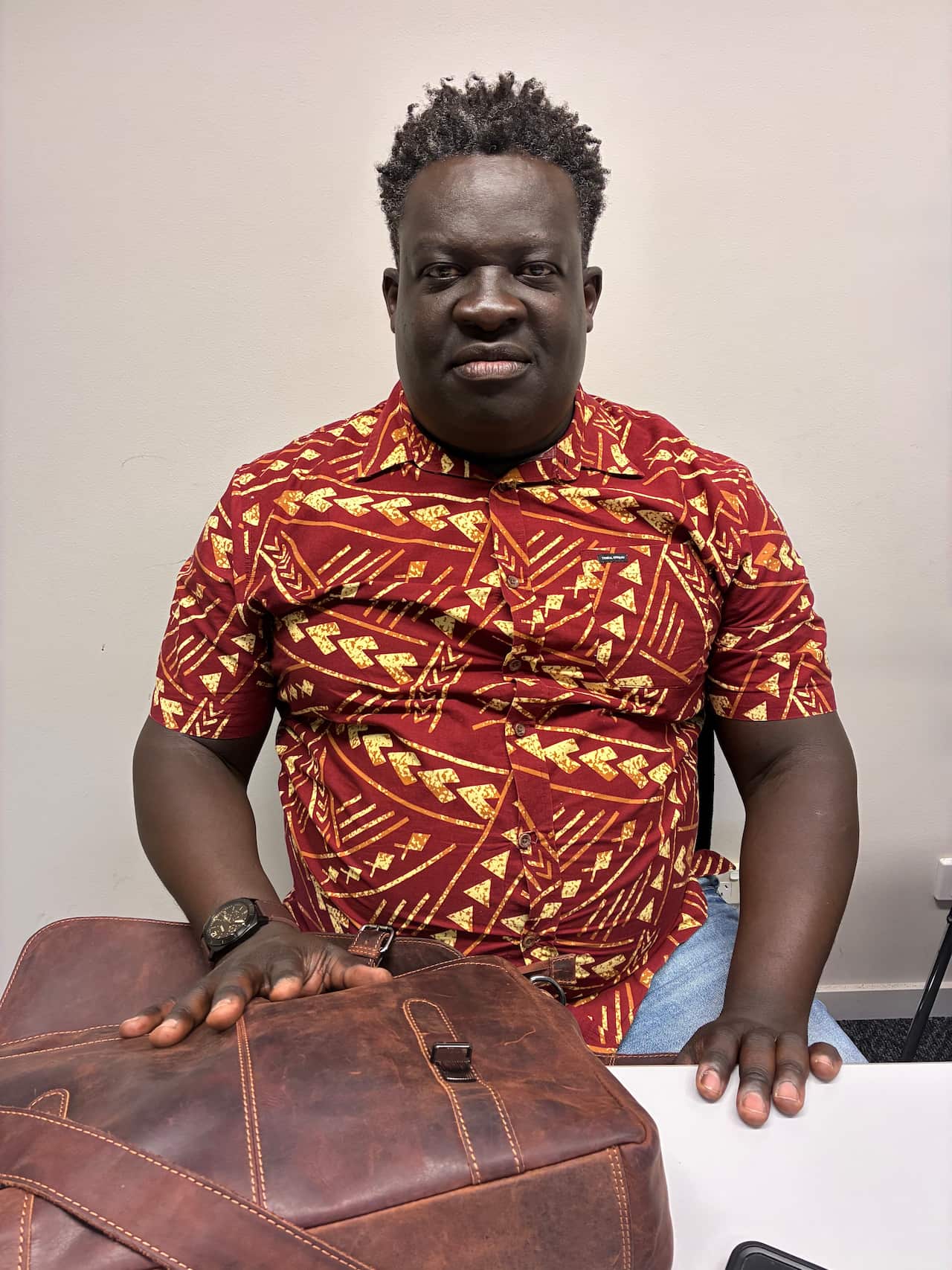
"A certain percentage of the food we buy every day is from the hands of a disengaged worker; it's exploited labour that contributed to its coming to the shelf," he says.
Modern slavery risks
Issues stemming from the PALM scheme have been well-documented, with corroborated reports of exploitation and work site fatalities prompting the NSW government to establish a parliamentary inquiry into modern slavery in 2024.
According to a spokesperson for DEWR, there have been 104 deaths among workers participating in the PALM scheme (or its predecessors) dating back to 2012.
"The death of any PALM scheme worker is a tragedy, and the department extends its sympathies to the families, friends, employers and communities," the spokesperson said, adding that the majority of fatalities stemmed from "medical conditions".
The state's anti-slavery commissioner James Cockayne says disengaged workers are at significant risk of exploitation such as debt bondage, forced labour, deceptive recruitment, sexual harassment and violence and sexual servitude.
"At the margins, we see people, particularly when they disengage from the scheme, becoming very, very vulnerable to very serious exploitation, so serious that it rises to the level of modern slavery," Cockayne says.
He blames labour hire companies for "overcharging people for certain services like laundry, transport, access to refrigeration", which he says pushes people into "a hamster wheel of debt".
- SBS News is investigating experiences of modern slavery in Australia. Have you got a story to share?
- Get in touch at investigations@sbs.com.au or contact Catalina Florez at catalina.florez@sbs.com.au.
Cockayne says there is also no licensing requirement for labour hire companies in NSW, making it attractive for "dodgy" companies to move to NSW from states where they are required to get a licence.
"Companies are moving here because the lack of licensing means that it's easier to make more profit, which, of course, is a synonym for exploit more people more easily," he says.

A NSW government spokesperson told SBS News: "NSW has been actively engaged with the Commonwealth Government and other jurisdictions with a view to establishing a National Labour Hire Licencing Scheme, as recommended by the 2019 Migrant Workers' Taskforce."
"SafeWork takes a proactive approach to addressing safety, including through information provision, engagement with industry, and proactive compliance checks across NSW," they said.
Calls to a hotline run by Cockayne's office, 1800 Freedom, have increased by 116 per cent since this time last year, says the commissioner, adding that around half the calls received each week are connected to labour hire companies and, in many cases, the PALM scheme.
According to Welcoming Australia, there are currently more than 30,000 PALM scheme workers in Australia. In the 2024–25 financial year, it's projected that workers participating in the scheme will pay more than $180 million in income tax.
The Australia Institute has found more than 230 Pacific Island workers were seriously injured and 45 died in Australia between 2020 and 2023.
Given the high percentage of deaths among a relatively small number of participants, Cockayne is alarmed at the lack of political urgency to fix the scheme.
He puts it down to a lack of political pressure.
"Many of the stakeholders don't vote in Australia, the temporary migrant workers don't vote, their governments don't vote," he says.
A history of migrant worker exploitation
Moe Turaga arrived in Australia from Fiji in 1988 to help support his family.
His dad died when he was 13 years old, after which point Turaga says his mum struggled to make ends meet.
His cousin promised him he could study and earn more than $25 a week working in Australia.
"It felt like a good option to come out and help mum out as well and also to develop my young siblings' journey," he says.
Upon arrival, Turaga's passport was confiscated, and he was told he owed a debt for travel and visa costs.
He worked at a regional grape farm in Victoria to earn money to pay off the debt and help his family. His cousin assured him his wages were being sent back to his family.
But after two years, Turaga decided to call his mum from a pay phone.
"That's when the penny dropped, that two years of our hard work, our families have never seen any money, nor did we," he says.
To this day, that question rings in my ears, when my mum asked me 'are you ever going to send money home?'
"To think that two years of our hard work — slogging it out in the middle of Victoria, in the winters and the summer — think that our families are not getting the fruits of our labour, we were absolutely devastated," Turaga says.
He escaped the farm and found refuge in a local church.
Turaga eventually recovered his passport, secured a visa and appropriate work.
He's now a citizen, working as an advocate for others experiencing modern slavery.
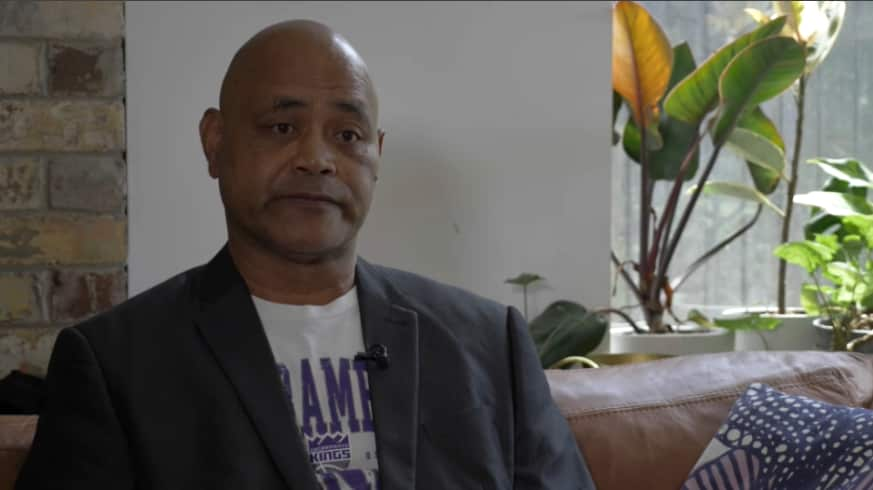
Turaga regularly shares his story to make sure that what happened to him doesn't happen to other migrant workers. But he says he now gets hundreds of calls a week from exploited Pacific workers.
He says it's not easy for workers to just go home when they face hardship in the PALM scheme, largely for cultural and safety reasons.
"They're not going home with a bit of shame because if these guys go home with no money to their families and if they've been debt–bonded — if they've borrowed money to come over — that can be fatal," he says.
While Leeton has a reputation for welcoming newcomers (signs in the town read "Leeton welcomes refugees, migrants and new settlers"), Dachi says their support systems aren't designed to manage the scale and complexity associated with widespread worker disengagement.
"Goodwill is not a strategy. Is it sustainable? No, there's donor fatigue, there's volunteer fatigue," he says.
Maytom agrees more coordinated support is needed. He wants to see safety nets formalised for disengaged workers, such as interim health cover and an amnesty offered to allow the ghost workforce to be re-engaged into the scheme.
"I have a good network of people around me, from their countries that do their best to support them while they can, but it can't go on forever," Maytom says.
"We're sort of getting overloaded at the moment, I'm grateful for whatever support we can get but we can't keep on doing what we're doing, we must find a way forward."
SBS News also contacted the Department of Foreign Affairs and Trade for this story, but did not receive a response by the deadline.
Readers who have concerns about modern slavery can contact 1800 FREEDOM on 1800 3733366 or at antislavery@dcj.nsw.gov.au for confidential support and assistance from the NSW anti-slavery Commissioner.
For the latest from SBS News, download our app and subscribe to our newsletter.







