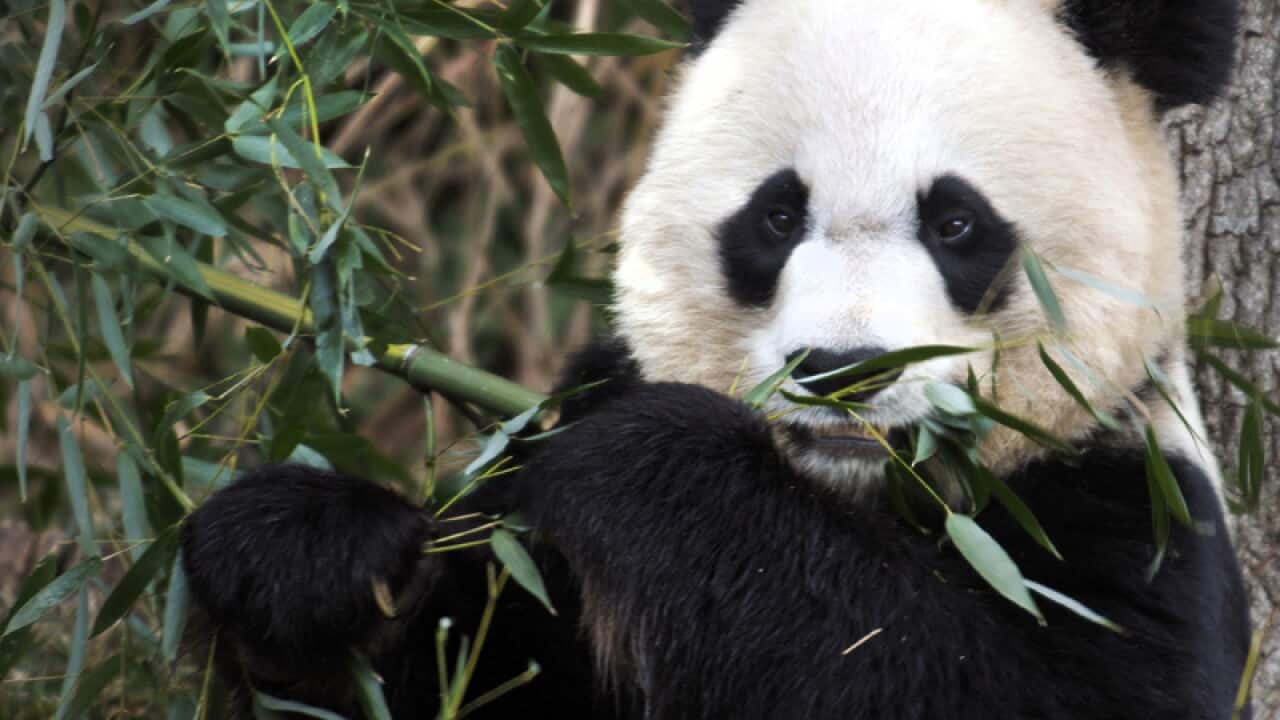
A rare giant panda called Mei Xiang has given birth to twin cubs at the Smithsonian National Zoo in Washington.
A first tiny cub - pink, hairless and only about the size of an adult mouse - was born at 5.35pm on Saturday and Mei Xiang reacted by tenderly picking up the cub.
Immediately after the zoo announced the birth, the live video feed from her enclosure appeared to have crashed, likely because of a high volume of viewers, the zoo said.
"All of us are thrilled that Mei Xiang has given birth," zoo director Dennis Kelly said. "The cub is vulnerable at this tiny size but we know Mei is an excellent mother."
Pandas are challenging to breed in captivity, but just when conservationists thought they had heard all the good news the zoo tweeted a few hours later: "We can confirm a second cub was born at 10:07. It appears healthy. #PandaStory."
News that makes sense
Your trusted source for staying up-to-date with the world around you. Get free daily news updates and analysis, straight to your inbox.
The birth of the twins appeared to be a surprise, as the zoo's Twitter feed had only previously referred to the expected birth of a single cub.
The mother panda's care team hope to carry out neonatal exams in the coming days and won't know the cubs' sex until a later date.
Mei Xiang was artificially inseminated in April with frozen semen from a male giant panda in China.
She was also inseminated with fresh semen from the zoo's male giant panda Tian Tian. DNA tests will identify the father.
Mei Xiang had a cub in 2005, which was sent to China. She also has a two-year-old cub named Bao Bao that lives with her in Washington.
But she also lost at least two other cubs, one that was stillborn in 2013 and another that lived just six days in 2012.
The zoo said Mei Xiang will spend almost all her time in her den for the next two weeks. On Tuesday, Malaysia announced that a giant panda at its National Zoo had given birth. The newborn's sex has yet to be determined.
There are fewer than 2000 pandas left in the wild, according to the World Wildlife Fund, as their habitats have been ravaged by development.
Roads and railways cut through the bamboo forests they depend on in China's Yangtze Basin, their primary habitat.
Pandas rely on bamboo and eat almost nothing else. Given their low birthrate, captive breeding programs are key to ensuring their survival.







