
Several homes have been destroyed in NSW as fires rip through bushland in heatwave-fuelled conditions.
Emergency warnings were issued for residents near fires on the NSW Central Coast and in the Hunter region on Saturday as 75 fires burned across the state.
At least 12 homes were believed destroyed by a bushfire at Koolewong, not far from built-up areas on the Central Coast.
Several more properties were thought to be affected at Buladelah, north of Newcastle, although fire assessors had not yet surveyed the full extent of the damage.
NSW Premier Chris Minns described the unfolding situation as a "challenging day for NSW firefighters".
News that makes sense
Your trusted source for staying up-to-date with the world around you. Get free daily news updates and analysis, straight to your inbox.
"We need to do everything we can to protect lives," he told reporters.
More than 1,000 firefighters are working to contain 19 out-of-control fires, with assistance from 300 vehicles and nine aircraft.
An emergency warning for Koolewong has been downgraded to a watch and act, although the fire has since spotted south into the Woy Woy Bay Road and Phegans Bay area.
NSW Rural Fire Service commissioner Trent Curtin said the fire had moved very quickly into properties on Saturday, after it started in park areas.
Firefighters were quick to respond to the Koolewong blaze, but by the time trucks arrived several homes were already in flames.
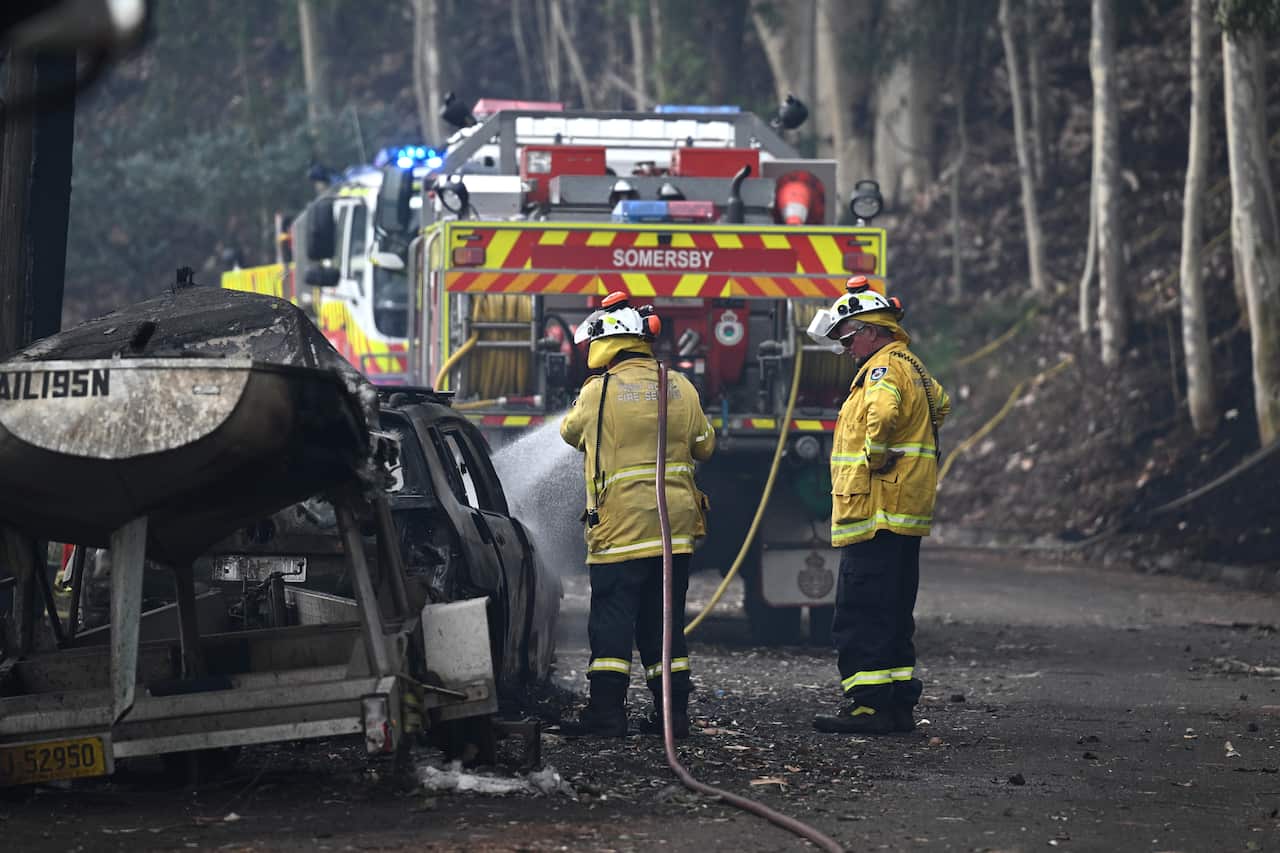
Gosford MP Liesl Tesch said the fires had devastated the community.
She added that the location would make it difficult for emergency services to access affected properties, with some driveways so steep that even a car would struggle to get up.
"It's a really tough location to get to," she told ABC News.
Temperatures topped 40C in parts of Sydney and elsewhere in NSW on Saturday, with heatwave warnings issued for multiple heavily populated areas.
The mercury in some inland areas neared 44C.
The Hunter and mid-north coast regions were of particular concern for firefighters, with windy conditions expected to fan existing fires.
The Milsons Gully fire in the upper Hunter also reached emergency level on Saturday.
A total fire ban was in place across Sydney and many parts of central NSW as forecast thunderstorms risk sparking more fires, with winds of up to 90km/h expected in some areas.
Hot, west-to-northwesterly winds could cause erratic and variable fire danger, the Bureau of Meteorology's Dean Narramore said.
"Dry lightning is also a risk with some of our storms through NSW and that could ignite more fires across the state," he said.
The state's inner north between Cobar and Tamworth had the highest thunderstorm risk, including damaging winds and hail.
A cool change moving through Victoria and southern NSW is not expected to bring relief to the Central Coast and northern NSW until late Sunday morning and into the afternoon.
Central and western parts of Queensland and areas in Western Australia's north also sweated through balmy conditions.
More than a dozen properties damaged in Tasmania
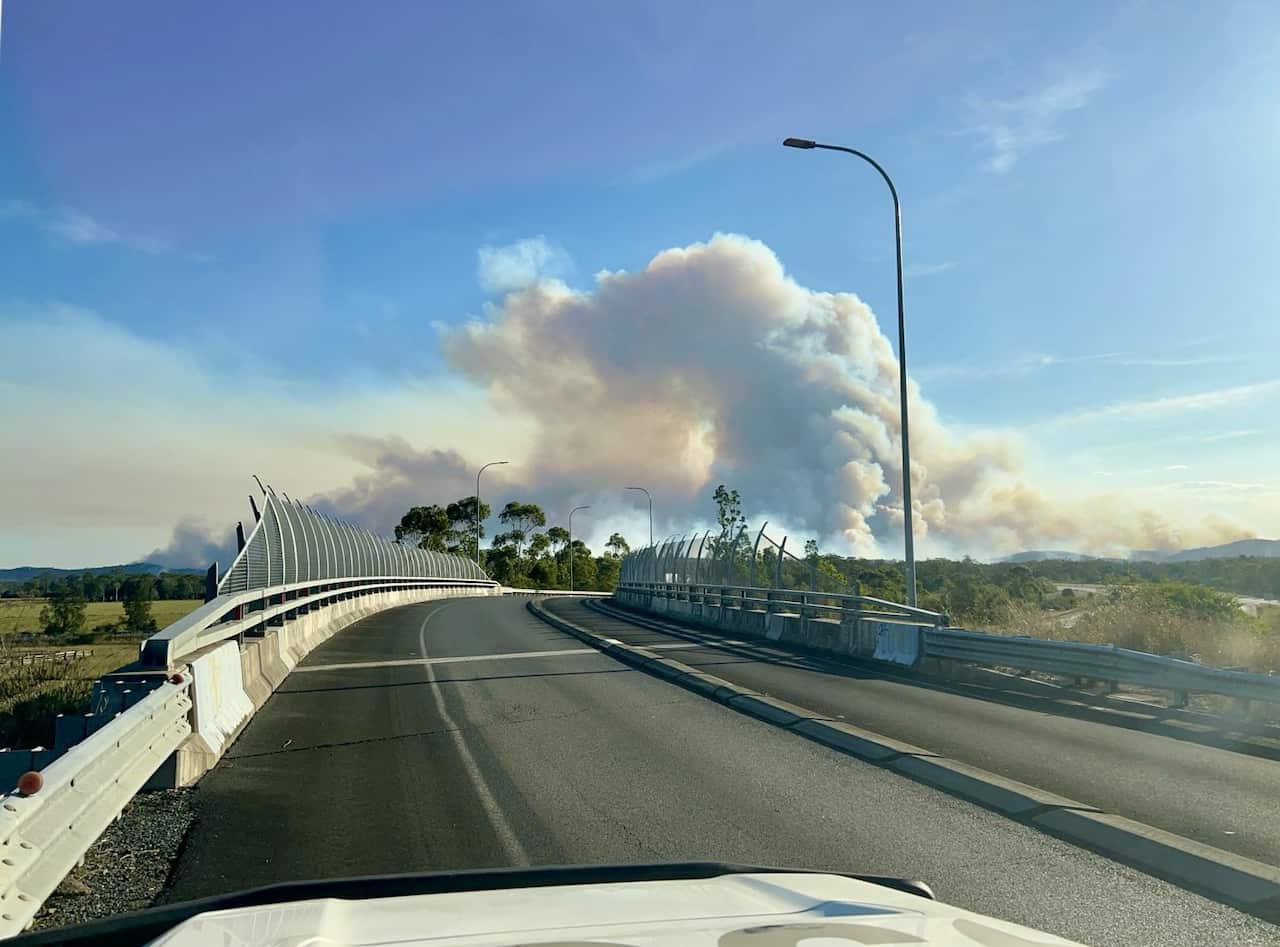
In Tasmania, more than a dozen homes and shacks, outbuildings and cars were damaged and two firefighters were injured fighting an out-of-control fire at Dolphin Sands on the state's east coast on Friday.
Crews in Tasmania are continuing to investigate its cause as they deploy air and ground tankers to contain the fire, which has burnt more than 700 hectares.
While alerts for the blaze have been downgraded, the Tasmania Fire Service has urged people not to return.
Some residents would be without power for a week after TasNetworks confirmed severe fire damage to dozens of power poles in the Dolphin Sands area.
But cooler temperatures and showers tempered conditions on the island state on Saturday, bringing relief and even snow to some parts.
For the latest from SBS News, download our app and subscribe to our newsletter.







