"The resumption of the peace process is a vital strategic interest of the state of Israel," he said in a statement.
"It is important on its own to try to bring an end to the conflict between us and the Palestinians, and is important because of the challenges facing us, especially from Iran and Syria," he said.
News that makes sense
Your trusted source for staying up-to-date with the world around you. Get free daily news updates and analysis, straight to your inbox.
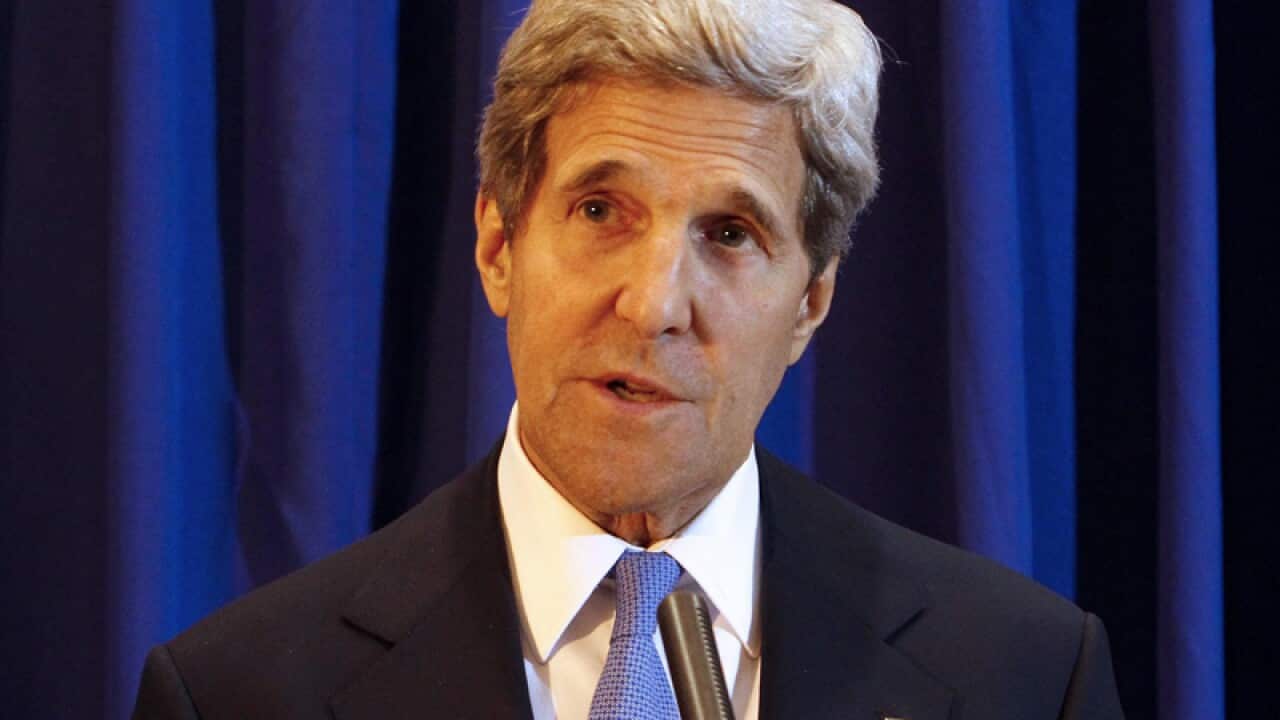
Netanyahu's remarks were his first reaction to the Friday night statement by US Secretary of State John Kerry, who said Israeli and Palestinian negotiators had agreed to meet to pave the way for a resumption of direct peace talks.
The last round of direct talks broke down in 2010 over the issue of Israeli settlement building in the West Bank and east Jerusalem.
Netanyahu also stated the two central goals he perceived for the talks: "Preventing a bi-national state... that would endanger the future of the Jewish state, and preventing the establishment of another Iranian-sponsored terrorist state within our borders."
He did not provide further details on what the sides had agreed upon ahead of the initial rounds of talks.
"I will insist on Israel's security demands and its vital interests," Netanyahu's statement said.
Speaking on privately-owned Channel 2 television, Israeli Justice Minister and chief peace negotiator Tzipi Livni noted that while there were no preconditions to talks, "everything will be on the table".
This would include the 1967 borders and east Jerusalem, which the Palestinians want as their future capital.
Earlier Saturday, Intelligence Minister Yuval Steinitz said Israel would release a "limited" number of Palestinian prisoners as a "gesture".
PLEDGE TO FREE PRISONERS
On Saturday, Israeli Intelligence Minister Yuval Steinitz said his government would engage in the staged release of a "limited number" of prisoners, some of whom have been in Israeli jails for 30 years.
Steinitz provided no other details but said "there will definitely be a certain gesture here".
Kerry's announcement came after he spent four days consulting the Israeli and Palestinian leadership from his base in an Amman hotel and a late Friday helicopter dash to the Palestinian Authority in Ramallah.
Just minutes before boarding a plane to fly home, Kerry told reporters both sides had reached "an agreement that establishes a basis for resuming direct final status negotiations".
"This is a significant and welcome step forward," he added, having doggedly pushed the two sides to agree to resume talks in six intense trips to the region since becoming the top US diplomat in February.
But he warned that the issues separating the sides were "difficult" and "complicated".
A US State Department official said Kerry had wrenched a commitment from both sides "on the core elements that will allow direct talks to begin".
The Israelis and Palestinians remain far apart on final status issues including the borders of a future Palestinian state, the right of return of Palestinian refugees, and the fate of Jerusalem which both want as their capital.
Palestinian president Mahmud Abbas has also repeatedly called for a freeze to Israeli settlement building and a release of prisoners.
Analysts cautioned against reading too much into the latest developments.
Chico Menashe, diplomatic commentator for Israeli public radio, likened the situation to "a half-baked cake Kerry removed from the stove. Kerry convinced the Israelis and Palestinians it was edible, and both sides agreed to eat it."
Gal Berger, Palestinian affairs correspondent for Israel's public radio pointed to the fact that Yitzhak Molcho, the personal envoy of Prime Minister Benjamin Netanyahu, has already been holding talks with Erakat, which were still ongoing.
"Now Livni is being added, but it is still not a meeting at the level of the leaders (Netanyahu and Abbas)," he said.
Predictably, the Islamist Hamas movement which runs the Gaza Strip rejected a return to talks, its spokesman Sami Abu Zuhri saying Abbas had no legitimate right to negotiate on behalf of the Palestinian people.







