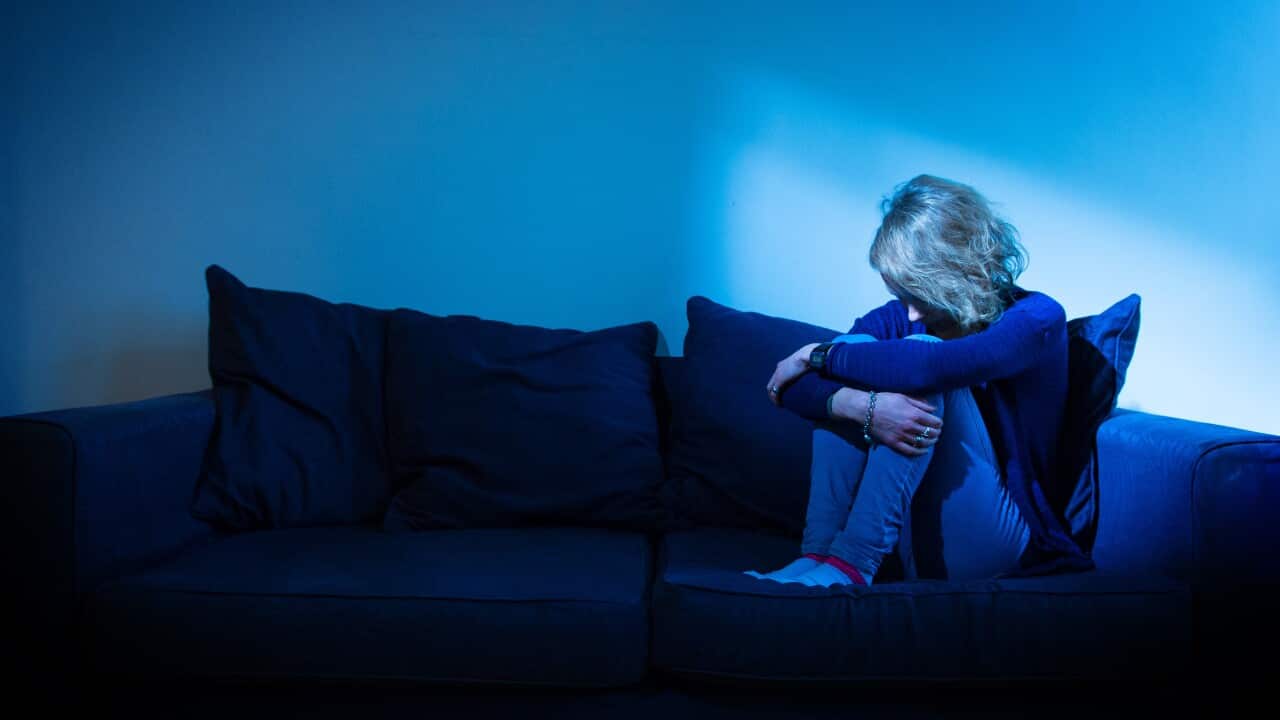
Changes to the aged pension announced by Scott Morrison have prompted concerns for the hundreds of thousands of pension recipients struggling with mental illness.
Tightening of the pension asset test announced by Social Services Minister Scott Morrison on Thursday will see more than 90,000 part pensioners lose access to their payments.
As of July 2013, more than 256,000 people received a disability support pension due to a psychological or psychiatric condition.
At 31.2 per cent, they accounted for the largest type of recipient under the disability support pension system.
SANE Australia CEO Jack Heath said there were concerns that the changes to the pension system could impact on them.
'We can’t keep replicating the sorts of expensive help we have at the moment'
“I have a big concern that we’re going to see significant decreases in terms of accessibility to the disability support pension for people that are affected by mental illness,” he said.
“When we talk about mental health expenditure, a lot of it tends to focus on the funds that are going to mental health organisations, when in fact that only represents 10 or 12 per cent of the overall spend.”
Mr Heath said it was also critical that long term plans for mental health spending be outlined, a call supported by Mental Health Australia.
Investment in electronic spaces needed to be investigated, he said.
“We have to look at e-mental health as the way forward to ensure that people get help that’s earlier and cheaper,” he said.
“We can’t keep replicating the sorts of expensive help we have at the moment.”
The health system was one of the big losers of the Abbott Government's last budget, but the mental health sector did see $300 million announced for front line services in April.
'People are often discharged very unwell, back into the community, back into their own families'
Headspace CEO Chris Tanti told SBS he was hopeful of further funding in the budget, but was not optimistic.
Mr Tanti said there simply wasn’t enough money to address issues within the sector.
“I think certainly in some areas of mental health care, particularly the acute end, people have been saying this for a very, very long time,” he said.
Funding issues for the mental health sector were outlined in a long awaited review of Australia’s mental health programs and services, issued in April.
The 700-page report stated that despite almost $10 billion in Commonwealth spending on mental health annually, there were no agreed or consistent national measures of whether this is leading to effective outcomes.
The report called for the future redirection of $1 billion in funding from acute hospital care to community based mental health programs, a proposal already ruled out by Health Minister Sussan Ley.
The move has been criticised by some, but Mr Tanti said Ms Ley’s decision was the best option.
He said a lack of funding in acute services meant people were often not given enough time in hospital to recover from episodes.
'I don’t think we need less money in the acute sector. I think we need more'
“People are often discharged very unwell, back into the community, back into their own families,” he said.
“Often families really, really struggle to cope… I think the Minister made the right call there, actually. I don’t think we need less money in the acute sector. I think we need more.”
The review also highlighted the significantly higher rates of mental health issues among Indigenous people, who were reportedly 2.7 times more likely to have high or very high distress levels.
Aboriginal and Torres Strait Islander people also take their lives at more than four times the rate of non-Indigenous people in some demographics, according to data issued by the Australian Bureau of Statistics.
Information recorded in 2010 showed that the rate of suicide among Indigenous men aged 25 to 29 was 90.8 deaths per 100,000 people, compared to 22.1 in its non-indigenous counterpart.
Mr Tanti said while a lot of money had been invested in Indigenous mental health, its use needed to be readdressed.
“I don’t think it’s about throwing money at the problem, I think it’s about using the existing allocation of funds better,” he said.
“I think Indigenous communities know what is going to work in their communities and I think need to work with them in order to make sure we can put those services on the ground. But there is an incredible amount of need.”
Concerns have also been raised by the St Vincent de Paul Society regarding the impact that welfare changes could have on mental health.
'I don’t think it’s about throwing money at the problem, I think it’s about using the existing allocation of funds better.'
CEO John Falzon told SBS that the government’s plans to crack down on unemployed youth could backfire and leave health services struggling.
“The government still has on the table, as if it’s trying to make an art form out of cruelty, it still is pursuing its absolutely vicious measure to force young unemployed people to survive for six months every year on fresh air and sunshine,” he said.
“This does nothing for people’s mental health or physical health.”
Dr Falzon said the system needed to have a structural approach to changing the labour market, as he believed it was not individual attitudes holding people back from employment.
He said the government needed to introduce a national jobs plan, instead of something “cobbled together from recycled materials such as the work for the dole scheme”.
“We particularly want to see a holistic approach by government,” he said.
“Sadly, what we have seen so far, is an approach to people who are living on the edges of the economy, of the labour market or indeed of society, an approach which actually penalises and blames them.
“Particularly in the area of mental health, this simply exasperates conditions rather than assisting people to really live happy lives.”
Anyone seeking support and information about mental health or suicide prevention can contact these numbers:
- Lifeline: 13 11 14
- Suicide Call Back Service: 1300 659 467
- BeyondBlue: 1300 224 636
- Kids Helpline: 1800 55 1800.
Share


