
It’s the first time more women than men are representing Australia at the summer Olympic Games, and the first time a woman, Kitty Chiller, has stepped into the role of the country's chef de mission.
But women's rights advocates and Twitter users have said they want social media users to stop describing Australia's Olympic women and officials as "girls".
Womensport NSW president Susan Horwitz tells SBS that the use of the word "girls" is "disappointing" as "all female representation at the games level is considered women's sport".
"It just shows a lack of respect and still eludes to the lack of equality in women's sport.
"I personally don't think people are meaning to refer to the athletes as girls but people need to be conscious that we are continually striving for equality in sport and it would go along way in the mission if they could refer to the female athletes as women and not girls."
Dr Nikki Henningham, executive officer of the Australian Women’s Archives Project at the University of Melbourne, agrees.
She tells SBS that she "loathe[s] the way adult women athletes are referred to as girls".
"This whole conversation dovetails nicely into a conversation about a Hungarian woman swimmer whose husband/coach was given credit for her victory."
Dr Henningham was referring to Katinka Hosszú who set a new world record in the 400-metre individual medley at the weekend.
In the aftermath of her performance, US broadcaster NBC referred to her coach and husband as "the guy responsible" for her success, a comment that landed it with criticism.
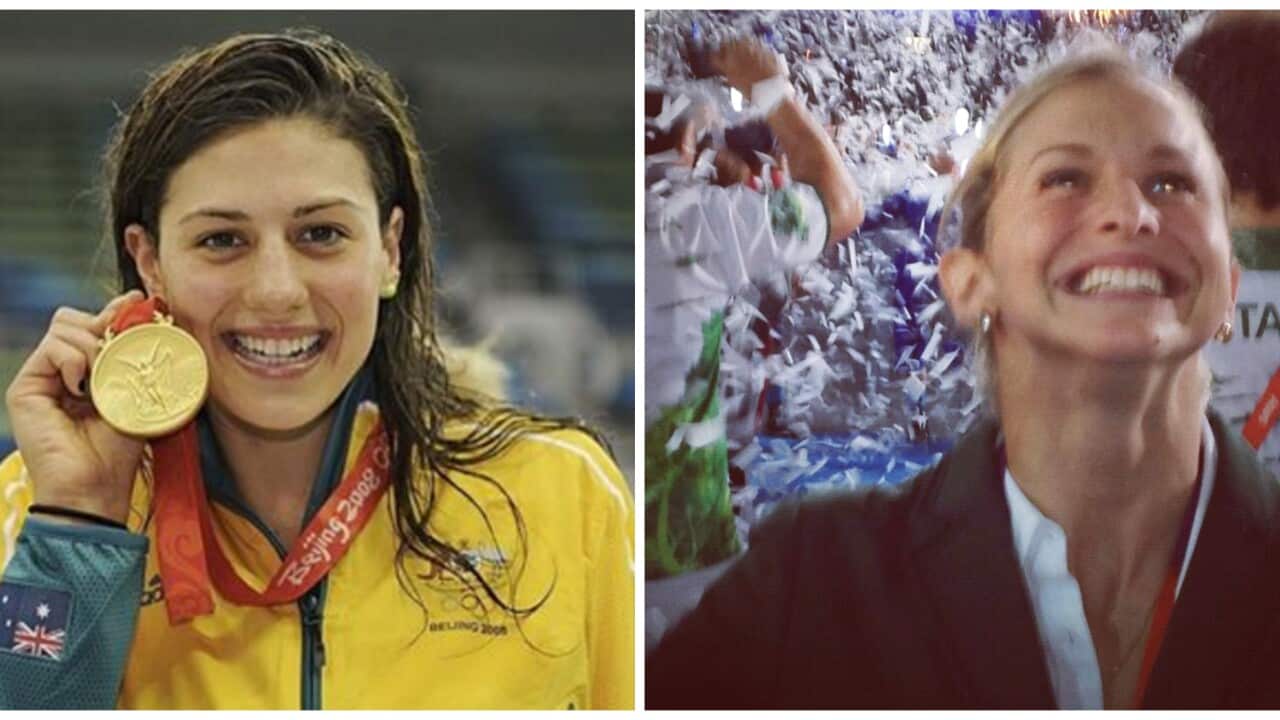
But former Olympic swimmer and two-time gold medalist Stephanie Rice tells SBS that she "doesn’t have a problem with either term, "girls" or "women".
Another former Olympic gold medallist swimmer Libby Trickett agrees.
"In my opinion I didn't find it offensive to be called a girl while I was swimming. We do the same with our boys as well.
"I think it's the nature of the environment we work in, sport, a lot of our athletes are very young and I would almost consider it a term of endearment," she adds.
"I think it goes without saying that our 'girls' are incredibly strong and talented women who are doing an amazing job representing Australia on the world stage."





