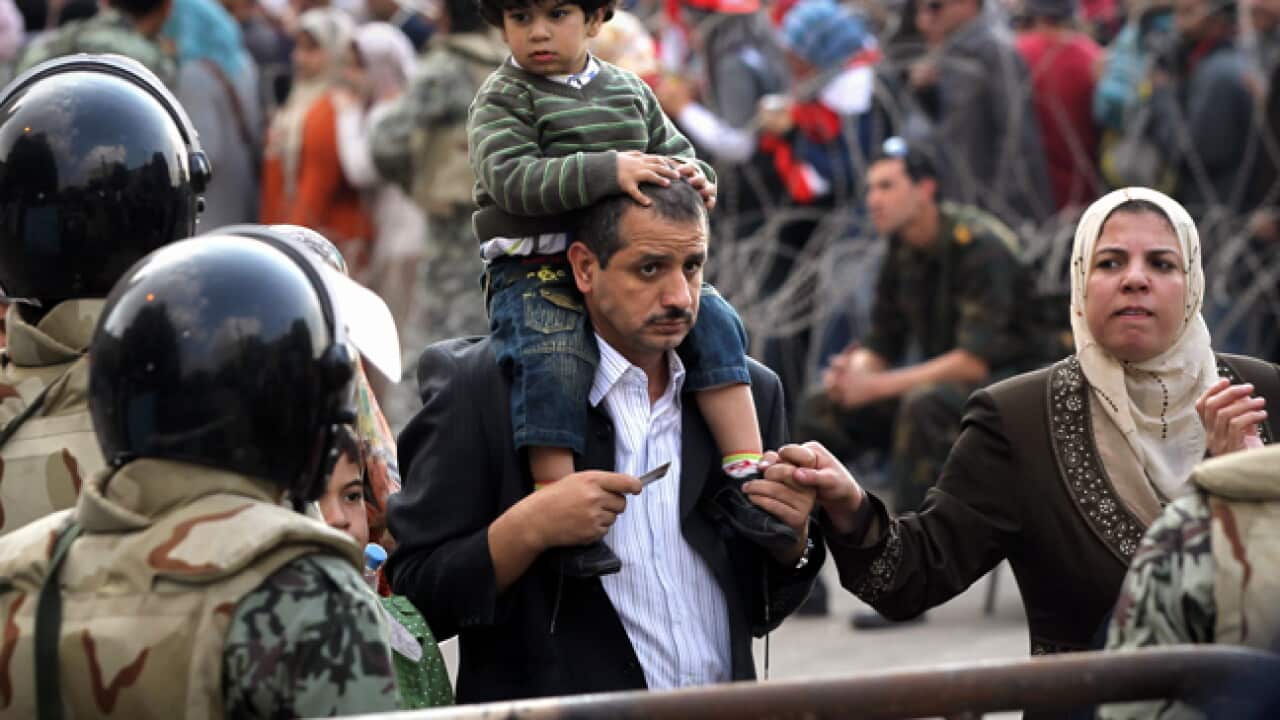
US President Barack Obama led increasingly hoarse Western calls for 'concrete' change in Egypt after President Hosni Mubarak wrong-footed the world by deciding to cling to power.
But though he stiffened his tone towards Cairo and embraced raging street protests as never before, Obama was constrained by a dearth of options at Washington's disposal.
After a defiant Mubarak said he would cede some power but stay in office, Obama said Egyptians needed to know if the transition was genuine -- and strongly suggested it was not.
News that makes sense
Your trusted source for staying up-to-date with the world around you. Get free daily news updates and analysis, straight to your inbox.
"The Egyptian government must put forward a credible, concrete and unequivocal path toward genuine democracy, and they have not yet seized that opportunity," he said in a written statement.
White House officials had at first Thursday declined to join rising euphoria buzzing on cable television amid reports and rumors that Mubarak was set to go.
But Obama, on a visit to Michigan pulled a minor surprise, offering his strongest endorsement yet of Egypt's protests, saying the world was watching "history unfold."
"We want those young people and we want all Egyptians to know that America will continue to do everything that we can to support an orderly and genuine transition to democracy in Egypt," he said.
Obama's remarks appeared a strong sign that the White House had reason to believe the 82-year-old strongman had decided he could hang on no longer.
But the veteran leader dug in his heels and Obama's statement may have put even more distance between the US and the Mubarak government.
The White House move may have also been motivated by a desire to clear up its public message amid scenes of confusion -- after CIA chief Leon Panetta said during a congressional hearing it was likely Mubarak would quit.
But the CIA quickly rowed back his comment however, saying that he was responding to news reports and not citing any US intelligence -- a moment of embarrassment for a top US spymaster.
Obama's first indication the drama was taking a lurch for the worse came as he and aides watched on television from Air Force One's plush interior as Mubarak made a defiant speech to his countrymen.
First, Washington had to figure out exactly what had just happened: Mubarak's speech left many observers confused, as to the extent of his handover to his Vice President Omar Suleiman.
Then it had to confront the possibility that fury in the Cairo crowds would translate to violence on Friday.
"It is imperative that the government not respond to the aspirations of their people with repression or brutality," Obama said.
Officials believe US appeals to Egyptian military officers, many with deep ties with the Pentagon, have been helpful in heading off cataclysmic violence.
Mubarak's defiance also posed a challenge to the authority of Obama, who a week ago called on the long-time US ally to take the "right decision" as a proud patriot on his future -- a clear hint that Washington wanted him out.
But in his speech Thursday, Mubarak fell back on a familiar nationalist arguments of an tottering autocrat, vowing to ignore foreign "diktats" -- a sign he cares little for Obama's warnings.
Obama's decision to issue a paper statement, rather than speak on camera however reflected a desire not to get personal with Mubarak.
In fact, his statement did not mention Mubarak at all, maybe an indication he was seeking to peel key military or political figures away from the Egyptian strongman's powerbase.
It remained unclear how much wider leverage the United States has.
"The bigger reality is really the limits of US influence and the limits of US knowledge ... and the limits to what we can do to steer things," said Richard Haass, President of the Council on Foreign Relations.
The biggest theoretical leverage the United States has might be pulling the 1.3 billion dollars of military aid to Egypt off the table.
But that move would likely endanger one of the few US channels of communication.
Haass said that the best US strategy would likely be forceful but quiet diplomacy, and a disciplined public posture on the crisis.
But the US line that only Egyptians can dicate their future may be tested if the country slips into chaos or repression.
Republican Senator John McCain said Obama now had no option but to get tough with Mubarak, despite his 30-year alliance with Washington.
"I think the United States had better be more clear in our message to President Mubarak that we are very serious in our message that he needs to step down," McCain told Fox.







