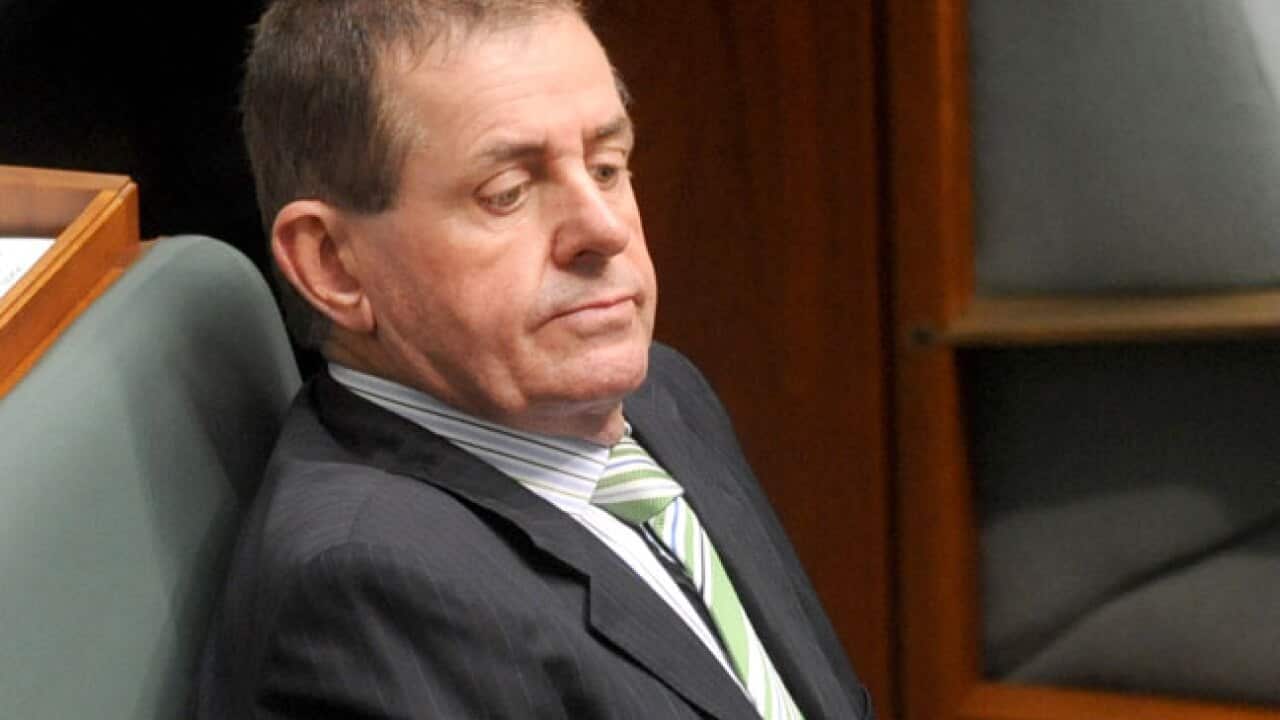
Peter Slipper is the new Speaker of the House of Representatives, replacing Harry Jenkins, while Labor MP Anna Burke has been elected as new Deputy Speaker.
Labor nominated Liberal MP Peter Slipper to take up the role, effectively giving the Gillard government two more votes on the floor of the lower house.
Mr Slipper has accepted the nomination and was eventually formally elected.
But the Coalition delayed a vote by nominating a series of Labor MPs to fill the post instead.
News that makes sense
Your trusted source for staying up-to-date with the world around you. Get free daily news updates and analysis, straight to your inbox.
Nationals MP Bruce Scott has been elected as Second Deputy Speaker of the House.
Manager of opposition business Christopher Pyne began by nominating Anna Burke, followed by Dick Adams, Sid Sidebottom, Sharon Bird, Kirsten Livermore, Steve Georganas, John Murphy, Maria Vamvakinou and Yvette D'Ath.
All declined to accept the nominations.
Mr Pyne said Labor was breaking with the Westminster tradition by refusing to nominate a government MP for the role.
"If the government truly believes in this parliament and the Westminster traditions upon which it is based they would not be trashing the constitution, trashing the standing orders, trashing the conventions of this parliament for 110 years," he said.
JENKINS RESIGNATION GIVES PM 'BREATHING SPACE'
Labor had put its political interests ahead of what was good for the parliament and the country, Mr Pyne said.
The sudden resignation of Harry Jenkins gives the the Gillard minority government two extra votes and a little more breathing space with the impending election of a Liberal MP as Speaker of the House of Representatives.
Since last year's election, Labor has had to rely on the votes of three independents and a Greens MP to survive and get its legislation through the lower house.
But the resignation of Speaker Harry Jenkins, to go to the Labor backbench, allowed caucus on Thursday morning to put forward Queensland Liberal MP Peter Slipper as their nomination for the role.
Having him in the role will give Labor an extra two votes, which will improve the government's position in getting its measures through parliament.
Mr Slipper is expected to resign from the coalition, to sit as an independent, after federal colleagues in a meeting in Canberra on Thursday voted that any member who put their name forward for the Speaker role would have to resign from the Liberal or National parties.
Mr Slipper was in the chair on Thursday morning and did not attend the coalition party room meeting.
The move may also head off the government having to go through with independent MP Andrew Wilkie's poker machine reforms, which is proving unpopular in the caucus and the community.
Mr Slipper also is under pressure from Queensland Liberal National Party colleagues to resign over a series of issues involving travel and electorate allowances.
On Wednesday afternoon, the LNP executive met and deferred a decision on whether to take disciplinary action against him or call an early preselection in mid-December.
A significant group of LNP members want him replaced by former Howard government minister Mal Brough.
The LNP executive is expected to meet again on Friday.
LNP president Bruce McIver said in a statement there were issues of a "serious nature pertaining to the federal seat of Fisher" which needed further examining.
Opposition Leader Tony Abbott declined to say whether he had tried to talk the LNP out of taking action against Mr Slipper, knowing that it could trigger such a move by Labor.
But it is understood that both Mr Abbott and federal Liberals director Brian Loughnane expressed their disappointment with the LNP's action.
Ms Gillard told parliament she would comment on the move later in the day.
Labor put forward Anna Burke for the deputy speaker role.
The Coalition will ask parliament to endorse Bruce Scott, from Queensland.
Under parliamentary convention, the deputy speaker comes from the alternate party to that of the Speaker.
The Speaker is also chairperson of the selection committee - a powerful body involving senior members of all parties and the independents which in essence sets the agenda for the parliament
The Australian Greens are meeting to discuss the situation.
Mr Abbott said Labor should provide the Speaker out of its own ranks, in line with the age-old Westminster convention.
"This is bad day for democracy in Australia," he told reporters in Canberra.
Mr Abbott said it should have been Ms Gillard who resigned, not Mr Jenkins.
"The Speaker has resigned so that the government can shore up its numbers in the parliament," Mr Abbott said,
"It's lost its way, it's lost its majority, and now it's lost its speaker."







