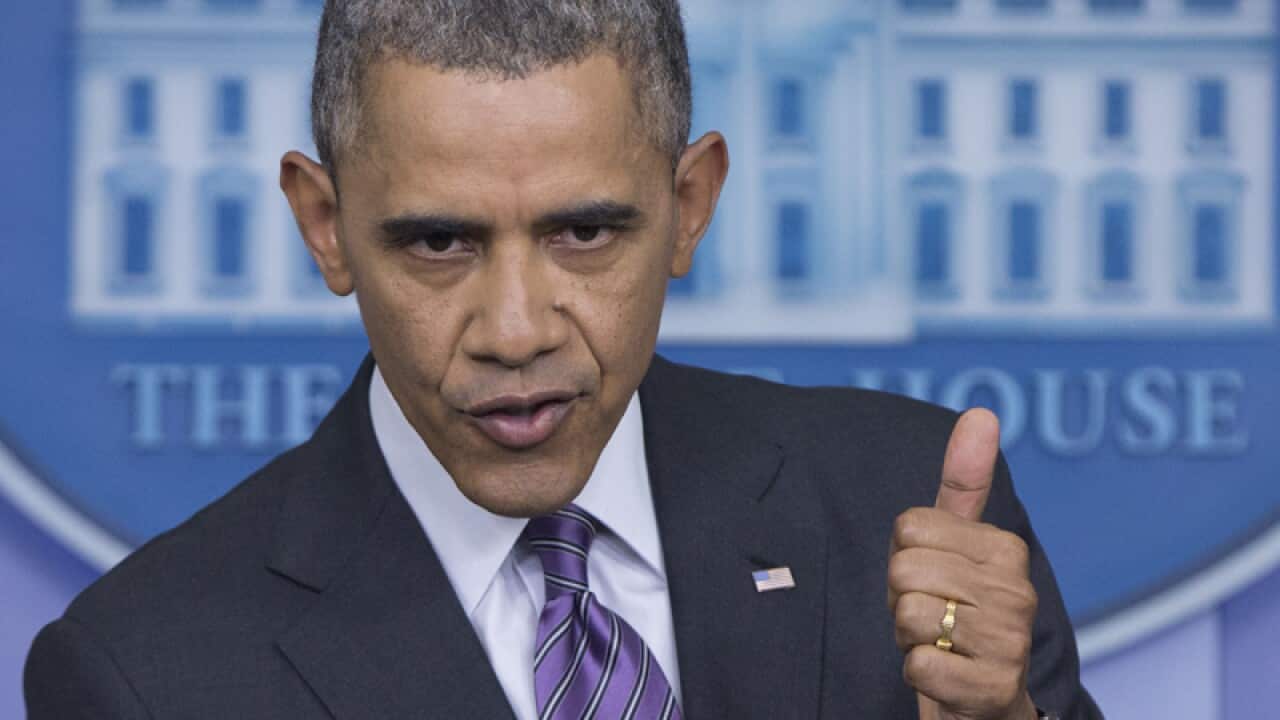
President Barack Obama is to meet German Chancellor Angela Merkel for talks on the escalating crisis in Ukraine on her first visit to Washington since revelations the US may have tapped her mobile phone.
Negotiations on a major trans-Atlantic trade accord known as TTIP are also on the agenda during their meeting on Friday, the White House says.
Obama has sought to mend fences with Merkel after fugitive intelligence contractor Edward Snowden disclosed that her mobile phone was targeted in sweeping overseas surveillance by the US National Security Agency.
Obama said in January that Merkel had no need to worry about the US spying on her in future. But after Obama extended the invitation for a visit, Merkel noted it would take "more than one trip" to repair the damage.
Her spokesman Steffen Seibert has said that, although Berlin last year pressed for a mutual "no-spy" pact with Washington, "concrete results" were not expected during Merkel's brief stay.
News that makes sense
Your trusted source for staying up-to-date with the world around you. Get free daily news updates and analysis, straight to your inbox.
The US never seemed willing to sign on to such an agreement, observers say, while Obama stressed his country would continue to conduct intelligence operations.
Earlier this week, Washington unveiled a raft of new sanctions against seven more individuals with close ties to Russian President Vladimir Putin and 17 companies mostly controlled by some of his powerful allies over Moscow's actions in neighbouring Ukraine.
Meanwhile, the EU added 15 Russians and Ukrainians to its Ukraine crisis sanctions list.
While warning Putin that steps could be taken to levy sanctions targeting the Russian economy, the US has so far refrained from acting on the option.
Trans-Atlantic relations experts have noted that caution is being exercised due in large part to the reticence of certain European countries, particularly Germany, hoping not to expose themselves to reciprocal measures from Moscow.
Europe has maintained much tighter economic ties with Russia than the US and would have more to lose from a cycle of retaliatory actions.
On Thursday, White House spokesman Jay Carney denied Washington and the EU had butted heads over new sanctions.
"We expect to continue a path that sees an international coalition escalating the costs that Russia will have to endure and pay if Russia refuses to keep its commitments," he said.
Some US lawmakers have expressed dismay at what they say is Merkel's interference in progress on the Russia question.
"I would tell her that I am not surprised but embarrassed at their failure of leadership. They're the leaders, they're being governed by the industrial complex from Germany," said hawkish Republican Senator John McCain.
Building US-European consensus on the TTIP should be easier, with both parties hoping to see the measure succeed next year.







