

A NASA spacecraft is set to make history by becoming the first probe to explore the most distant planetary body - Pluto.
It has taken nine years and almost five billion kilometres to reach the baby of our solar system, but an American spacecraft launched in January 2006 is about to meet Pluto for the first time on Tuesday.
Pluto sits in a region known as the Kuiper Belt and is the furthest of the sun’s family of nine planets. Only two thirds the diameter of the Earth’s moon, Pluto was downgraded to a "dwarf planet" in 2006 though it has its own atmosphere and five known moons.
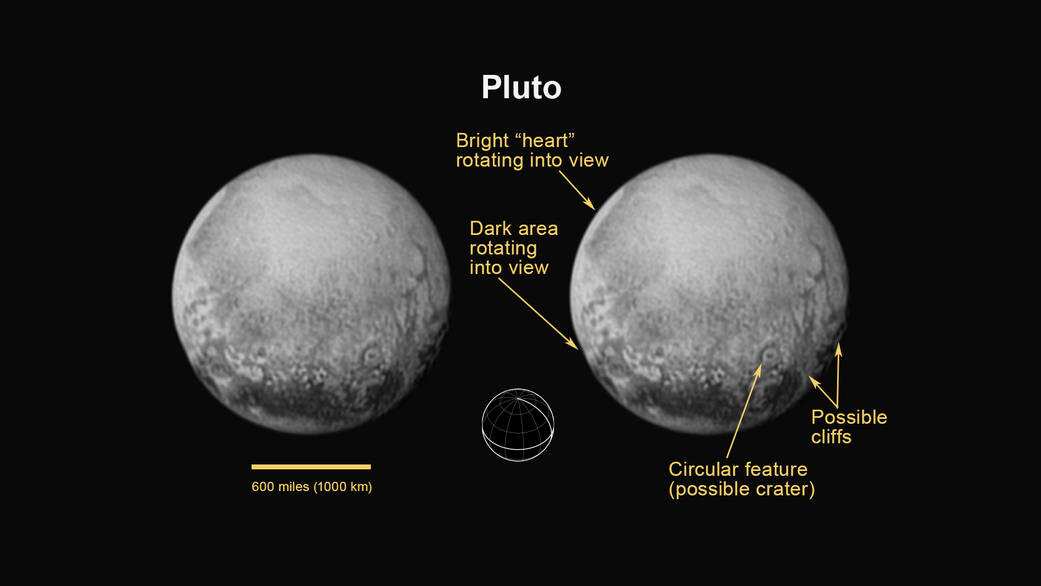
NASA’s spacecraft New Horizon is expected to pass within 12,500km of Pluto, and will take four hours to transmit unprecedentedly detailed images of Pluto’s surface through electromagnetic radiation. Given Pluto’s small size, the encounter will be brief.
"It’s a long way to go for a very brief period of a time, but it’ll be revolutionary to see what a body in the Kuiper belt, what it looks like," NASA’s Carolyn Porco told SBS World News.
"We’ll know the morphology of its surface, the geology, what kind of processes have been going on, the temperature."
Porco said the $A945.18 million spacecraft is a significant demonstration of human capability and our place in the universe, comparing the Pluto fly-by to Christopher Columbus’ discovery of America.
"It’s a monumental thing to think about the vastness of the solar system and how small we are, what little creatures, really, we are. And we have just extended our reach far, far, far away and done it with such grace and style and accuracy,” she said. “It should prove to everybody how capable we are when we set our minds to it."
Beyond its scientific significance, Porco said this historic moment gives her "hope" for humanity.
"You know we are a kind of wretched species; we’re troubled, we’re warlike, we’re cruel and we’re reminded of this day in and day out.
"And yet we are the beings that have conducted the exploration of our cosmic environment all the way out to the edges of the bodies that are in orbit around the sun."
Early images have revealed cliffs, craters and chasms larger than the earth's Grand Canyon. Porco said she expects Pluto to resemble Neptune’s moon Triton, but hopes to see things never seen before.
How to watch the Pluto fly-by
The world’s eyes will be on NASA’s spacecraft tonight as it passes Pluto in an historic moment.
Australian scientists will be capturing the first images of the Pluto flyby via the CSIRO’s Canberra Deep Space Communication Complex.
The nine-year journey across over five billion kilometres will culminate in an approximately 30-minute window of transmitted images of Pluto’s surface.
Watch the Pluto Countdown and Arrival live:
- When: 9:30pm, Tuesday 14 July (Sydney Time).
- Where: NASA TV will live stream the Pluto Arrival on all its channels, available online.
- Images will be available on the NASA website.





