By Anthony Dillon, Australian Catholic University
Tony Abbott is spending this week in North East Arnhem Land, part of his long-held hope “to be not just the Prime Minister but the Prime Minister for Aboriginal Affairs”. We asked our experts: what stories does the PM need to hear while he’s in the Top End?
One thing is certain about the Prime Minister’s week in North East Arnhem Land: no matter what he does, he’ll be criticised for it. That’s just how it is with politics, especially Aboriginal politics. People love to criticise.
Some of the criticisms the PM could face include that his visit has come later than he originally promised; that a week is not enough for a visit like this; that he can’t manage to visit all the communities in the region; or he will be criticised after the fact if his visit does not result in an immediate solution to the problems facing some Aborigines.
Why do people like to criticise not only governments but also Aboriginal leaders when it comes to Indigenous affairs? I believe the answer is because being a critic is so much easier than facing some uncomfortable truths: truths that need to be openly discussed if we are to close the gap.
News that makes sense
Your trusted source for staying up-to-date with the world around you. Get free daily news updates and analysis, straight to your inbox.
Importantly, the comments I make here are not restricted to the Aboriginal people of North East Arnhem Land, but are broader points raised by this week’s visit. That’s because I expect that the decisions Tony Abbott makes as a result of this trip – part of the government’s plan to find new ways of closing the gap – will have implications for Indigenous Australians beyond the Northern Territory.

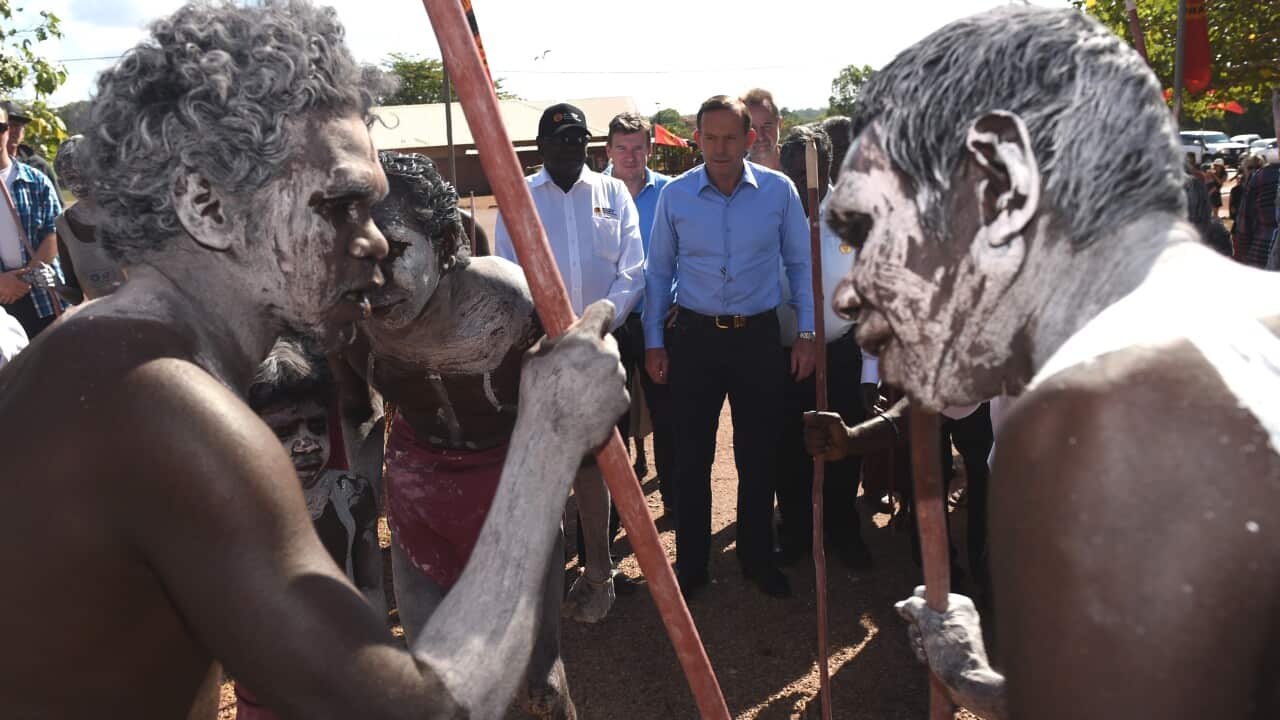
Tony Abbott with Galarrwuy Yunupingu (right) yesterday. AAP Image/Tracey Nearmy
Listening to many voices, in many languages
To minimise some of the criticisms that are bound to appear after his visit, the Prime Minister should meet with a representative sample of people.
This means speaking with and listening to those who may not speak English (and hence require a translator); leaders of different factions and families; the men and women; the young and the elderly; and the service providers.
Abbott also needs to be clear about the purpose of his visit and what can be expected. The demands are likely to be high.
While he needs to listen to the people, he needs to be upfront and tell them what it will take for them to have jobs, schools that provide quality education and access to services most Australians take for granted.
The PM needs to be able to tell the people if all this will be possible for them if they remain where they are. And if it is not possible, the people need to know what the options are.
Clear calls for action, with clear goals
Meanwhile, the Aboriginal leaders and community members seeing Abbott should be clear in their requests, and go into meetings knowing what is viable in the short- and long-term.
Vague rhetoric like “Give us sovereignty” or “Stop the paternalism” just won’t cut it. Unless these mantras are clarified with specific examples, they are simply smokescreens and distractions, which won’t help anyone.
For those who think that such rhetoric does not exist, consider the words of elder Rosalie Kunoth-Monks:
How much longer do we have to pay the price of being blacks of this country? How much longer do we have to keep coming cap in hand?
Such rhetoric sounds impressive and conjures up images of Aboriginal people being treated badly simply because they are Aboriginal. But it does little more than tickle the ears of those who love to blame.
The biggest problems are the hardest to discuss
Complaining is so much easier than tackling the real problems we face in many parts of Australia. These include community dysfunction, alcohol abuse, unemployment, ensuring real jobs are available and that the adults are ready to do those jobs, and ensuring the kids are in quality schools.
If the topic of a treaty or constitutional change is raised during Abbott’s time in North East Arnhem Land, those raising should also present a plan describing how it will help people.
Given the high rates of child abuse and violence in some Aboriginal locations, the Prime Minister should do all he can do to ensure that people can talk about these issues. This can be an extremely challenging task, given the reluctance to discuss such topics. These are problems of today that are not likely to be shown in shallow, emotive “documentaries” like Utopia.
‘It is not the critic who counts’
This week, Aboriginal people living in North East Arnhem Land have both an opportunity and a responsibility to voice their concerns, while the PM has a responsibility to listen and engage.
Ideally, to promote a sense of accountability, there should be a record of discussions, consultations with the people to document issues raised and actions proposed or promised. And importantly, such records should preserve the anonymity of participants wherever requested.
The PM would be wise to include his response to the visit in the report and discuss the ensuing actions. All this should be made available to the public, and especially made available in multiple languages for the people of North East Arnhem Land.

Anthony Dillon does not work for, consult to, own shares in or receive funding from any company or organisation that would benefit from this article, and has no relevant affiliations.







