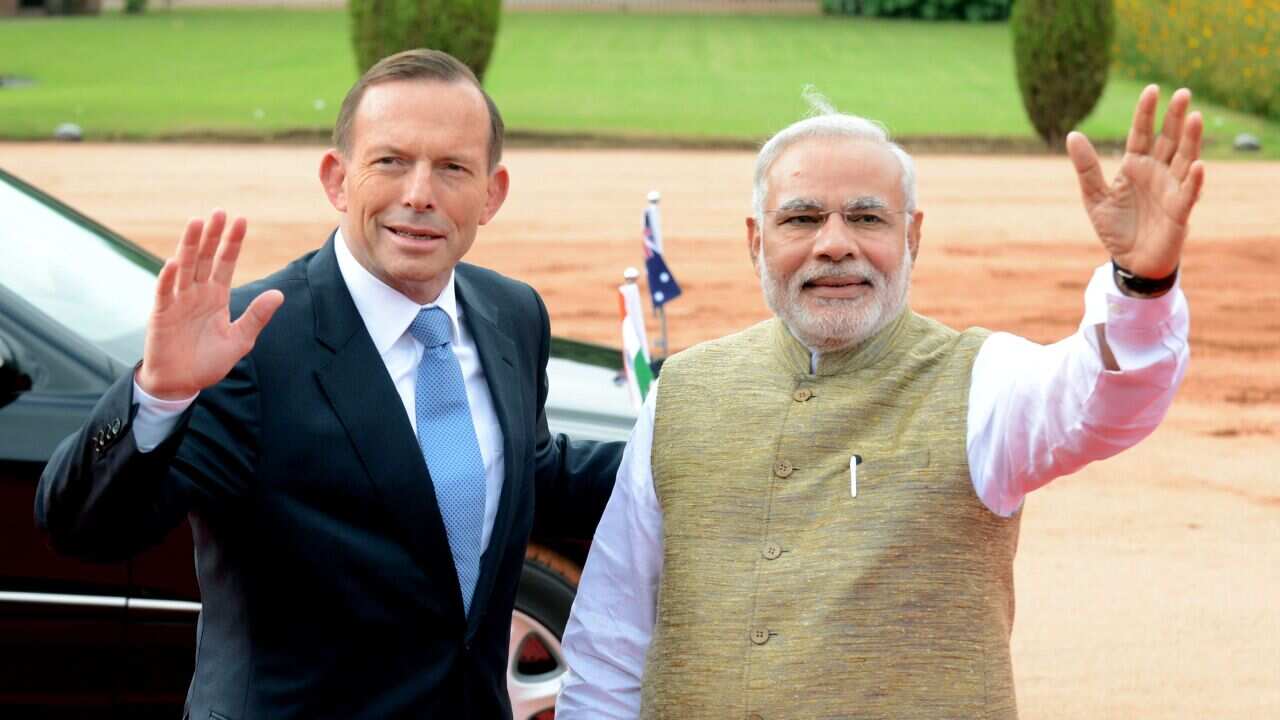
India has promised that any uranium it buys from Australia will only be used to produce energy, not build nuclear weapons.
Prime Minister Tony Abbott is poised to overturn a long-standing ban on uranium sales to India when he announces a deal with his counterpart Narendra Modi in New Delhi on Friday.
The nuclear safeguards agreement stipulates that India must only use the uranium for peaceful purposes that adhere to recognised international safety standards.
Australia also expects India to meet the highest global standards of radiation and nuclear safety.
The agreement will prove controversial because India has refused to sign the Nuclear Non-Proliferation Treaty despite possessing an arsenal of atomic weapons.
Mr Abbott has defended India as a model international citizen and peaceful "democratic superpower" in the region.
But opponents claim the deal is reckless, pointing to the secrecy of India's civilian nuclear industry, its poor safety record and quest to pursue a more sophisticated weapons stockpile.
It's not clear how the agreement will be enforced but Mr Abbott has stated it's not Australia's job to tell India how to conduct its own business.
The agreement must first be considered by Australia's parliamentary Committee on Treaties before getting the stamp of approval.
Australia's refusal to sell uranium to India has been a deep source of mistrust between the trading partners for years.
John Howard first gave in-principle support to the idea in 2007 but Kevin Rudd rescinded that once elected.
Julia Gillard convinced Labor in 2011 to lift its ban and negotiations for a safeguards agreement began with India the following year.
India wants to vastly expand its nuclear sector and hopes by the middle of the century a quarter of all its energy will come from uranium.
Australia, with the world's largest known uranium reserves, is well placed to capitalise on this energy transformation.
India is Australia's fifth-largest export market, with energy resources making up the lion's share of the goods shipped across the Indian Ocean.
The energy-strapped nation bought nearly $5 billion worth of Australian coal last year alone.
Share


