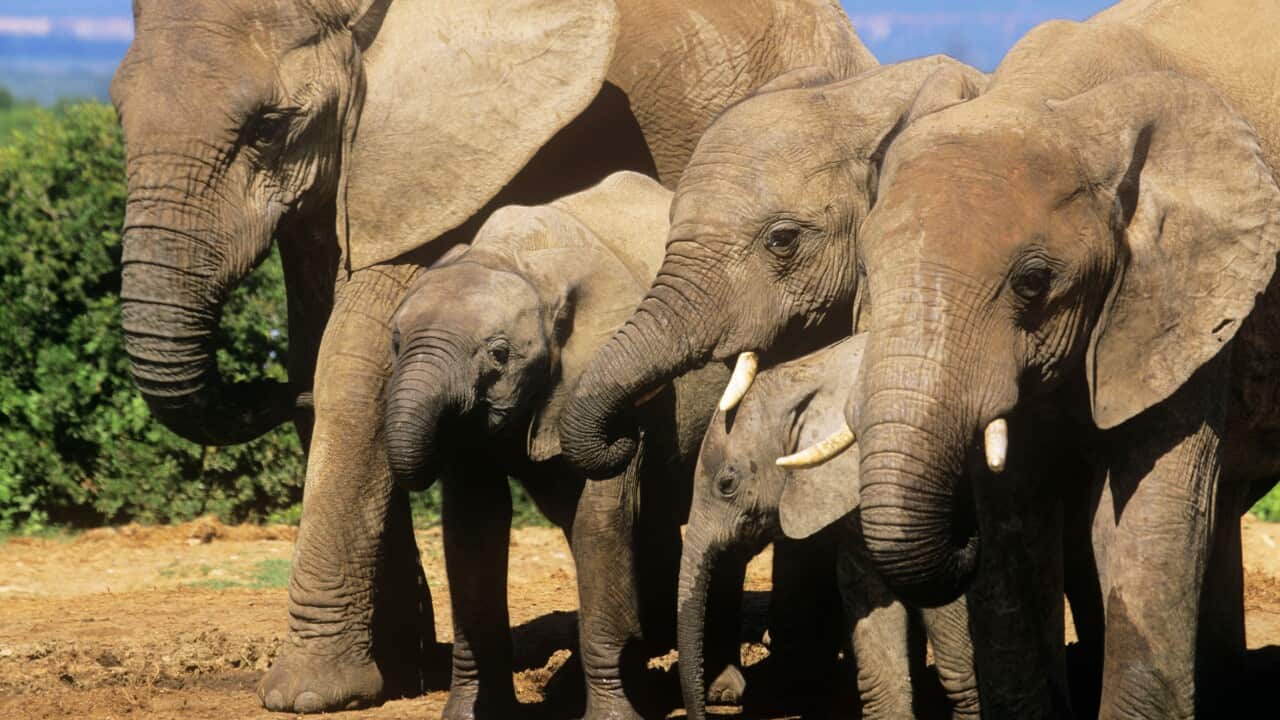
The two-day UN-backed conference which opened Friday aims to come up with strategies to stem worsening elephant poaching in Tanzania, a top safari destination determined to protect its prized wildlife assets but struggling to deal with increasingly sophisticated organised crime gangs.
"Approximately 30 elephants a day are killed... at this rate the population will be exterminated by 2020," the Tanzanian Elephant Protection Society (TEPS), an independent conservation group, said.
Tanzanian Vice President Mohamed Gharib Bilal opened the summit by asking for international assistance in battling the increasingly well-organised and equipped poaching gangs.
News that makes sense
Your trusted source for staying up-to-date with the world around you. Get free daily news updates and analysis, straight to your inbox.
"Organised and intricate poaching networks in and outside the country sustain this illegal trade, thus making it difficult for Tanzania alone to win this battle," Bilal said, painting a bleak picture of the situation.
Tanzanian police launched late last year a crackdown on suspected poachers amid a spate of killings of elephant and rhino, operating under what was reported to be a shoot-to-kill policy and making sweeping arrests.
While poaching rates dropped drastically, the operation was shut down because of allegations of harassment, rape and murder of suspected poachers.
But TEPS director Alfred Kikoti said he wanted the military to resume its role battling poachers.
"They have to stay in there, protecting our elephants," he said. "They can't just be in there for one operation and then pull out. It needs to be a longer term commitment."
Poaching has risen sharply in Africa in recent years. Besides targeting rhinos, whole herds of elephants have been massacred for their ivory -- threatening the tourism sector, a key foreign currency earner for Tanzania.
Organised gangs with insider knowledge and armed with automatic weapons and specialised equipment such as night vision goggles, use chainsaws to carve out the rhino horn or remove elephant tusks.
Millions of dollars of elephant tusks and rhino horns are smuggled out of East Africa each year, according to United Nations experts, with demand fuelled by an increasingly affluent Chinese middle class.
In 2006, the elephant population of Tanzania's vast Selous-Mikumi ecosystems, once hosting one of the largest elephant populations in the world, numbered 70,000, Bilal said.
Last year, there were only 13,000 elephants there.
Tourism, some 90 percent of which is wildlife based, accounts for 17 percent of Tanzania's gross domestic product and employs over 300,000 people, according to official statistics.







