(Transcript from SBS World News Radio)
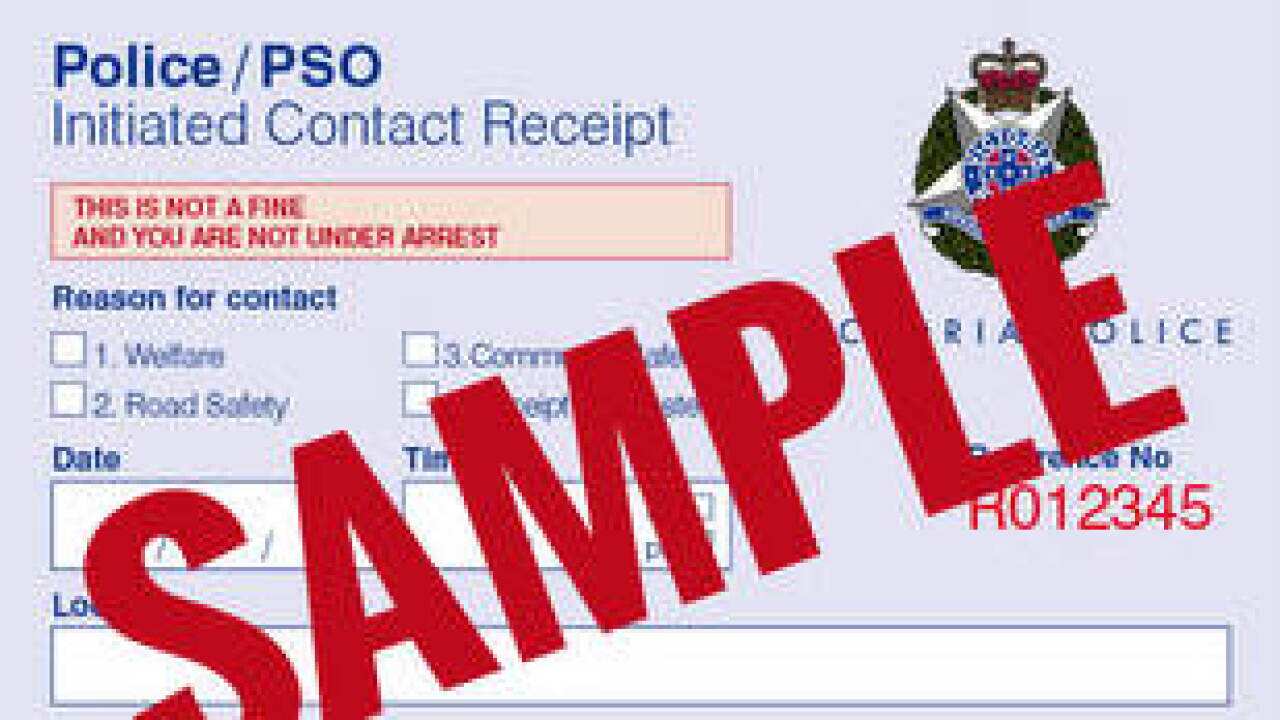
An Australian-first police receipt program is being rolled out in parts of Melbourne.
It's one of a number of measures promised by Victoria Police as part of a three-year plan to tackle so-called racial profiling.
Police admitted to racial profiling after 19 African-Australian men took Victoria Police to the Federal Court seven years ago.
They alleged police were targeting some people based on their appearance, rather than their actions: what's known as racial profiling.
News that makes sense
Your trusted source for staying up-to-date with the world around you. Get free daily news updates and analysis, straight to your inbox.
Santilla Chingaipe has the details of Victoria Police's new pilot program to address the issue.
(Click on the audio tab above to hear the full report)
Acting Deputy Commissioner Jack Blayney is with Victoria Police, and explains how the program will work.
"It's very similar to a business card - just a little bit larger than a business card - and it will simply only record the time and date that the contact was made, the reason for the contact and the location and the member (police officer) that has made the contact. So, it is quite a simple physical record that someone can take away that details the interaction and if they are concerned in any way about that interaction, we have contact details of where they can raise those concerns."
He says the pilot will initially begin in Moonee Valley, in Melbourne's north east, and Dandenong in Melbourne's south east.
"We chose Moonee Valley and Dandenong because of the diversity of the communities there. So, one of the aims of the program is to ensure that our members are acting appropriately and that they're not dealing with members of the community in different ways because of their background and so that's why we're actually using them in Dandenong and Moonee Valley because they do have diverse communities that would be a good test place for this sort of approach."
Acting Deputy Commissioner Blaynet says the receipt programs are meant to reassure communities.
"This was an initiative that we have looked at that's been applied in a number of jurisdictions around the world and it's one of many initiatives that we've been looking at working with local communities over the last year or so to ensure that they're comfortable with the interactions they have with police, they they understand that those interactions are based on legitimate police operations and that we're not targetting any particular group of the community on the basis of whether they come from any cultural background, racial background or anything of that nature and it's about trying to ensure that our people are operating appropriately and also that the community are confident that we are operating appropriately."
Daniel Haile Michael was part of the federal court case that brought the action against Victoria Police.
He says he was constantly stopped by police for no reason.
"So that varied. For me, it could be up to 3 or 4 times a day. Just walking under the housing estates, playing at the basketball courts, doing those everyday things."
Mr Michael describes the ticketing pilot as "bittersweet".
"It's great that Victoria Police are taking the initiative, and is seeing through their promises to do something about racialised policing in Victoria. It's disappointing that ethnicity is not going to be recorded which is going to be a major drawback in terms of data collection."
Anthony Kelly is from the Flemington-Kensington Legal Centre.
"It's a real disappoinment that it won't be collecting ethnicity data to the level that's going to be required to accurately map who police are stopping and why in the streets of Melbourne. And that's real opprotunity, a lost opportunity. It's a real disappointment that the trial is not as robust as comprehensive as we would have hoped."
Daniel Haile Michael says that ethnicity not being noted on the reciepts puts the onus on individuals to follow up any concerns they might have about why they were stopped.
"So, relying on the individual assumes that everybody is aware of the issue of racial profiling and you're relying on marginalised communities to collect data that a professional entity should be doing. And sometimes it puts pressure on community groups that aren't as funded or as resourced as a public institution is to collect that data. So it's unfair to expect that every member of the community should hold a receipt, especially young people"
But Acting Deputy Commissioner Jack Blayney says removing ethnicity from the receipts was made in consulation with the affected communities.
"It has been a process we've gone through engaging with numerous community groups and it is true to say that there's been a range of views as to whether or not we should collect that data. It's quite a complex issue around this sort of data and the diversity of views around this was that some community groups believed we should, and some were firmly of the view that we shouldn't because they were that the data has the potential to further marginalise groups."
A second pilot program will be rolled out in Mildura and Boroondara in July this year, with the trial expected to wrap up by the end of the year.







