
In Brief
- The Australian Federal Police has received a substantial increase in reported threats against politicians in recent years.
- Australian political leaders are calling for civility and lowered temperatures following a threat against the prime minister's home this week.
The bomb threat that prompted the evacuation of Prime Minister Anthony Albanese from his Canberra residence is the latest in a rising tide of threats in an increasingly volatile climate faced by Australian politicians.
On Tuesday night, the prime minister was moved to another location for several hours while federal police swept his home and investigated a false claim that explosives had been placed around The Lodge.
The threat, seen by SBS News, said the property would be "blown into ruins and blood will flow like a river" if upcoming performances by the Shen Yun dance troupe were allowed to go ahead in Australia.
The group is connected to the spiritual movement Falun Gong, which is critical of China's government and has been outlawed in China since 1999.
Australian Federal Police (AFP) found nothing suspicious, but the incident amplified concerns about a heightened climate of hostility across the Australian political sphere.
News that makes sense
Your trusted source for staying up-to-date with the world around you. Get free daily news updates and analysis, straight to your inbox.
Albanese said the incident was a "reminder to take every opportunity to tell people to turn the heat down".
The incident drew condemnation from across the political spectrum and similar calls to bring down the temperature and keep political disagreements civil.
Opposition leader Angus Taylor said threats against any parliamentarian were unacceptable and Australia was "built on expressing our differences through debate".
Heightened threat environment
The AFP received 951 reports of threatening, harassing, nuisance and offensive communications to federal parliamentarians in the 2024-25 financial year.
That figure has climbed 63 per cent over four years.
AFP commissioner Krissy Barrett, speaking at Senate estimates earlier this month, said 21 people had been charged since the AFP established new national security investigations teams in September, with the majority of charges relating to threats towards people in office and the Jewish community.
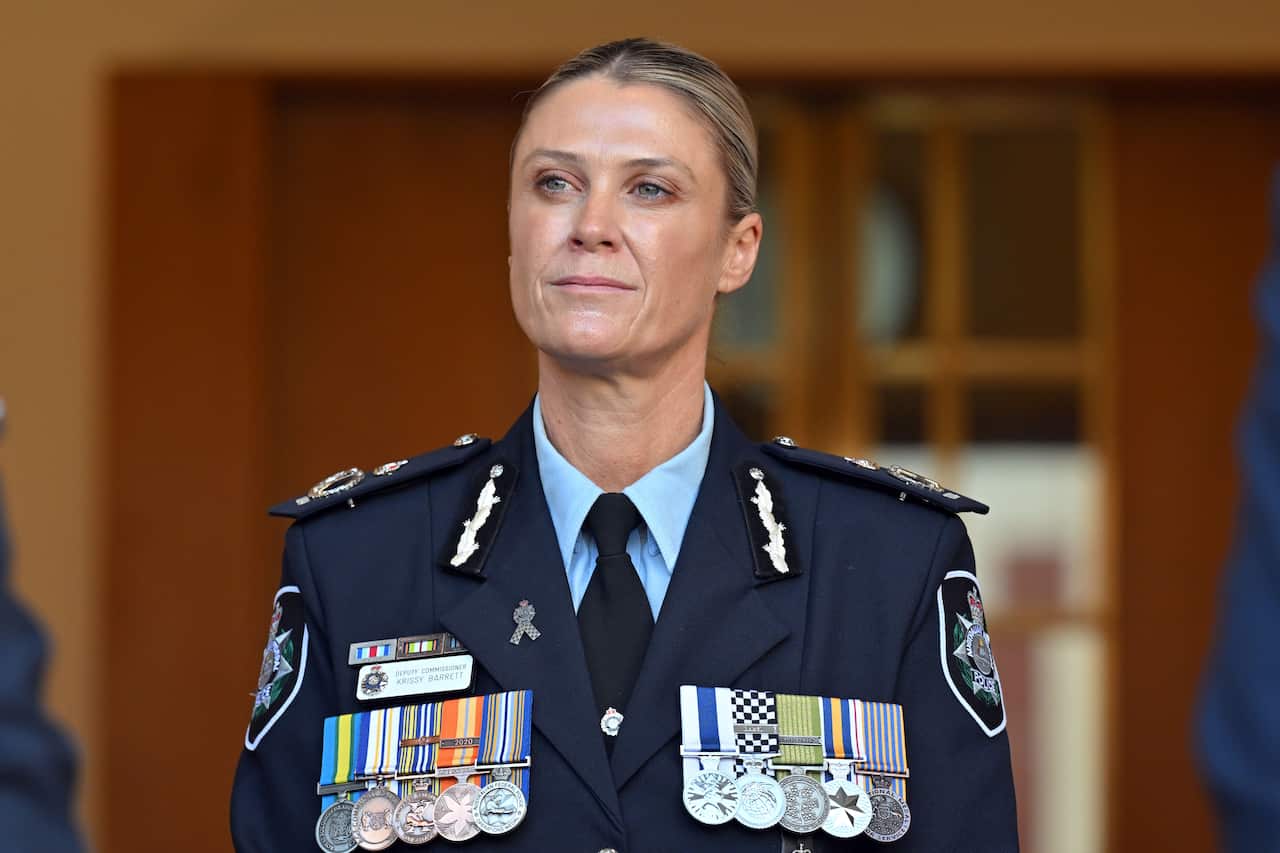
"We are witnessing the continued rise of individual grievance, including those who are willing to make threats in the online world and then carry them out in the real world," she said.
Josh Roose, a political sociologist and associate professor of politics at Deakin University, suspects reported incidents are just "the tip of the iceberg", particularly when it comes to online discourse.
"The real danger here is not only the online hate being directed towards politicians, it's the crossing (of) that threshold into action," he told SBS News.
He said there had been "particularly concerning" attacks and incidents across the political spectrum in recent years, including the targeting of electorate offices.
An August report by the Independent Review of Resourcing in Parliamentarian Offices said it received consistent feedback that work in electorate offices carried a higher level of risk.
The report found electorate offices across the country were dealing with high numbers of threatening, abusive and sometimes violent interactions with constituents, with 85 per cent of surveyed parliamentarians and staff reporting they had dealt with this type of behaviour.
The Albanese evacuation is the latest in a string of recent incidents involving federal MPs.
A Sydney man faced court last month after allegedly making threatening phone calls to the prime minister's office a day after the Bondi Beach terror attack.
In December, a man was charged over alleged online threats to kill Communications Minister Anika Wells.
In November, independent MP Allegra Spender and NSW Opposition leader Kellie Sloane reported violent threats to police after they both spoke critically of a neo-Nazi rally outside NSW Parliament.
Neo-Nazi Joel Davis, who was a member of the National Socialist Network which now says it has disbanded, was arrested after he invited Telegram users to "rhetorically rape" Spender.
Davis has been denied bail and his lawyer argued that he did not incite people to physically attack Spender, but meant the term rape in an "academic" sense.
'Flashing red'
The Australian Security Intelligence Organisation (ASIO) warned in its 2025 annual threat assessment that politically motivated violence — which could include violent acts or threats intended to achieve a political objective, such as a violent protest or vandalising an electoral office — had become more common in Australia.
At the time, ASIO director-general Mike Burgess forecast this dynamic would continue over the next five years, and said the security concern was "flashing red".
Concerns about political violence sat within a broader fragility in Australia's security environment, he said, amid declines in social cohesion and institutional trust.
He also pointed to the spread of mis- and disinformation as the world reels from a protracted war between Russia and Ukraine, a global pandemic, and Israel's war on Gaza which has triggered other conflicts and regional tensions in the Middle East.
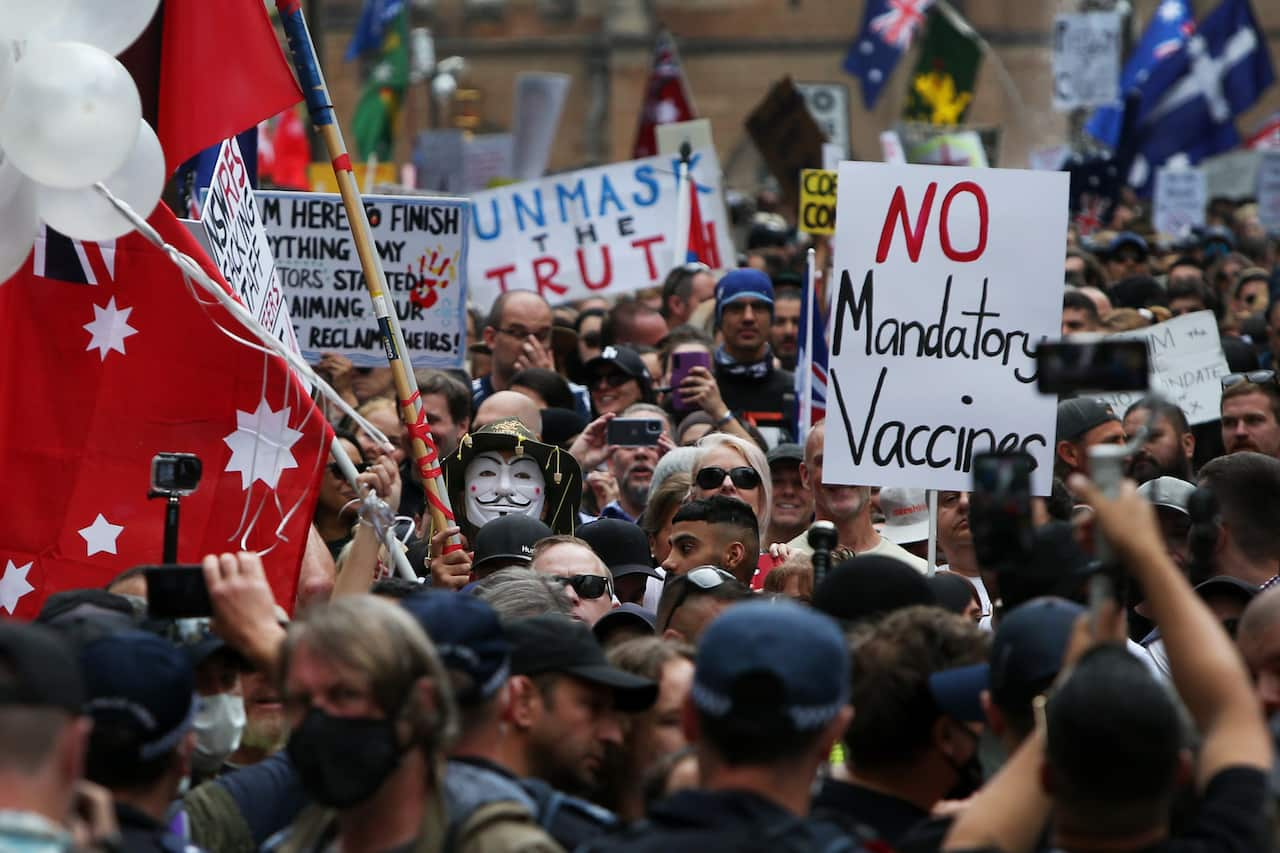
Roose said the COVID-19 pandemic played a pivotal role in stirring discontent, as people grew disenfranchised and looked to "blame government for challenges they were facing and the policy response", with grievance-fuelled narratives proliferating online.
"We've seen not only a wider variety of conspiratorial influences and thinkers, we've seen it become a little bit more mainstream," he said.
'The world has become far more polarised'
The intimidation of politicians, both online and offline, is widespread globally, according to a recent report by the Inter-Parliamentary Union, which surveyed MPs in Argentina, Benin, Italy, Malaysia and the Netherlands.
"Many parliamentarians report changing their behaviour in response to intimidation, and some regard such abuse as an unavoidable feature of political life," the report found.
"Normalising intimidation in this way risks narrowing democratic debate, deterring participation and weakening representative institutions."
Lise Waldek is a senior lecturer in terrorism and violent extremism studies at Macquarie University.
"Clearly, we live in an environment globally and within Australia, where the world has become far more polarised," she told SBS News.
"Our communications are very, very polarised. And that, I think, is connected to our online environment."
She said attacks on politicians sit within broader, connected issues of violence in society and the acceptability of using violence to achieve a political gain.
The 2025 McKinnon Index, an annual measure of democratic health, found a "concerningly high" number of respondents in Australia — nearly nine per cent — said it was sometimes justified to use extreme measures such as violence to advance a cause they care about.
"Australia is not a backwater, it's not some sort of safe space," Roose said of extremism.
Far-right movements in the United States have had substantial influence in Australia, he noted, driving a "normalisation of extreme hatred from the extreme right".
"Significantly more needs to be done not only to hold the spread of [hateful online material], but to hold those accountable in Australia who are spreading hate online."
For the latest from SBS News, download our app and subscribe to our newsletter.







