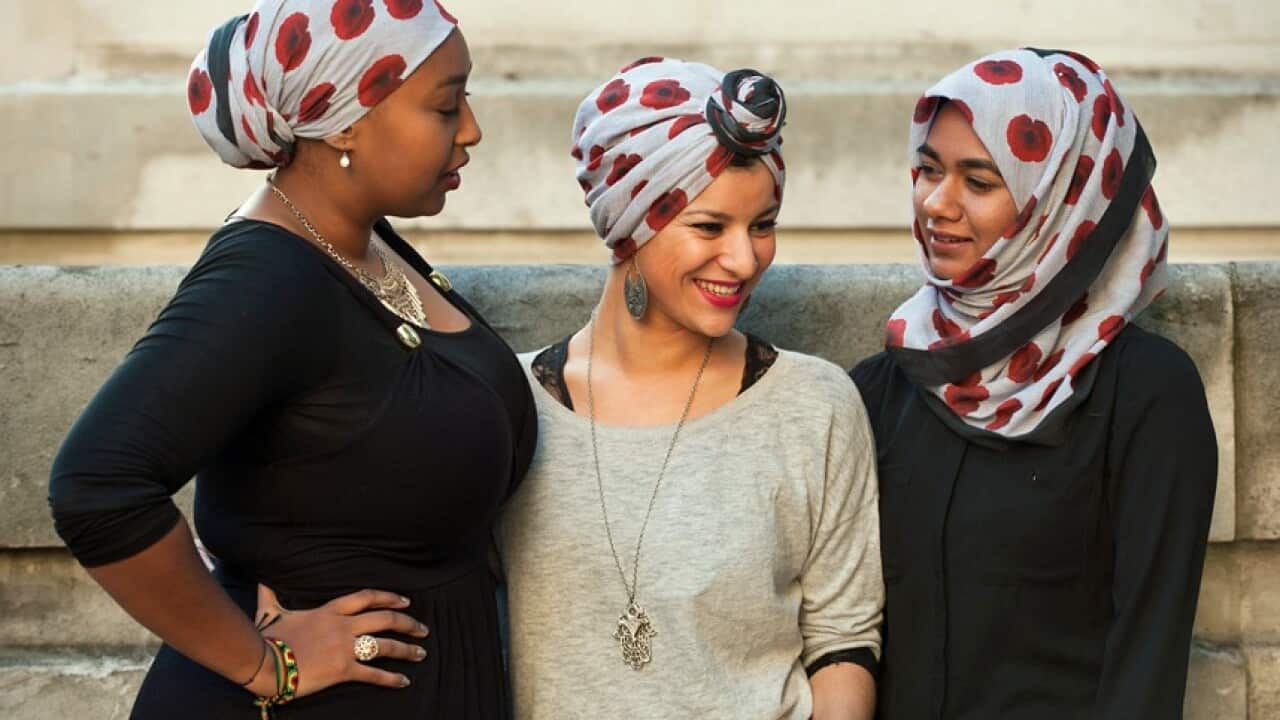
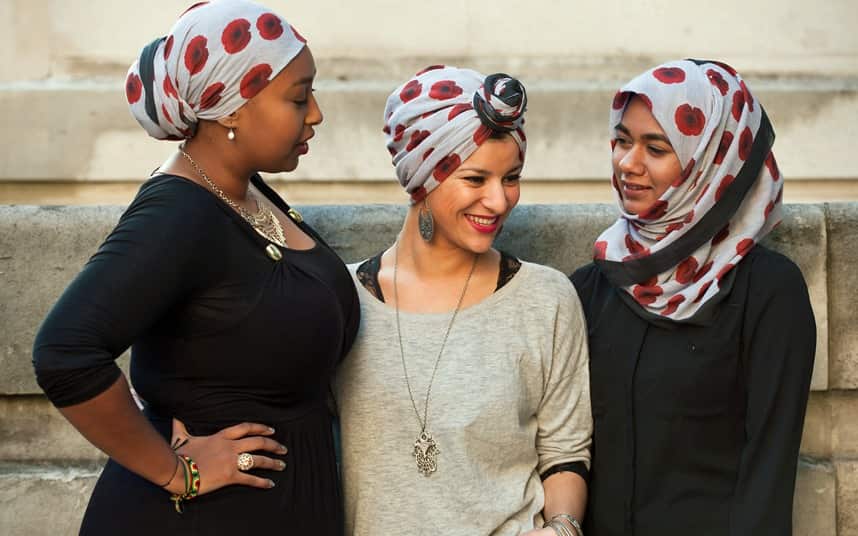
A young British fashion designer has unveiled the 'poppy hijab' as a unique way for Muslim women to mark Remembrance Day.
For $35 (22 British pounds), women can buy a headscarf printed with the iconic red poppies, a symbol for fallen soldiers.
But some UK Muslims say they disagree with the politics behind it, saying the symbol of a poppy with its long association with Western remembrance events is culturally inappropriate.
More than one million Indian soldiers and 400,000 Muslims fought alongside British troops in 1914.
Khudadad Khan from Pakistan became the first Muslim soldier to be awarded with the Victorian Cross for bravery.
News that makes sense
Your trusted source for staying up-to-date with the world around you. Get free daily news updates and analysis, straight to your inbox.
Fashion designer Tabinda-Kauser Ishaq said the headscarves give British Muslims an opportunity to honour their shared cultural heritage.
"It's really to send out the message that Muslims do care about Remembrance Day, and it's to tackle a lot of misconceptions that are out there," she told SBS.
"There's a lot of misconceptions that Muslims don't remember or commemorate those that we lost at war and we really want to tackle that."
Three years ago, a group calling itself ‘Muslims Against Crusades’ attracted condemnation when it burned a poppy on Remembrance Sunday.
Sughra Ahmed from the Islamic Society of Britain said despite this history, the 'poppy hijab' is meant to be symbol of unity.
"It's really important for us as British Muslims, and as a society, to come together to mark something that binds us all, that unites us all." she told SBS.
Dilly Hussain is the deputy editor of the 5Pillarz publication that describes itself as delivering independent, non-sectarian British Muslim news.
He said he is concerned about the politics of the poppy hijab campaign, saying it dismisses the thousands of Muslims who choose not to wear a poppy in acknowledgment of the Muslims who chose not to fight for Britain and against Arabs during World War One.
"The poppy hijab is a counterproductive and patronising campaign, which singles out Muslims as being a suspect community whose allegiance lies elsewhere," he wrote in an opinion piece for the Huffington Post.
"Many British Muslims do put their religion before their nationality but that doesn't make them any less integrated.
"What that means, is that there is a significant percentage of Muslims who practice Islam holistically as a comprehensive way of life, which includes speaking the truth, standing up for justice, speaking up for the oppressed and accounting their government. Some would argue these are also British values but I beg to differ."







