
In Brief
- The government is set to unveil new draft laws this week allowing users to opt out of social media algorithms.
- But the execution will be key to people adopting it, experts say.
Your morning scroll could look very different under new draft laws from the federal government, which plan to give social media users the chance to switch off the algorithm shaping their feed.
An exposure draft of the long-awaited Digital Duty of Care is expected this week, which will put the onus on platforms to risk-test their products before rolling them out — with one proposed measure forcing social media giants to let users opt out of the recommender systems that decide what content they see.
But the plan is already facing pushback, with the Coalition and the Greens both flagging problems with the approach from opposite directions, while other experts have welcomed the change but say the devil is in the detail.
What's the government proposing?
Under the new laws, platforms will be required to offer an opt-out from algorithm-driven feeds.
News that makes sense
Your trusted source for staying up-to-date with the world around you. Get free daily news updates and analysis, straight to your inbox.
Communications Minister Anika Wells says the goal is choice, not a ban on algorithms altogether.
"A lot of Australians appreciate the algorithm, both for the enjoyment that they get out of it or the utility that they get out of it," she told ABC News on Monday morning, adding that big tech should "offer them the choice in the first place" and "respect that choice".
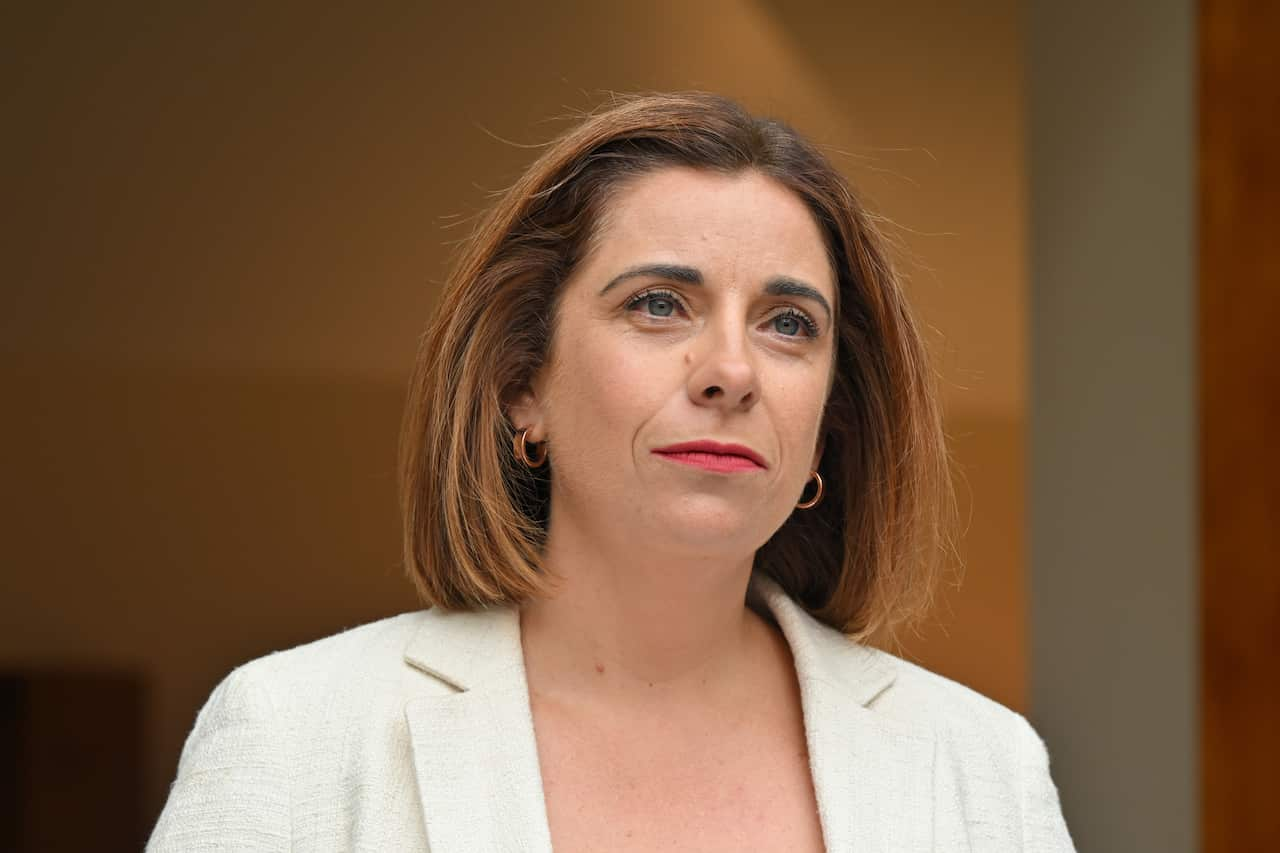
Companies could be fined up to $109.2 million for breaching the wider duty of care laws, which also require platforms to actively mitigate risks on their platforms.
Nationals leader Matt Canavan argued the reform is redundant.
"People can already opt out of algorithms in their accounts. Why do we need the government here?" he said on Monday morning, accusing the government of using the policy to "silence people" from engaging with content critical of it.
But existing options to opt out of the algorithm are harder to use than that suggests.
"It's not true that you can opt out of recommender systems on all platforms," Tama Leaver, professor of internet studies at Curtin University, told SBS News.
On Instagram for instance, users can toggle to a followers-only feed, he says, but it snaps back to the algorithmic version every time they log back in. A different setting that lets users snooze certain personalised content resets every month.
Where opt-outs do exist, he said they're often "buried" in menus, requiring a "deep dive" to find them.
How would it work?
That's the big question — and one that can't clearly be answered yet.
Leaver said the execution would determine whether anyone bothers to opt out.
"The question of what you will get instead is the thing that will decide whether people will try this out or not," Leaver told SBS News.
He said a return to a reverse chronological feed — the model Instagram launched with — would show only posts from accounts you follow, in the order they were posted, and you could reach the end of your feed — rather than today's endless scroll.
But that's a harder sell than it sounds. Fewer people post to their main feeds these days, Leaver noted, which could mean an alternative execution of serving videos based on generic identifiers, like gender.
"Does it mean going back to the reverse chronological feed of 2012, or does it mean that you get a recommender algorithm that's just not personalised to you, but to the general population?" he said.
"For many people, that would probably feel worse, not better."
There's also the question of which algorithm gets switched off.
Platforms such as Instagram run several at once — separate systems sort the main feed, Stories and Reels — so an opt-out would need to specify whether it's turning off one, or all three.
On TikTok, Leaver noted, the algorithm-based For You page is its key product.
"That's the only place the vast majority of people go," he said. "So there are some big architectural questions here."
Leaver said all of this is guesswork until the government releases the actual details.
Will it solve the problem?
Unlike Australia's under-16s social media ban, the new laws wouldn't explicitly target young people —it would apply to everyone.
Experts say that's because the reform is trying to solve two separate problems: the addictive design of social media, and young people's exposure to extremist content.
On the first, Swinburne University media expert Belinda Barnet says it would help.
"It's actually not that radical. It's just kind of a move back in time to before all of these automated, essentially AI algorithms," Barnet told the Australian Associated Press.
"It's not going to get rid of predators or the many other issues that they could encounter on digital platforms ... this is really just removing one of the addictive elements from it."
On the second — boys and young men being funnelled toward extremist and misogynistic content — Leaver says it comes down entirely to which version of "opt-out" the legislation delivers.
"I think it will be successful if the option that is presented is to go to a reverse chronological feed," he said. "If this is simply the option to go to a recommender-driven feed that is not based on you, then I think the change is probably pointless and may in fact make it worse."
Outcry like protesting seatbelts, health minister says
Already, the government is facing political backlash.
The Greens said they were awaiting the draft legislation before deciding their approach, but Senator Sarah Hanson-Young has proposed her own bill, calling for an algorithm opt-out to be the default setting.
The Coalition is also yet to establish its position on the proposal, but Opposition leader Angus Taylor on Sunday expressed doubts about Labor's plan.
He said parents should have more control over what their children could see on social media, but he was "deeply sceptical" that the proposal wasn't an attempt to censor people's feeds.
Taylor accused Labor of butchering the already implemented under-16s social media ban — which the Coalition supported — adding the government should focus on fixing that policy.
Health Minister Mark Butler said the reforms were crucial to keeping people safe online.
"The idea is that this is some censorship or infringement of civil liberties almost harks back to the days of the 1970s when people were protesting about seatbelts being introduced to cars," he told ABC Radio.
"It's pretty unremarkable really to expect that big companies have a duty of care not to harm Australian citizens, particularly, frankly, young Australians.
— With additional reporting by the Australian Associated Press.
For the latest from SBS News, download our app and subscribe to our newsletter.







