This article contains references to self-harm and eating disorders.
Two former Australian prime ministers have thrown their support behind a campaign urging the government to give social media users more control over the content they see.
Malcolm Turnbull has backed an open letter to Prime Minister Anthony Albanese from the group Teach Us Consent, which calls on the government to "Fix our Feeds" by requiring platforms to offer an opt-in feature that allows Australians to switch algorithms on and off.
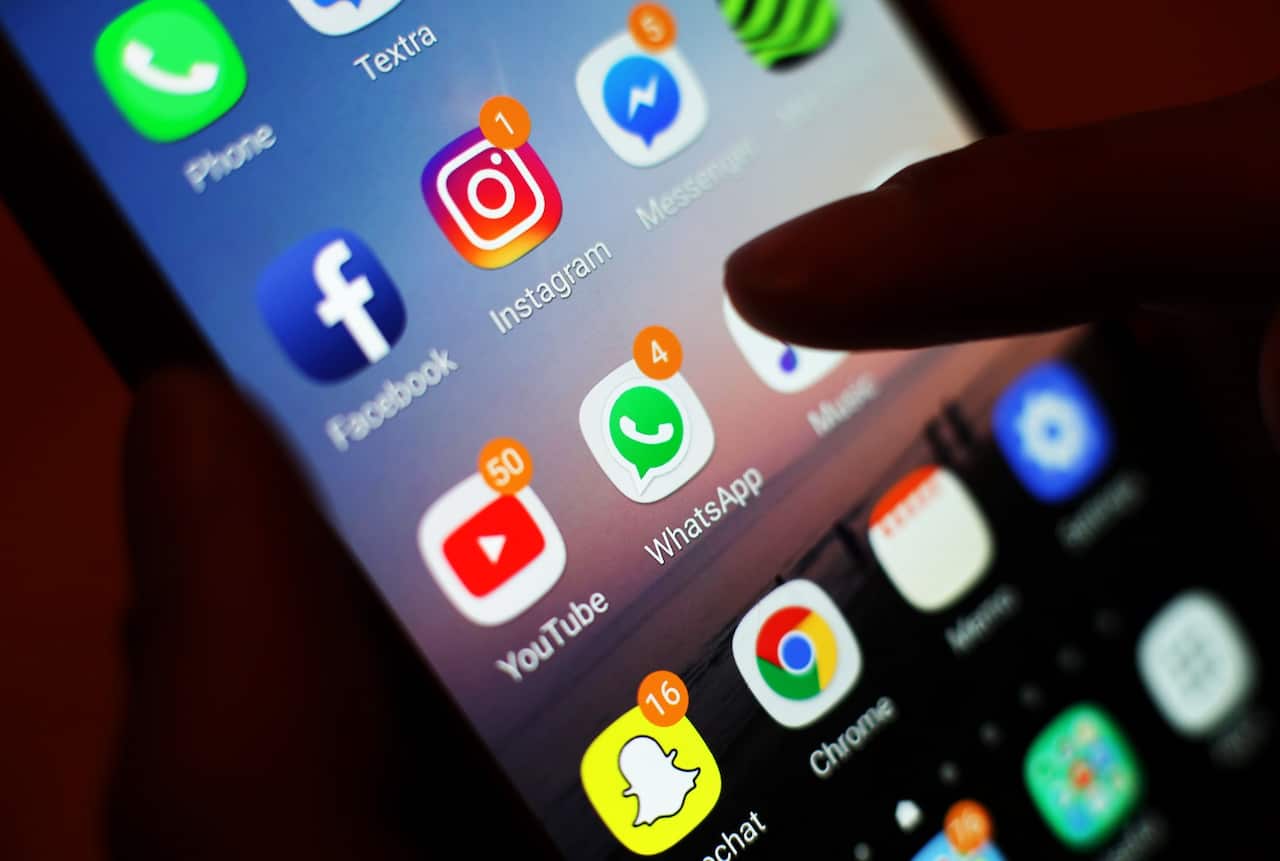
"The algorithms that curate our feeds are designed to keep us scrolling," the letter reads.
"They prioritise content that provokes the strongest emotional reactions; outrage, validation, fear, arousal and anger drive 'successful' posts. In turn, our feeds have become fertile ground for extreme, misogynistic content."
News that makes sense
Your trusted source for staying up-to-date with the world around you. Get free daily news updates and analysis, straight to your inbox.
Meanwhile, Julia Gillard, in her own social media post supporting the campaign, said she had "long been a firm believer in social media regulation".
"Too often, online spaces are unsafe and filled with abuse, particularly for women," she wrote.
Pointing to echo chambers of hateful and sexist content and their role in radicalising boys and young men, the group says the proposed intervention would help prevent "gender-based violence and the mainstreaming of radicalised misogyny".
It would also support those vulnerable to eating disorders and self-harm, while limiting exposure to racism, homophobia, false information, and other harmful content.
"Or, it could just be a tool for people wanting to spend less time on socials," the letter states.
Its signatories include Turnbull, independent MPs Allegra Spender, Zali Steggall, Sophie Scamps, Helen Haines, and Monique Ryan; Greens senator Sarah Hanson-Young, author Zoë Foster Blake and media personality Abbie Chatfield, along with leaders from advocacy groups, university academics, and activists.
Taking back control of our feeds
Joanne Orlando is a digital wellbeing researcher at Western Sydney University, whose work focuses on the social and educational effects of technology on children, adolescents, and adults.
"I think a social media feed without an algorithm would be one where you choose the content and one where things aren't sensationalised," Orlando told SBS News.
Under the proposed concept, a feed could feature far less advertising, violent content, influencer material, and "any kind of content that we didn't really ask for".
"So we have more control over what we see, what we engage with," she said.
Tama Leaver, a professor of internet studies at Curtin University, said social media without heavy algorithmic curation could appear as a straightforward feed of the content most recently posted by the people and accounts a user follows.
'Algorithms are the issue'
Orlando argued switching off algorithms would create a healthier social media experience.
"They are the complete issue," she said.
"I think it's really good that we get to explore new interests online. We get to learn things online. We get to connect with other people and other ideas. That's a really good thing."
"I think access to a lot of ideas is great, but the algorithm just drives such extreme, narrow content. It's a big issue," Orlando said.
Leaver, who also serves as chief investigator in the ARC Centre of Excellence for the Digital Child, said part of the problem is the fact that platforms can't identify if you've had a positive or negative reaction to a clip you've lingered to look at — but you'll be fed more of that content regardless.
Social media's role in shaping young men
Last year, research from Australia's eSafety commissioner found that while the internet offered young men opportunities to express themselves and explore connections, it also drove dangerous and stereotypical ideas about gender and masculinity that could become a central driver in shaping young men's identities.
The report found Andrew Tate, a social media influencer and self-described misogynist, was a key figure in many young men's worlds.
A 2024 study by Dublin City University tracked content that was recommended to experimental YouTube and TikTok accounts and found that all of the male-identified accounts were almost immediately fed "masculinist, anti-feminist and other extremist content" — even when they had not actively searched for such content before.
Against this backdrop, Teach Us Consent noted a 10 per cent rise in reported sexual assaults in Australia last year — the highest figure recorded.
"Not all disrespect of women ends up in violence against women, but all violence against women begins with disrespecting women," Turnbull wrote on LinkedIn as he invited followers to sign the open letter.
'We all need to be protected'
Today marks the unofficial first day of Australia's world-first social media ban for children under 16.
While the law formally comes into effect on 10 December, Meta has started removing access to Instagram, Threads and Facebook accounts.
"While we are working hard to remove all users who we understand to be under the age of 16 by 10 December, compliance with the law will be an ongoing and multi-layered process," a Meta spokesperson said.
According to Orlando, it's not just teens who need to be shielded from the harms of addictive algorithms.
"We all need to be protected, all of us," Orlando said. "You know, when you turn 16, you don't miraculously learn how to handle the algorithms on social media."
She said an algorithm blocker could be more effective than a blanket ban on social media for teens, which has faced criticism over its myriad potential loopholes.
"If we had more control over our algorithms, then that would help to control what young people see, and then that would kind of resolve, I think, a lot of the issues that are driving the ban in the first place," she said.
How realistic is the proposal?
Leaver agreed that turning off personalised algorithms could be more effective than a blanket ban on social media for teens, but acknowledged that, like the ban, it would be complex to implement and cover all social media platforms.
However, from a technical perspective for the companies, he said it "should be something that's achievable".
Asked for comment on the opt-in proposal, a spokesperson for Communications Minister Anika Wells told SBS News consultation was open for its Digital Duty of Care legislation and "we welcome submissions on ways we can make online environments safer for children".
Leaver noted that platforms have been resistant to getting on board with these types of changes.
"You tend to stay on the platform because of those things that provoke a reaction, and there's been a lot of work done that shows that, if you just have the ... chronological feed, you actually spend less time on that particular platform."
Readers seeking crisis support can ring Lifeline on 13 11 14 or text 0477 13 11 14, the Suicide Call Back Service on 1300 659 467 and Kids Helpline on 1800 55 1800 (for young people aged up to 25). More information and support with mental health is available at beyondblue.org.au and on 1300 22 4636.
Embrace Multicultural Mental Health supports people from culturally and linguistically diverse backgrounds.
Readers seeking support for eating disorders or body image concerns can call the Butterfly National Helpline on 1800 ED HOPE (1800 33 4673) or visit www.butterfly.org.au
For the latest from SBS News, download our app and subscribe to our newsletter.







