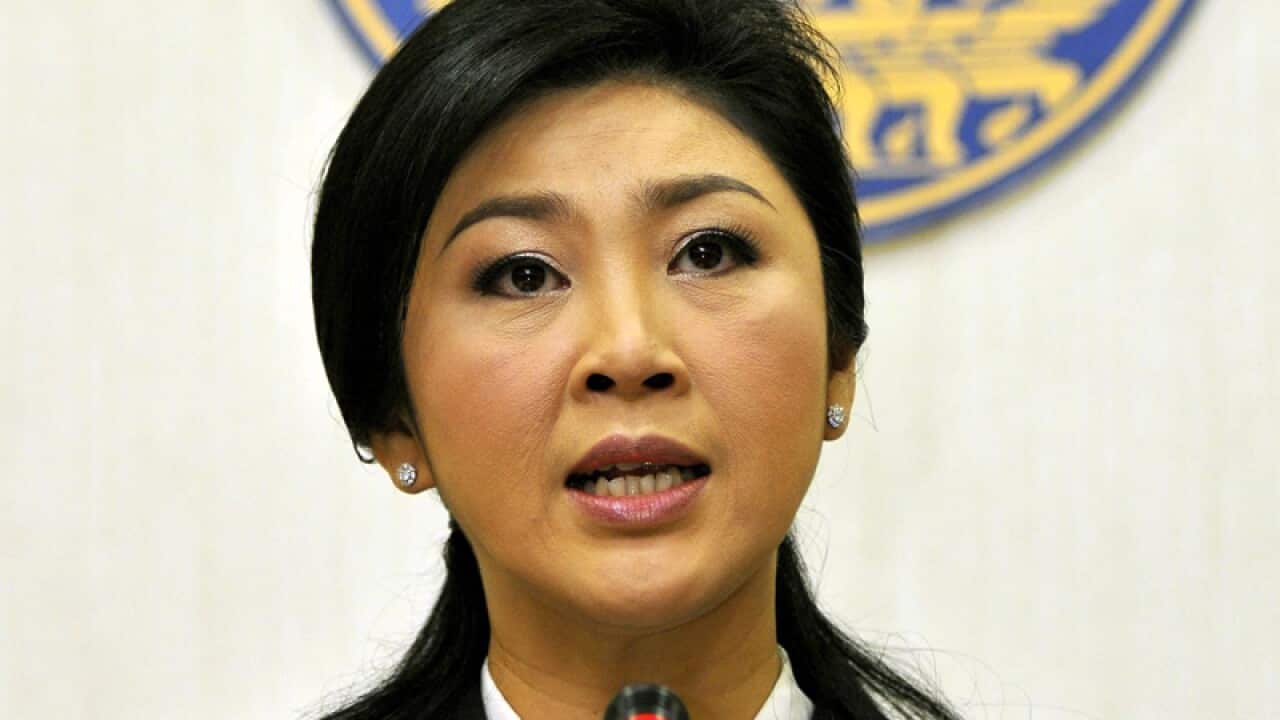
Thailand's prime minister has proposed a "national reform council" to find a way out of the political crisis gripping the kingdom.
Yingluck Shinawatra said the body would recommend constitutional amendments, economic and legal reforms and anti-corruption measures.
"It is now time to develop a mechanism to push forward and mobilise national reform," she said in an address to the nation on Wednesday.
The plan was immediately rejected by protest leaders who want reforms before elections planned for February 2.
Yingluck "is not sincere about reform", said a spokesman for the protest movement, Akanat Promphan.
"The prime minister can show her responsibility and sacrifice by stepping down so that the reform process can begin," he said.
In recent weeks tens of thousands of protesters have taken to the streets of Bangkok seeking to oust Yingluck's government and install an unelected "people's council" in its place.
The premier has called a snap election to try to ease tensions, but the main opposition Democrat Party - which has not won an elected majority in about two decades - has vowed to boycott the vote.
The Democrat-backed protesters are demanding loosely-defined reforms such as an end to alleged "vote buying" as well as anti-graft measures.
They want elections to be held in 12 to 18 months.
The political conflict broadly pits a Bangkok-based middle class and elite against rural and poor voters loyal to Yingluck's brother Thaksin Shinawatra, who was ousted as prime minister in a coup in 2006 and lives in self-exile.
Protesters accuse Thaksin, a billionaire tycoon turned politician, of controlling his sister's government from his home in Dubai.
Even some of Yingluck's supporters criticised the proposed selection process for the 499-member reform council, which will be supervised by 11 representatives from the military, civil service, business and other sectors.
"All 11 people are from the Thai elite and have nothing to do with the Thai people," said Thida Thavornseth, chairwoman of the Red Shirt political movement which is broadly loyal to Thaksin.
"This could cool the political temperature but in reality only the people want reform, not the elite," she said, stressing the importance of the February election.
The protesters have tried to stop candidates signing up for the election by blocking the entrances to the stadium serving as a registration venue.
Demonstrators tried to force their way into the building on Wednesday, triggering scuffles with police.
Election authorities have expressed confidence that candidates will be able to register in time.
But the demonstrators have vowed to keep up their campaign to disrupt the polls, with protest leader Suthep Thaugsuban threatening to "shut down the country" to prevent people voting.





