Only weeks remain until the federal government's expert group on asylum seeker policy is due to hand down its recommendations.
And with critics lamenting the state of the political debate on the issue, questions are being raised about whether migrant and refugee communities should be doing more to make their voices heard. SBS Radio's Kristina Kukolja reports.
KRISTINA KUKOLJA REPORTS: Post Second World War immigration programs opened up Australia to many ethnic and cultural groups, among them those coming under the federal government's refugee and humanitarian program.
News that makes sense
Your trusted source for staying up-to-date with the world around you. Get free daily news updates and analysis, straight to your inbox.
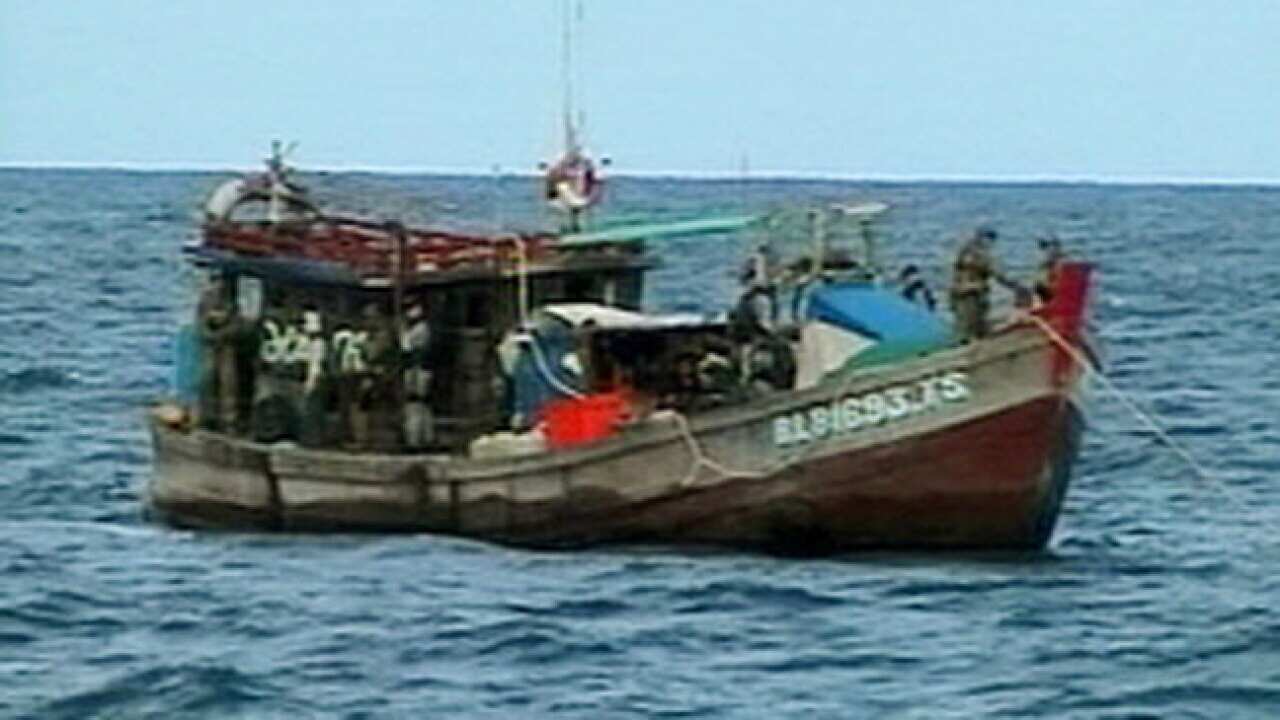
But it was not until the 1970s that Australians first heard the term 'boat people', when after the end of the Vietnam War, the country opened its borders to thousands of Vietnamese refugees arriving by sea.
Children Out of Detention, or ChilOut, is an advocacy group for the rights of child refugees.Spokeswoman Sophie Peer says, the current asylum seeker debate appears to have seen an absence of a strong voice from these communities.
SOPHIE PEER (CHILOUT): We've certainly had some of that voice. We've had it through the Catholic migrant service and we've had it through individual communities in their local papers and their local radio, but certainly on a national scale, there is some strength of voice missing and amplification certainly needed to get across, unfortunately, what are complex stories and don't fit into soundbites.
KRISTINA KUKOLJA (REPORTER):According to refugee advocate Marion Le, it's the stories of why people risk boat journeys on perilous seas to reach Australia that should be the focus of a federal parliamentary inquiry.
Ms Le says one migrant community that could help create a better understanding of this aspect of the asylum experience is the Vietnamese community, which in her opinion, has remained silent on the issue.
MARION LE (REFUGEE ADVOCATE): There are indeed thousands of Vietnamese people who came here by boat and are now in the community. they are Australian citizens, they are raising their children and I haven't, unfortunately, heard them speaking up in favour of people getting a fair go when they are put to sea the way that unfortunately these people are having to do.
KRISTINA KUKOLJA (REPORTER):The former President of a community group calling itself the Vietnamese Community of Australia, Phong Nguyen, says there's widespread support for asylum seekers among Vietnamese migrants in Australia.
But he claims this is being largely ignored by the mainstream media, despite efforts by the group to gain publicity.And he says while the community overall should be more assertive, the nature of the political debate is making some Vietnamese-Australians reluctant to openly express their views on asylum policy.
PHONG NGUYEN (FORMER PRESIDENT - VIETNAMESE COMMUNITY COUNCIL OF AUSTRALIA): We as a nation depend on our Government, on our Opposition, on our MPs, our elected representatives to show leadership. When the leadership are confusing, contradictory and even aggressive towards refugees, then quite understandably, the rest of the population are divisive and confused. That is what I believe [has caused] the confused situation, the fear of people, to contradict the government, to contradict, the so-called perceived Status Quo of the majority, of a number of rednecks, people who are racist and anti-migrant, anti-refugee, [who have] caused this confusion, and fear and hesitation within our community.
KRISTINA KUKOLJA (REPORTER): The South Sudanese community is one of this country's youngest and fastest growing migrant groups, with many of its members arriving under Australia's Refugee and Humanitarian Program.
Spokesman Mading Malek says while he believes there's a prevailing sense among the South Sudanese in Australia that a more humanitarian approach should be taken in the development of asylum policy, these views are yet to assume any prominence in the public debate.
Mr Malek says the silence is in part that of a young refugee community still struggling with its own settlement challenges, such as dealing with the trauma of war and language barriers in their new homeland. But he hopes that as members become more engaged with political life in Australia, this will change.
MADING MALEK (SOUTH SUDANESE SPOKESPERSON): The South Sudanese community are a growing community in Australia, but again they lack the political connectiveness to their local areas whereby they are trying (which I could see) from the last elections .. I can see my community are now well connected to their local members so that they can push these things through and can also understand the political context of Australia itself. So these are the few things that are still making my community to be more like outsiders, but I do hope with a few years to come they will be able to be at the national level.
KRISTINA kUKOLJA (REPORTER):The peak body representing Australia's ethnic communities says it's concerned about the nature of the political debate on asylum seekers, saying it fears the well-being of people seeking protection in Australia is not a priority for the Federal Government and the Opposition.
Deputy Chairman, Doctor Sundram Sivamalai, says the Federation of Ethnic Communities Councils of Australia (FECCA) hasn't hesitated to make its views known.
DR SUNDRAM SIVAMALAI (DEPUTY CHAIRMAN, FECCA): If you look at some of the statements that the Chairman [Pino Migliorino] has released over the past few months and even over the [past] few years through FECCA - We have released statements, there are concerns that we have raised and, certainly, when we feel it's an issue that we can actually raise, yes we do.
KRISTINA kUKOLJA (REPORTER): Doctor Sivamalai says he would like to see more avenues made available for Australia's migrant communities to have their views on asylum policy more widely heard.
But he concedes that FECCA doesn't see itself taking a leading role in the effort, preferring to support other agencies and the Refugee Council of Australia in the work it does.
DR SUNDRAM SIVAMALAI (DEPUTY CHAIRMAN,FECCA): Not to forget, I think the Federation of Ethnic Communities Councils of Australia is for the migrants who, when we were to classify, is slightly divorced from the definition of refugees. Certainly the refugees are partly as migrants, but certainly when they have the refugee status we like to make sure that the Refugee Council of Australia has the peak role in these issues.
KRISTINA kUKOLJA (REPORTER): Vietnamese community spokesman, Phong Nguyen, disagrees.
Mr Nguyen, who is a former Chairman of the Ethnic Communities Council of Victoria, says he'd like to see the leaders of his and other ethnic communities discuss ways in which to make their views on asylum policy more prominent in Australian media and society.
And he says state ethnic communities councils and FECCA should take a stronger leadership role in mobilising ethnic communities to this end.
PHONG NGUYEN (CHAIRMAN, ETHNIC COMMUNITIES COUNCIL OF VICTORIA): The role of ethnic communities councils throughout Australia should be very strong. Should we go down on the street to show our concern, to show our support, to show our voices? Why not? But once again it's up to the ethnic communities councils as well as FECCA together with communities like us, leadership wise, to pick up the issue and to sit down and plan together and organise things together big enough to have a voice in the debate right now in Australia.
KRISTINA kUKOLJA (REPORTER): ChilOut's Sophie Peer says now is the time for this to happen.
SOPHIE PEER (CHILOUT): I think that it would be terrific to see some kind of joint forces, if you like, at what is a crucial time in policy making in Australia. We've got a few weeks only of this expert panel meeting. I think that the public need to hear from those migrant communities. I think the public needs to hear that this is a complex situation and that there is not a one-size-fits-all solution. They need to understand issues of family reunion, of why people get on a boat in the first place and that is best told by the communities themselves that have experienced this.







