

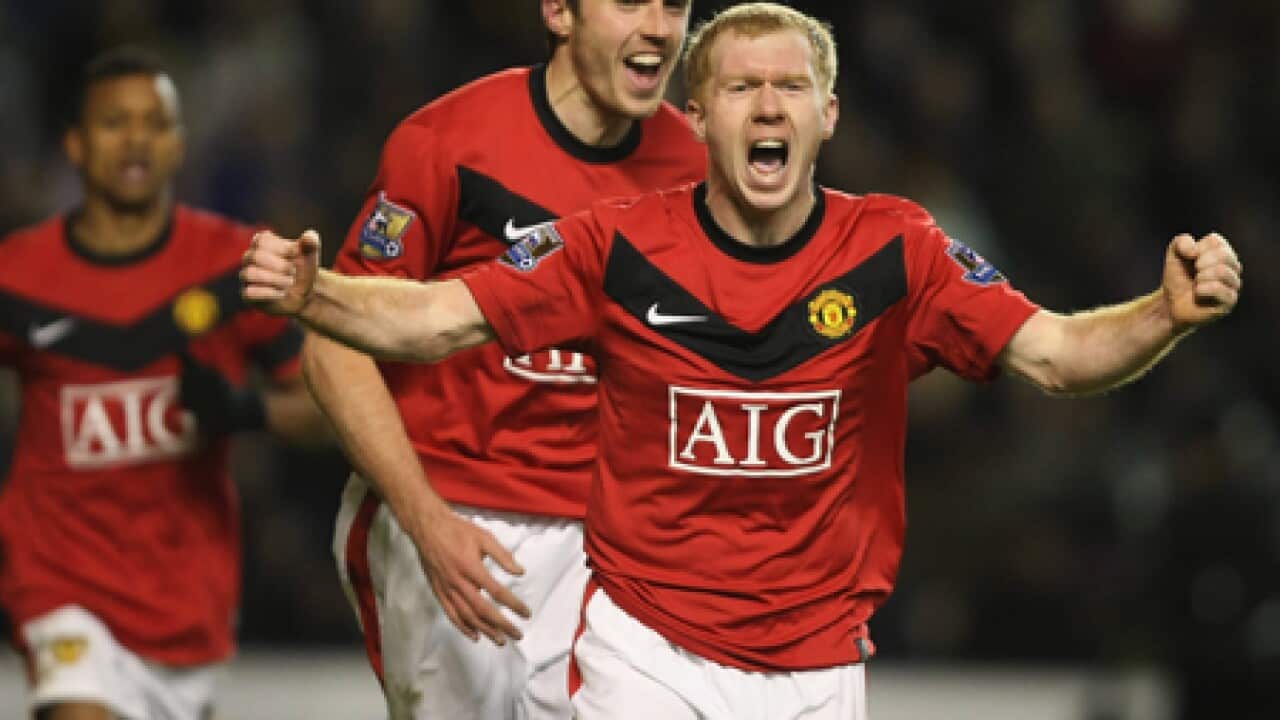
In an era where Premier League footballers became staples of the tabloid gossip columns and took to Twitter to vent their thoughts, Paul Scholes was the quiet man of English football.
Not for him the celebrity lifestyle of his former Manchester United team-mate David Beckham.
Instead Scholes became arguably an even more influential player than Beckham and perhaps the best England midfielder of his generation.
News that makes sense
Your trusted source for staying up-to-date with the world around you. Get free daily news updates and analysis, straight to your inbox.
Born in nearby Salford, it didn't take long for Scholes to make his way to Old Trafford where he became a key member of United manager Sir Alex Ferguson's trophy-winning sides.
That a mutual respect blossomed was understandable for Scholes, a talented player who gave of his best while not causing any off-field problems, was a footballer after Ferguson's own heart.
Blessed with an eye for a pass and indeed a goal -- Scholes scored the winner in United's 2008 Champions League semi-final win over Barcelona -- just about his only weakness on the field was an ocassional inability to tackle cleanly.
United fans would wince when, on the rare occasions he lost possession, Scholes tried to atone by going straight in with a challenge.
As the years passed, so did Scholes' powers of recovery decline and there was something rather sadly inevitable about the way he was sent-off during United's recent FA Cup semi-final defeat by local rivals Manchester City at Wembley following a late challenge.
If Scholes was something of a throwback away from football, he was in the vanguard of a trend when announcing his retirement from England duty at the early age of 29 after Euro 2004.
Scholes, like many of his England contemporaries, never shone quite as brightly for their country as they did for their respective clubs and he quit the international game in frustration at Sven-Goran Eriksson's decision to move him from his preferred central midfield role.
Both of Eriksson's successors, Steve McClaren and Fabio Capello, tried to entice Scholes back into the England fold but Italian manager Capello was criticised for not making more of an effort to get the United hero on board in time for last year's disappointing World Cup campaign in South Africa.
Scholes subsequently conceded he might have done more to respond to England's overtures.
In the latter stages of his career, injuries became an increasing problem for Scholes, notably an alarming eye problem in December 2005 that left him with blurred vision.
Scholes had indicated a desire to retire last season only for Ferguson to persuade him to stay on for one more campaign, the midfielder's 18th season.
While Gary Neville called it quits before the end of this term, allowing the full-back to enjoy a star-studded testimonial match in the run-up to United's Champions League final defeat by Barcelona, Scholes soldiered on.
He then announced his retirement with a short statement that allowed him to end his playing days with a typical lack of fuss.