In brief
- Rescue teams in Nepal are racing to find survivors in large tunnels beneath the ground.
- Two Australians have been safely located.
The Australian government has confirmed two Australians have been safely located amid catastrophic flooding on the Nepal-China border as the number of people killed climbs and increasingly desperate families search for missing loved ones.
The combined deaths in Nepal and China surpassed 1,000, with more than 4,400 people — including 42 Australians — missing.
One of those people is 30-year-old Luke Costanzo, from Perth.
In a statement, his family said he had been visiting Mount Kailash on a pilgrimage trek when the floods hit. He went missing shortly after making contact at the Gyirong Port border crossing.
"Luke is an extremely strong, compassionate, disciplined and spiritual person," the statement said.
News that makes sense
Your trusted source for staying up-to-date with the world around you. Get free daily news updates and analysis, straight to your inbox.
Once he makes a decision, he commits to it fully and he was so excited to be visiting Mount Kailash.
"We can do nothing but continue hoping for a miracle that Luke, and the others who remain missing, are found alive and well."

Officials were in contact on Tuesday with an Australian in Tibet, after another Australian, Cara Severino, was located safely on the weekend.
Foreign Minister Penny Wong said she was "incredibly thankful" a second Australian has been found, whose identity the government did not confirm.
"It’s hard to imagine the sense of relief their loved ones must be feeling after what will have been an incredibly harrowing few days," Wong said in a statement.
"Despite this second piece of welcome news in recent days, we must remain realistic about the days ahead .... the conditions facing search and recovery teams are extremely challenging."
Nepal's disaster agency said 987 deaths had been counted there, while Chinese authorities reported 16 deaths in their most recent update on Sunday.
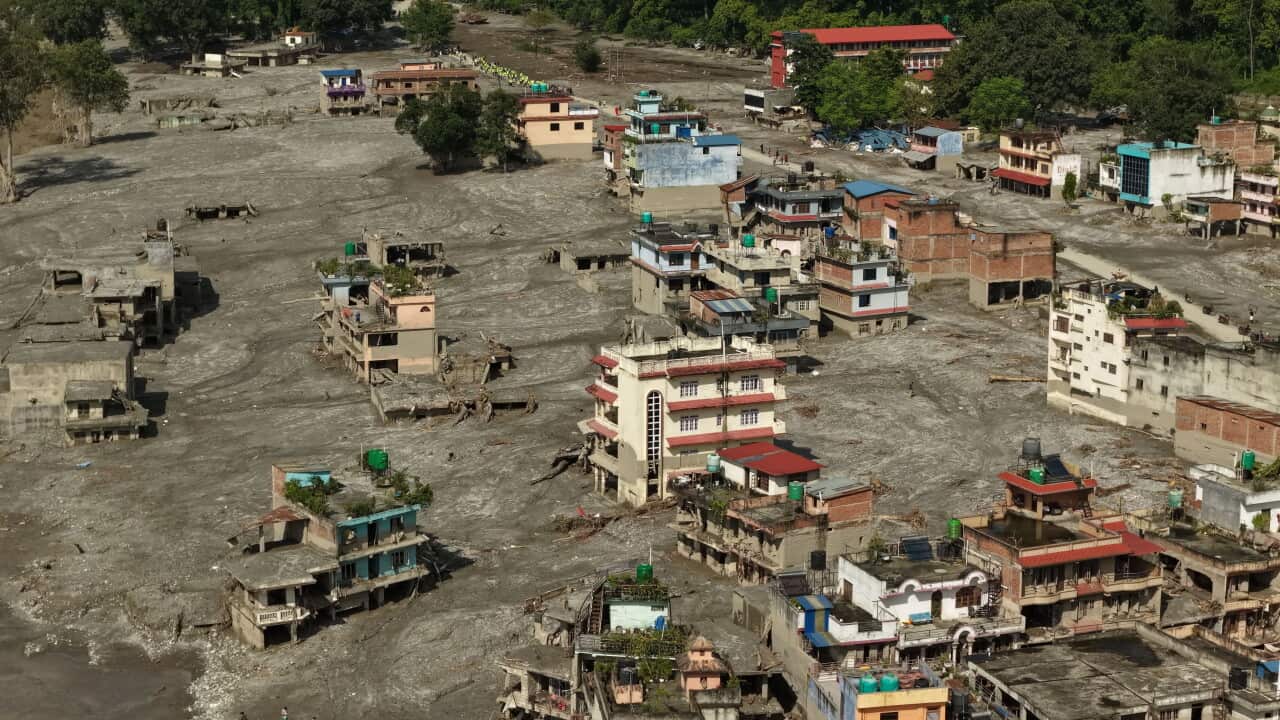
Rescuers are racing to free hundreds of workers believed to be trapped in tunnels at hydropower sites that were buried in mud by the flooding.
A private-sector association representing power companies said at least 900 workers were unaccounted for at 12 hydropower projects damaged by the flash floods in Nepal's Rasuwa and Nuwakot districts.
About 500 of those workers were believed to be trapped in tunnels.
At least one expert said that some workers could have access to oxygen, but others warned that the chances of finding survivors were diminishing.
As the rescue efforts intensified, four bodies were recovered from three mud-filled tunnels, Nepal's army said.
Some workers managed to call for help when the disaster struck last Wednesday, and others who managed to flee reported to authorities and relatives that many of their colleagues were still in the tunnels, said Mohan Kumar Dangi, president of the Independent Power Producers' Association.
It was unclear whether rescuers have had any contact with the trapped workers since the initial calls for help.
Six days after the disaster, fears were growing that some might have suffocated, Dangi said.
Rescue efforts were focused on people trapped in the gigantic tunnels built for controlling the flow of water.
"These tunnels are big enough to drive trucks through," said Jakob Steiner, a geoscientist at the University of Graz in Austria based in Dhaka, Bangladesh.
"And from what we understand, they have managed to get oxygen to some of those stuck inside and are trying to rescue them now. It's a race for time, though, as people need food and water."
In the Upper Trishuli-1 Hydropower Project, in the hard-hit Rasuwa district, at least 576 people were missing, Dangi said, adding that about 300 of them were believed to be trapped inside the project's tunnel.
At the Trishuli-3 Hydropower Project, crews were working to descend about 15 metres into a tunnel in an effort to reach those believed trapped inside, according to Nepali army spokesman Brigadier General Raja Ram Basnet.
Workers shovelling mud from a flood-ravaged power station in Dhading, Nepal, said the station is a key connection for providing power to more than 20,000 people in the region.
Across the border
On the Chinese side, rescue and recovery efforts included rebuilding the road leading to the Gyirong Port border crossing that regulated travel between China and Nepal.
Trucks carried giant rocks as workers tried to repave a portion of the road, state broadcaster CCTV showed on Monday, next to rapidly rushing waters, which have been made more powerful by days of rain.
The road is now under two to three metres of water.
The repaving effort was just a little over a kilometre from the border, CCTV said.
Although some rescue teams have managed to reach the border, that represented only a portion of the force.
Chinese state media coverage has focused largely on the official response, highlighting the deployment of firefighters, the army and instructions from top leaders.
Little is known about victims on the Chinese side.
Nepal's disaster agency said 939 deaths had been counted in the country, with 3925 people missing, including 592 foreigners.
As of Sunday, Chinese authorities reported 16 deaths and 546 missing.
Chinese state media said 261 of the missing were foreigners, including more than 100 Nepalis.
Wednesday's flash floods started after a glacial collapse high in the Himalayan region.
Scientists who studied satellite images said bedrock underneath a glacier high in the Himalayan region had collapsed, taking part of the glacier with it.
The rockfall was so extreme that it registered as a magnitude 5.2 seismic event.
The rocks and melted water then swelled the rivers in the valleys below, causing a torrent of water that swept buildings, bridges and earth downstream in Tibet and Nepal.
The first victims of the floods are being buried in mass graves in Nepal as authorities struggle to identify and store the growing number of bodies recovered from the disaster.
The decision has sparked controversy in the predominantly Hindu country, where the dead are traditionally cremated.
Some relatives of the missing and other critics have questioned whether authorities began the burials too quickly and without sufficient regard for Hindu funeral rites.
Many of the bodies were swept dozens or even hundreds of kilometres downstream and were recovered badly decomposed or mutilated, making visual identification difficult.
Mortuaries in some affected areas have reached capacity while hot and humid conditions have accelerated decomposition.
Authorities said photographs, DNA samples and other identifying information were being collected before burial so that relatives could later establish the identity of victims.
For the latest from SBS News, download our app and subscribe to our newsletter.







