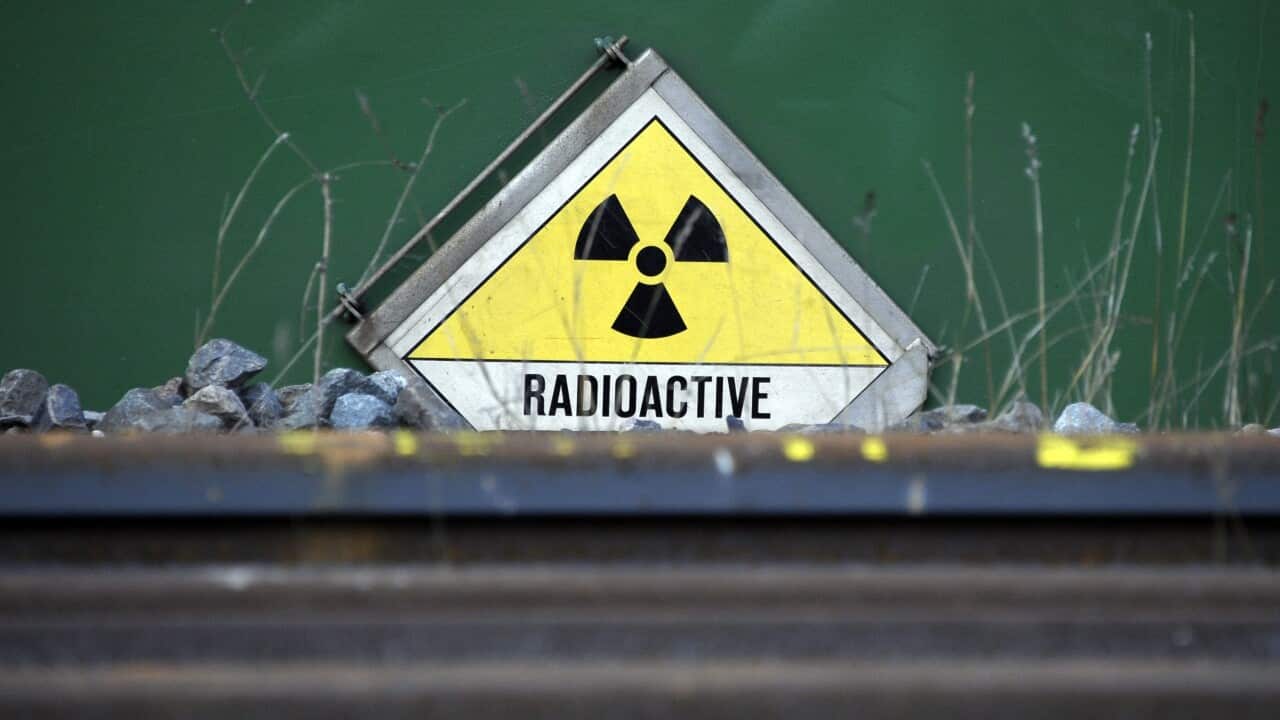
Iraq is searching for "highly dangerous" radioactive material stolen last year, according to an environment ministry document and seven security, environmental and provincial officials who fear it could be used as a weapon if acquired by Islamic State.
The material, stored in a protective case the size of a laptop computer, went missing in November from a storage facility near the southern city of Basra belonging to US oilfield services company Weatherford, the document seen by Reuters showed and officials confirmed.
A spokesman for Iraq's environment ministry said he could not discuss the issue, citing national security concerns.
Weatherford said in a statement that it was not responsible or liable for the theft.
News that makes sense
Your trusted source for staying up-to-date with the world around you. Get free daily news updates and analysis, straight to your inbox.
"We do not own, operate or control sources or the bunker where the sources are stored," it said.
The material, which uses gamma rays to test flaws in materials used for oil and gas pipelines in a process called industrial gamma radiography, is owned by Istanbul-based SGS Turkey, according to the document and officials.
An SGS official in Iraq declined to comment and referred Reuters to its Turkish headquarters, which did not respond to phone calls and emails.
The US State Department said it was aware of the reports but has seen no sign that Islamic State or other militant groups have acquired it.
The environment ministry document, dated November 30, describes "the theft of a highly dangerous radioactive source of Ir-192 with highly radioactive activity".
A senior environment ministry official based in Basra, who declined to be named as he is not authorised to speak publicly, told Reuters the device contained up to 10 grams of Ir-192 "capsules", a radioactive isotope of iridium also used to treat cancer.
The material is classed as a Category 2 radioactive source by the IAEA, meaning that if not managed properly it could cause permanent injury to a person in close proximity to it for minutes or hours, and could be fatal to someone exposed for a period of hours to days.
Large quantities of Ir-192 have gone missing before in the United States, Britain and other countries, stoking fears among security officials that it could be used to make a dirty bomb.
A dirty bomb combines nuclear material with conventional explosives to contaminate an area with radiation, in contrast to a nuclear weapon, which uses nuclear fission to trigger a vastly more powerful blast.
"We are afraid the radioactive element will fall into the hands of Daesh," said a senior security official with knowledge of the theft, using an Arabic acronym for Islamic State.
"They could simply attach it to explosives to make a dirty bomb," said the official, who works at the interior ministry and spoke on condition of anonymity as he is also not authorised to speak publicly.







