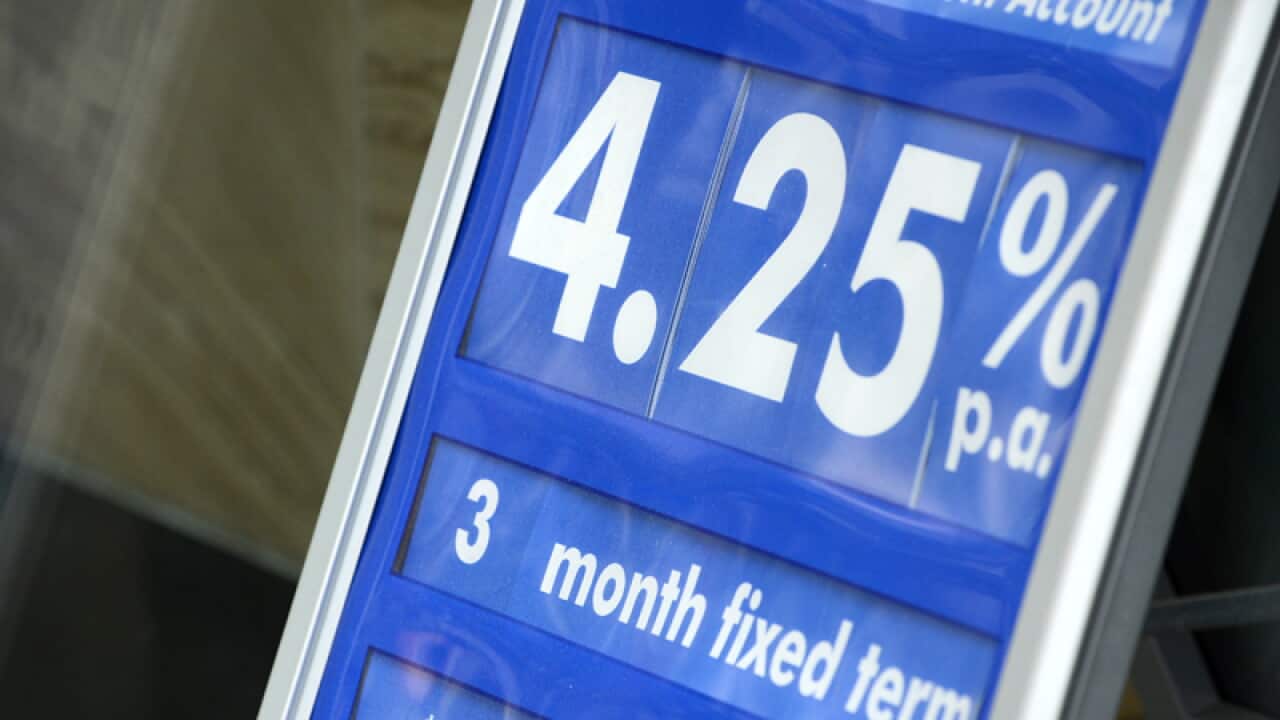
Business groups believe it is too early to call an end to interest rate cuts, but they accept another reduction is unlikely just yet.
The Reserve Bank (RBA) holds its first board meeting of the year on Tuesday and is expected to keep the cash rate at an all-time low of 2.5 per cent, particularly after last month's data showed an unexpected jump in annual inflation in 2013 to a two-year high.
But Australian Chamber of Commerce and Industry (ACCI) acting chief economist Burchell Wilson said those figures were at odds with an economy that is growing below trend, with a deteriorating labour market and moderate wages.
"There is a real risk that that (inflation) number is a bit of an anomaly," he told reporters in Canberra on Monday.
"I think on that basis it's premature to rule out the need for further rate cuts in 2014."
News that makes sense
Your trusted source for staying up-to-date with the world around you. Get free daily news updates and analysis, straight to your inbox.
Data on Monday indicates price pressures were more subdued at the start of this year.
The TD Securities-Melbourne Institute monthly inflation gauge rose by 0.1 per cent in January.
ACCI's business expectations survey showed profitability and sales revenue were "very poor" in the December quarter, undermining employment as well as investment, particularly in plant and equipment, which has suffered the longest period of contraction in nearly 20 years.
The survey produced one bright spot, with the expected economic performance index rising to 54.3 points from 50.6 points, its highest since mid-2010.
"We need to see improved expectations translating into results," Mr Wilson said.
At the same time, the Australian Industry Group's performance of manufacturing index remained below 50 for a third consecutive month in January - down 0.9 points at 46.7 points.
"2014 looks to be another challenging year for many Australian manufacturers," the group's chief executive Innes Willox said.
Demand for workers remains soft, with growth in job advertisements falling by 0.3 per cent in January.
Australian Retailers Association executive director Russell Zimmerman said an interest rate reduction would be crucial in stimulating employment and believes the central bank has room to move.
Still, the housing sector continues to strengthen, with home values in capital cities rising 1.2 per cent last month and 9.8 per cent in the year to January.
While building approvals eased 2.9 per cent in December, they were still nearly 22 per cent higher than 12 months earlier.







