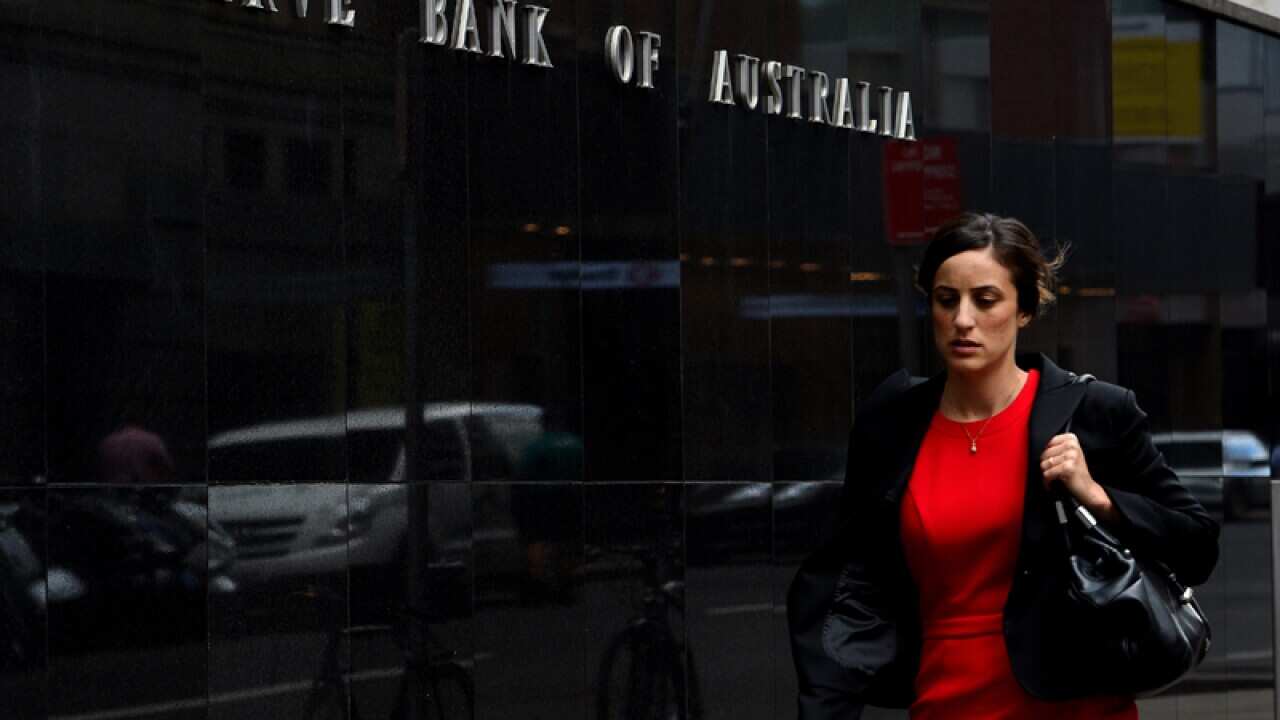
A gloomier economic growth outlook has helped prompt the Reserve Bank of Australia to keep the door open for further interest rate cuts.
In its quarterly Statement on Monetary Policy, released Friday, the RBA did not rule out another rate cut after slashing the official cash rate to a fresh low of two per cent on Tuesday.
"The board will continue to assess the outlook and adjust policy as needed to foster sustainable growth in demand and inflation outcomes consistent with the inflation target over time," the RBA said.
While keeping its options open, most analysts believe another rate cut from the RBA is unlikely in the months ahead because of signs of recovery in the economy, and the risk of overheating the property market in Sydney.
The Aussie dollar plummeted soon after Friday's release, hitting a three-day low of 78.72 US cents in response to the statement's downbeat tone on growth.
In the statement, the RBA revised down its outlook for the Australian economy, pointing to slower Chinese growth and local business investment as key concerns.
The central bank said economic growth was expected to be in the range of 2.5 to 3.5 per cent in the year to June 2016, which was a quarter of a percentage point weaker than previously predicted.
In line with comments made by governor Glenn Stevens this week, the central bank also said business investment and public spending remained sluggish, and that mining investment would "continue subtracting substantially from growth over the next couple of years".
The statement also noted that the unemployment rate would probably peak at about 6.5 per cent in mid 2016, then remain elevated for longer that previously thought.
On the plus side, the statement said the outlook for Australian dwelling investment was up, driven by lower interest rates and strong population growth.
It said underlying inflation was predicted to remain "well contained" over coming months.
NAB chief markets economist Ivan Colhoun said the statement showed the central bank was keeping flexible on interest rates.
"This is a flexible statement that allows for further easing, but does not signal that easing is currently under active consideration. Like the US Federal Reserve, the RBA will be data dependant," Mr Colhoun said.
Westpac chief economist Bill Evans said it remained unlikely that the RBA would act on rates in 2016.
"There is time to assess the progress of the household sector and continually test whether above average growth in 2016 is a likely prospect," he said.
Share


