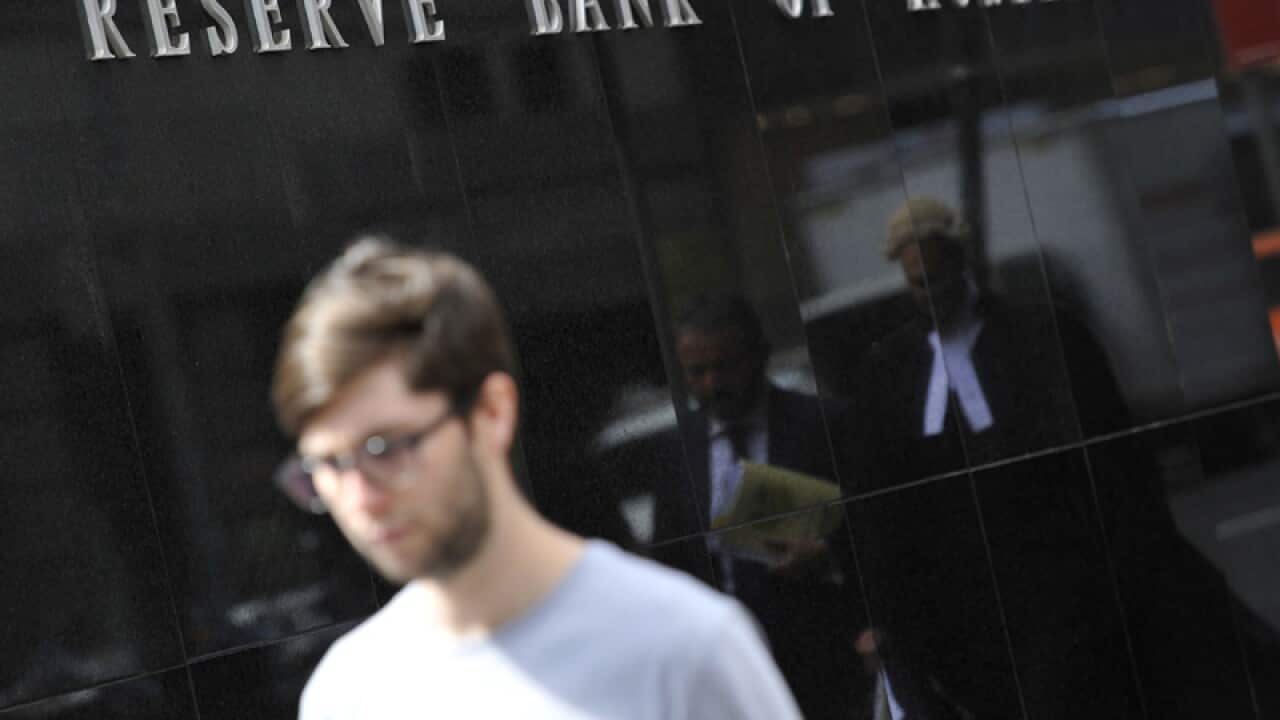
The Reserve Bank boss is still open to cutting the cash rate again but will "chill out" until the bank's first board meeting in 2016.
"I'm more than content to lower it if that actually helps, but is that the best thing to do at a particular time?" Glenn Stevens told an Australian Business Economists (ABE) dinner in Sydney.
"As for February, that's three months away, we've got Christmas, we should just chill out and see what the (economic) data says."
Recent good economic data, including the unemployment rate falling to a six-month low, has caused the chances of another interest rate cut to plummet.
The cash rate is at a record low of two per cent, the most recent cut being in May.
News that makes sense
Your trusted source for staying up-to-date with the world around you. Get free daily news updates and analysis, straight to your inbox.
Mr Stevens was asked what's stopping him from cutting the cash rate again, especially as economic growth is still below its long-term average.
The RBA governor said the key question was how to make the economy better.
"Maybe you can make it better by lowering rates. It may be we could make it better, most effectively, by articulating a case for (interest rate) stability, pointing to the positive things that are happening," he said.
Mr Stevens admits the impact of an interest rate cut on the economy is shrinking as the cash rate gets lower.
He said recent interest rate cuts didn't make as much impact as the ones made in the early 1990s, when, in a series of moves, it went from 17 per cent to 4.75 per cent three year later in 1993.
A survey of the ABE executive committee, coinciding with the group's annual conference, found that economic growth is expected to pick up and the cash rate to stay unchanged in 2016.
The bulk of the ABE committee attached a probability of 20 per cent that Australia would enter recession in the next two years.
The risks were centred on China.
"A hard landing in China or an unruly devaluation in the Chinese yuan were the most frequently noted event risks," the ABE committee said.
Mr Stevens says if Australia does suffer a recession it will be a larger shock than previously because it has been more than 24 years since the country last had one.
"That they have not seen this is a good thing in the sense that it results from the fact that we have not had a really serious downturn for a long time now. But if one comes, it will be a shock," he said.
"A lot of people in business have, I suspect, not seen how tough conditions can become when virtually every industry and region is contracting."







