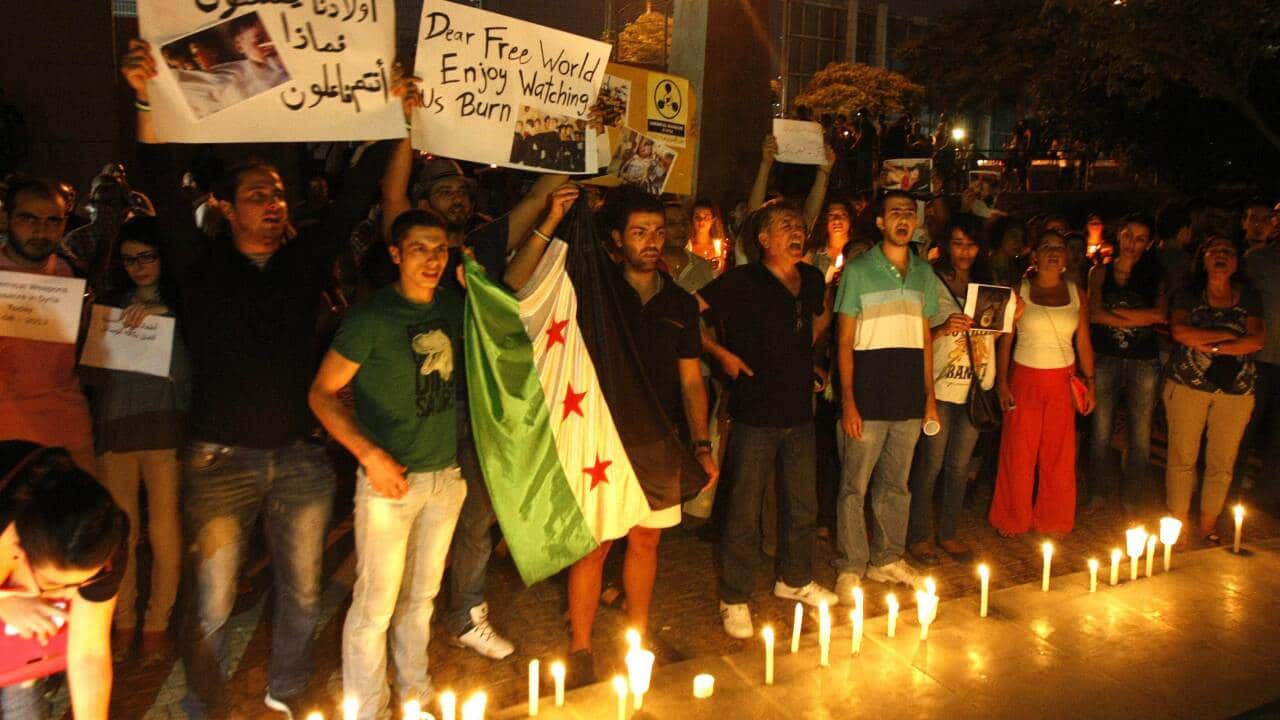
Iran has rejected claims that the Syrian regime, its chief regional ally, had deployed chemical weapons, saying if such an attack was proven rebels would be responsible, IRNA news agency said.
"If the information concerning the use of chemical weapons is accurate, very definitely they were used by terrorist groups ... who have shown they will not hold back from committing any crime," Foreign Minister Mohammad Javad Zarif was quoted as saying, referring to rebels locked in a deadly war with President Bashar al-Assad's forces.
Human rights organisations say the Syrian government must give access to UN weapons inspectors now in Damascus to the sites of alleged deadly chemical attacks near the capital.
Separate calls by Human Rights Watch and Amnesty International came after Syria's opposition accused the regime of President Bashar al-Assad of massacring more than 1,300 people on Wednesday.
News that makes sense
Your trusted source for staying up-to-date with the world around you. Get free daily news updates and analysis, straight to your inbox.
The government has strongly denied the allegations.
"The Syrian authorities... should immediately facilitate the visit of the UN team to Eastern Ghouta and other locations," said Amnesty International's deputy director for the Middle East and North Africa Hassiba Hadj Sahraoui.
The team must be given "unimpeded access to all locations to investigate these and any other incidents of alleged use of chemical weapons", Sahraoui said Wednesday.
Should the allegations be true, "the attacks would amount to war crimes," she said, while renewing Amnesty's call for the situation in Syria to be referred to the International Criminal Court.
New York-based Human Rights Watch said Thursday that the descriptions its staff heard from witnesses are "consistent with the use of chemical nerve agents."
"A huge number of people in Ghouta are dead, doctors and witnesses are describing horrific details that look like a chemical weapons attack and the government claims it didn't do it," said Joe Stork, HRW's acting Middle East director.
"The only way to find out what really happened in Ghouta is to let UN inspectors in," Stork added.
HRW cited two doctors describing the symptoms of patients they were treating including suffocation, muscle spasms, frothing at the mouth and pin-point pupils.
"These symptoms are consistent with nerve agent poisoning," said the organisation.
However, some specialists in the effects of chemical weapons have said video evidence was not entirely convincing.
The inspectors arrived in Damascus on Sunday with a mandate to investigate three sites for the alleged use of chemical weapons.
They are Khan al-Assal in the northern province of Aleppo, where rebels and the army blamed each other for using chemical weapons in March, as well as Ataybeh near Damascus and Homs in central Syria.







