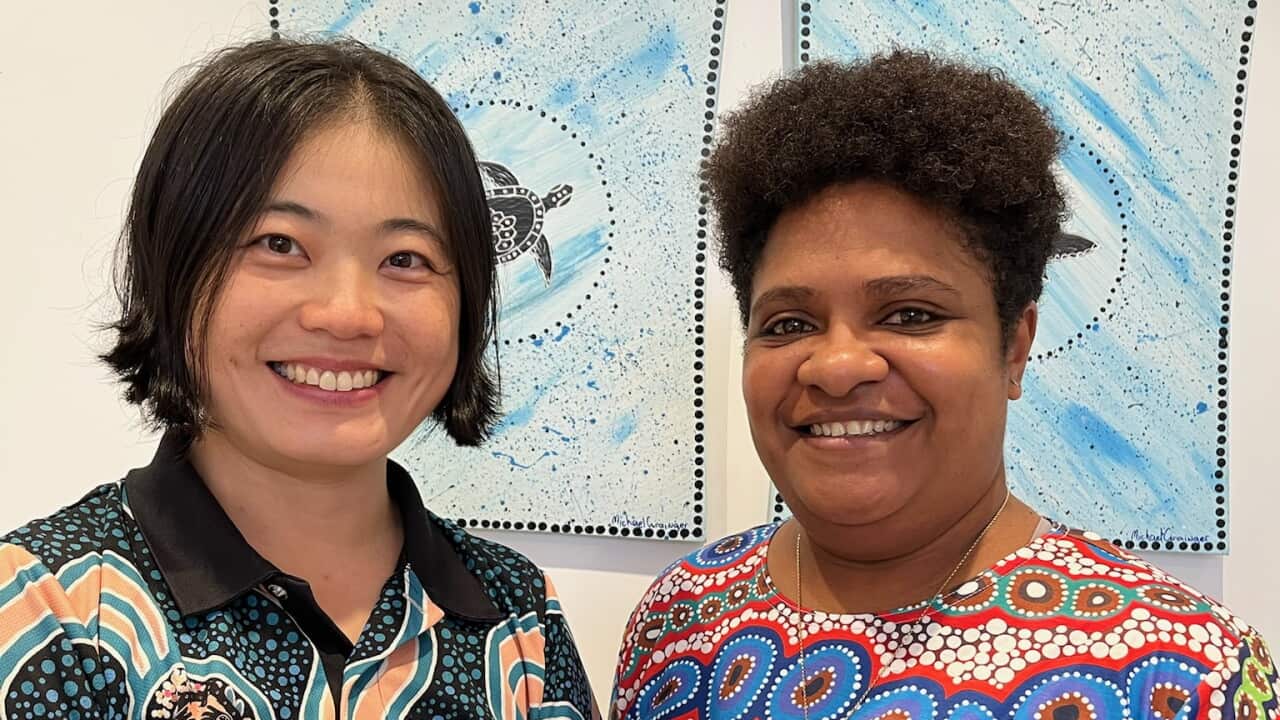
When Tiantian arrived in Australia in 2015, she knew some things about Aboriginal culture and the concept of reconciliation, but there were some things she didn't know she didn't know.
"I remember when I first came to Australia, I heard remarks from backpackers about First Nations people. After studying social work, I realised those remarks were actually discriminatory," Tiantian said.
"I don't think people were malicious, but I understand that those remarks often come from the lack of understanding about Australia's history."
At that early stage, she said she only had a basic understanding of the purpose of her university's National Reconciliation Week (NRW) event, which is dedicated to First Nations healing and truth-telling.
"At first I thought the NRW was similar to NAIDOC Week," Tiantian, who prefers using her first name only, told SBS News. NAIDOC Week is an annual event led by First Nations communities to celebrate their culture and achievement, which is often held in July.
News that makes sense
Your trusted source for staying up-to-date with the world around you. Get free daily news updates and analysis, straight to your inbox.
But when she became a social worker in Cairns, she made friends with her First Nations colleagues and engaged with local First Nations communities. Her understanding of NRW has significantly expanded.
This year, she decided to actively engage with NRW by sharing Chinese-language materials about it on her social media.
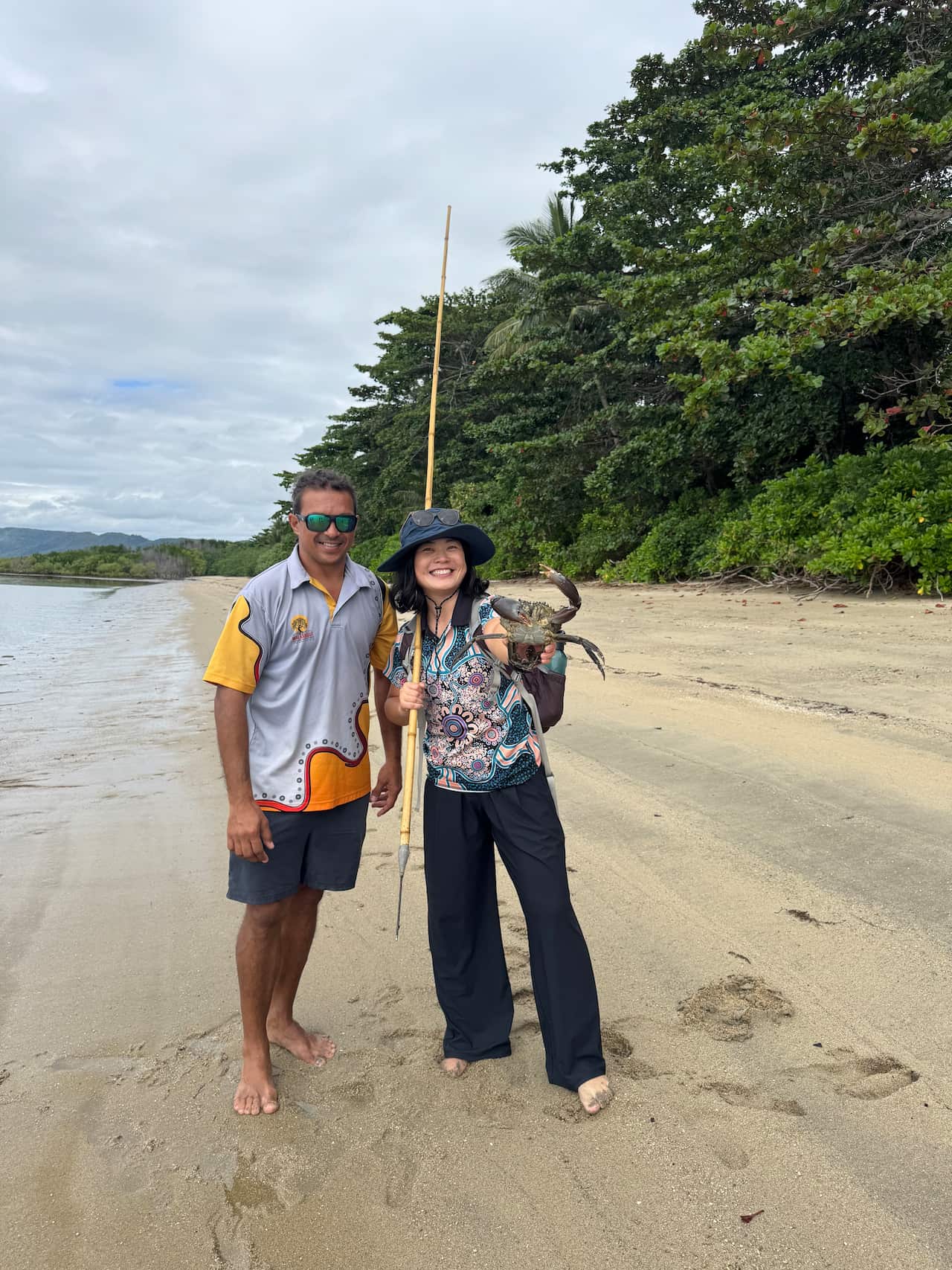
Tiantian's sharing was paid back. Many of her Chinese friends also shared their involvement with the NRW to her. "I feel we have more people practising and engaging with the NRW theme this year, which is ‘All In'," she said.
The theme is designed to encourage everyone to commit wholeheartedly to reconciliation, according to Reconciliation Australia, which curated the itinerary of the annual event. To ensure members of multilingual communities were included, it also provided translated posters and educational resources in 13 languages.
Despite the provision of these translated materials, however, even passionate volunteers like Tiantian have found it can be challenging for them to hold conversations about First Nations culture in their mother tongues.
Lost in translation?
Tiantian is a fluent English speaker and has mainly learned about First Nations history and culture in English. The difficulty for her comes during translation.
"Sometimes it takes time for me to express what I learned [in English] in Chinese, because I want to ensure my translation to Chinese is accurate," she said.
One word that challenged Tiantian was "reconciliation", which translates literally into Chinese as "making peace". She came across the word during an NRW event where she was told about significant historical events for the First Nations community, including the 1967 referendum and the Stolen Generation policy.
On her social media, Tiantian said the event had helped her understand the term reconciliation more deeply.
"I was impressed that reconciliation was officially defined as 'strengthening relationships between Aboriginal and Torres Strait Islander peoples and non-Indigenous peoples, for the benefit of all Australians'," she said.
"But if we try to understand this definition, we need to confront the other side of the colonial history of Australia, that for First Nations people, that was a history of land grabbing, violence, systemic discrimination and cultural damage."
Such a challenge of understanding First Nations content in English and then translating it to other non-First Nations languages could also be faced by professional translators, according to Professor Jing Han at Western Sydney University.
Han, who translated First Nations author Melissa Lucashenko's fiction Too Much Lip from English to Chinese, recalled that when translating the 2019 Miles Franklin Award-winning novel, she often had to pause to ponder words that contained deep historical and cultural contexts.
"History, culture, language, literature, political affairs and all sorts that are related to the First Nations [community], a lot of terms are historically embedded, and it's not a straightforward literary translation at all," she told SBS News.
"It's not just about translation. You do need to dig in what is missing because one fundamental thing about translation is there is no equivalence between languages," she said. "It needs to be embedded in contextual information."
During the Voice Referendum in 2023, the federal government had to revise the Chinese translation of the referendum question, after some members of the Chinese community raised concerns that the government adopted a literary translation of the term "First Nations", and that could imply ranking among different ethnicities.
Han said translation like this may lead to misinformation about the First Nations community. "Translators must know Australia's history, Indigenous history and politics [with] in-depth knowledge to be able to do the job properly."
Call for national body on translation for First Nations content
Besides translated materials, Han said it's also important to have community events throughout the year to help multicultural communities learn about First Nations history.
Han said there should be an official body that oversees translations of First Nations-related terms and content to ensure they are consistent.
"People take for granted that there is equivalence [between languages], that humans or machines can do [translations] easily, that's not true," she said.
"Translation is all about negotiation, because there's no equivalence between languages, let alone historically loaded terms."
Tiantian said she supported the theme of "All In" for the NRW this year. "Everyone living in Australia can take action and contribute to reconciliation," she said.
In a statement to SBS News, Reconciliation Australia said it was the fourth year of the organisation to provide multilingual resources for communities.
"Reconciliation Australia has developed a partnership with leading multicultural communications agency Cultural Perspectives to connect with linguistically and culturally diverse communities directly and drive engagement and grow understanding of reconciliation amongst these communities," a spokesperson said in a statement.
A 2024 survey by the organisation found 90 per cent of multicultural Australians think the relationship between First Nations and non-Indigenous people is important.
"We want to lift our engagement with non-Anglo Australians and ensure multicultural communities are well informed and able to take their places in the national reconciliation movement," the spokesperson said.
For the latest from SBS News, download our app and subscribe to our newsletter.







